
Missouri’s effort to collect a $24.5 billion judgment against Chinese government entities over pandemic-era personal protective equipment (PPE) has entered a new phase after two defendants appeared in federal court to challenge the award.
The People’s Government of Hubei Province and the Chinese Academy of Sciences (CAS) filed a motion on Aug. 31 asking U.S. District Judge Stephen N. Limbaugh Jr. to set aside the default judgment—which was entered after the defendants did not appear to contest the case—and dismiss the lawsuit. White & Case attorneys entered appearances for both defendants that day.
The move came after Missouri began the process of formally serving the March 2025 judgment, a required step before the state can ask the court for authorization to pursue eligible assets.
Hubei and CAS said they were making a limited appearance “now that Missouri has taken steps to effect service of that default judgment.” Their filing noted that Missouri had not yet asked the court for authorization to begin enforcing the judgment against assets.
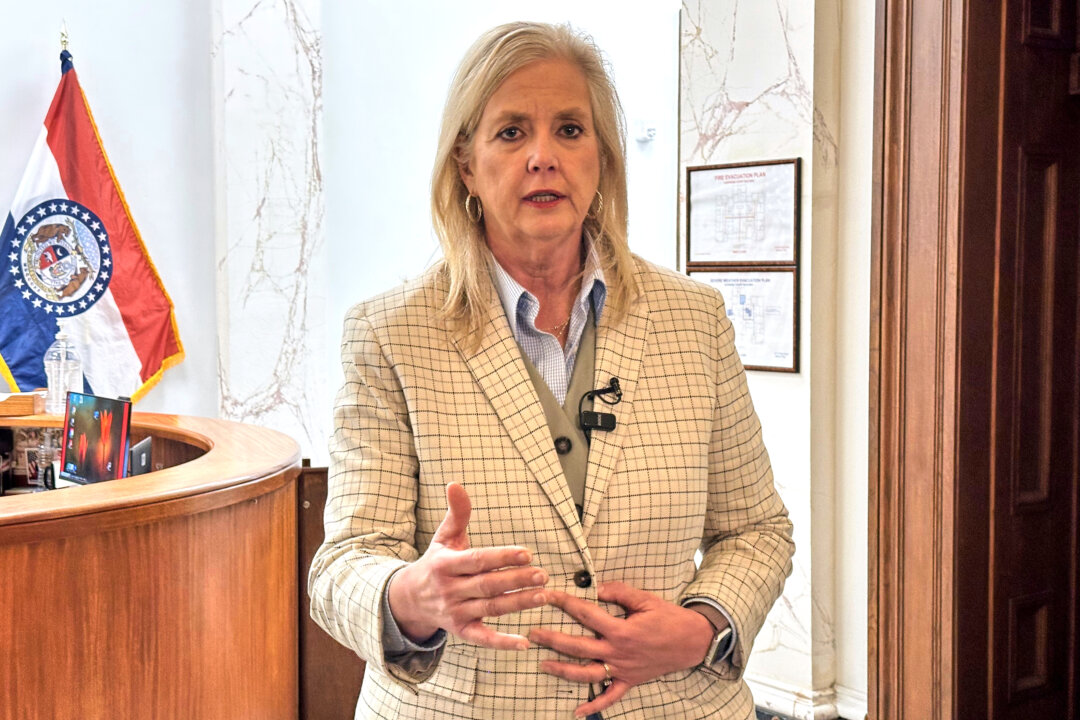
Missouri Attorney General Catherine Hanaway’s office said last year that it had sent judgment documents to the State Department for delivery through diplomatic channels and intended to pursue assets tied to the defendants after completing the required legal steps. The office has cited real estate, financial interests, and farmland among potential targets.
Even if the judgment survives the new challenge, Missouri would still have to obtain court approval and identify assets that can legally be seized under the Foreign Sovereign Immunities Act (FSIA).
Xiaoxu Sean Lin, executive director of the Consilium Institute, a New York-based independent think tank, told the Chinese edition of The Epoch Times on Sept. 3 that the judgment had largely been a number on paper until Missouri began taking steps that could eventually reach assets. That, he said, changed the stakes for the Chinese defendants.
Allen Zeng, co-founder and CEO of the U.S.-based Sound of Hope Radio Network, similarly said the prospect of asset seizure gave Hubei a practical reason to enter the litigation after years of nonparticipation.
Zeng said on his Sept. 3 talk show that if Missouri ultimately preserves and enforces the judgment, other U.S. states or other countries could be encouraged to consider similar legal actions against Chinese government entities.
$24.5 Billion Judgment
Missouri filed the lawsuit in April 2020 against the People’s Republic of China, the Chinese Communist Party, Hubei Province, Wuhan’s government, CAS, the Wuhan Institute of Virology, and several Chinese ministries and agencies.
The lawsuit initially made broad allegations concerning the emergence and spread of COVID-19. Most of those claims were later dismissed under the FSIA, a federal law that generally protects foreign governments from being sued in U.S. courts.
In January 2024, the U.S. Court of Appeals for the Eighth Circuit allowed one claim to continue: Missouri’s allegation that the defendants hoarded PPE and manipulated supplies during the early stages of the pandemic.
The appeals court said alleged activities involving the production, purchase, import, and export of PPE could qualify as commercial conduct rather than protected government activity. It also found that Missouri had plausibly alleged that the conduct directly affected the United States. The court stressed that Missouri still had to prove those points.
At a January 2025 evidentiary hearing, Missouri presented its evidence without any of the defendants appearing to contest it.
Limbaugh ruled on March 7, 2025, that Missouri had presented sufficient evidence and entered a default judgment for $24,488,825,457, plus interest.
The court calculated about $8.16 billion in compensatory damages, most of it based on Missouri’s estimate of lost state tax revenue, and trebled that amount under federal and Missouri antitrust laws to reach the $24.49 billion award.
The judgment was based on the surviving PPE-hoarding claim. The Eighth Circuit had not allowed Missouri’s broader claims seeking to hold the defendants legally responsible for the pandemic as a whole to continue.
Defendants Seek to Undo Judgment
Hubei and CAS are asking Limbaugh to set aside the judgment on several grounds, including foreign sovereign immunity, whether the court had authority over the defendants, whether they were properly served, and the legal basis for the antitrust award.

A central question is whether the alleged PPE conduct falls within an exception to the immunity normally enjoyed by foreign governments.
Hubei and CAS argue that Missouri’s own evidence describes government actions—such as directing industries, controlling medical supply chains, and regulating imports and exports—rather than ordinary commercial activity. If the conduct was governmental rather than commercial, they contend, the FSIA exception does not apply.
They also dispute whether their alleged conduct had a sufficiently direct effect in the United States.
The defendants argue that global demand, export restrictions imposed by other countries, and other intervening events also affected U.S. PPE supplies and prices. They contend that the chain between their alleged actions in China and Missouri’s losses is therefore too indirect to overcome foreign-government immunity.
Lin said he viewed the appearance by Hubei and CAS, rather than China’s central government itself, as a way to contest the U.S. judgment while keeping Beijing outside the proceeding.
He also said that if the judgment were set aside and the case reopened for both sides to litigate the underlying PPE claim, participating Chinese entities could face demands to produce records concerning pandemic-era decisions and PPE procurement and allocation.
Dispute Over Antitrust Basis for Award
Hubei and CAS are also challenging how Missouri’s original PPE-hoarding claim became the basis for a judgment under federal and state antitrust laws.
Missouri’s 2020 complaint called the surviving claim “Breach of Duty: Hoarding of Personal Protective Equipment.” It alleged that the defendants had a duty not to hoard PPE, but it did not expressly accuse them of monopolization under the federal Sherman Antitrust Act.
Hubei and CAS argue that Missouri later relied on antitrust claims that were never formally added to the complaint or served on them. They say the resulting judgment is therefore invalid.
The court considered that question before entering the $24.5 billion judgment.
The Eighth Circuit had already described the PPE-hoarding allegations as “classic anticompetitive behavior” when it revived the claim in 2024.
Before issuing the 2025 judgment, Limbaugh specifically asked Missouri to explain why the original PPE-hoarding claim could support liability under federal and Missouri antitrust laws.
Missouri argued that it was not introducing a new set of allegations. Instead, it said the antitrust laws provided another legal basis for holding the defendants liable for the same alleged PPE-hoarding conduct described in the original complaint. Missouri therefore argued that it did not have to amend the complaint and formally serve the defendants again.
Limbaugh accepted Missouri’s position when he entered judgment under the original PPE-hoarding count and found the defendants liable under federal and Missouri antitrust law. Hubei and CAS are now asking him to reverse that determination.
CAS has raised a separate issue over whether Missouri properly served it with the original lawsuit.
In April 2024, Limbaugh said Missouri’s attempt to serve CAS with the original complaint by email appeared ineffective under the FSIA and directed Missouri to address the issue.
Missouri argued that the email service was legally sufficient. Limbaugh later stated in his March 2025 judgment that the defendants had been properly served. CAS is now asking him to reconsider that conclusion.
Hubei and CAS also challenge the trebling of the damages, arguing that it had a punitive function barred by the FSIA for foreign-state defendants.
Wuhan Lawsuit Seeks $50.5 Billion
A separate case is also pending in China.
In December 2025, the People’s Government of Wuhan Municipality, CAS, and the Wuhan Institute of Virology sued Missouri and several current and former state officials in the Wuhan Intermediate People’s Court.
The Chinese plaintiffs are seeking 356.4 billion yuan, about $50.5 billion, according to the Missouri Attorney General’s Office. They are also demanding public apologies in U.S. and Chinese media, legal costs, and the right to seek additional compensation. The lawsuit alleges that Missouri’s case damaged the reputation and economic interests of Wuhan, CAS, and the Wuhan Institute of Virology.
Hanaway called the Chinese case a “stalling tactic” and said Missouri would continue trying to collect its U.S. judgment.
Lin described the U.S. challenge and the Wuhan lawsuit as parts of a broader strategy of “delay, entangle, counterattack, and exhaust through procedure.”
He said the Wuhan lawsuit allows Chinese institutions to counter Missouri through a Chinese court while supporting a domestic narrative portraying them as victims of Missouri’s litigation.
Zeng said the two cases may not carry equal practical weight. He noted that Missouri is looking for U.S. assets tied to the Chinese defendants, while no comparable pool of Missouri state assets in China has been publicly identified.
Missouri has not yet filed its substantive response to the Aug. 31 motion to set aside the U.S. judgment.
Limbaugh on Sept. 1 granted the state additional time and set Sept. 28 as the deadline for Missouri to respond.
We had a problem loading this article. Please enable javascript or use a different browser. If the issue persists, please visit our help center.