
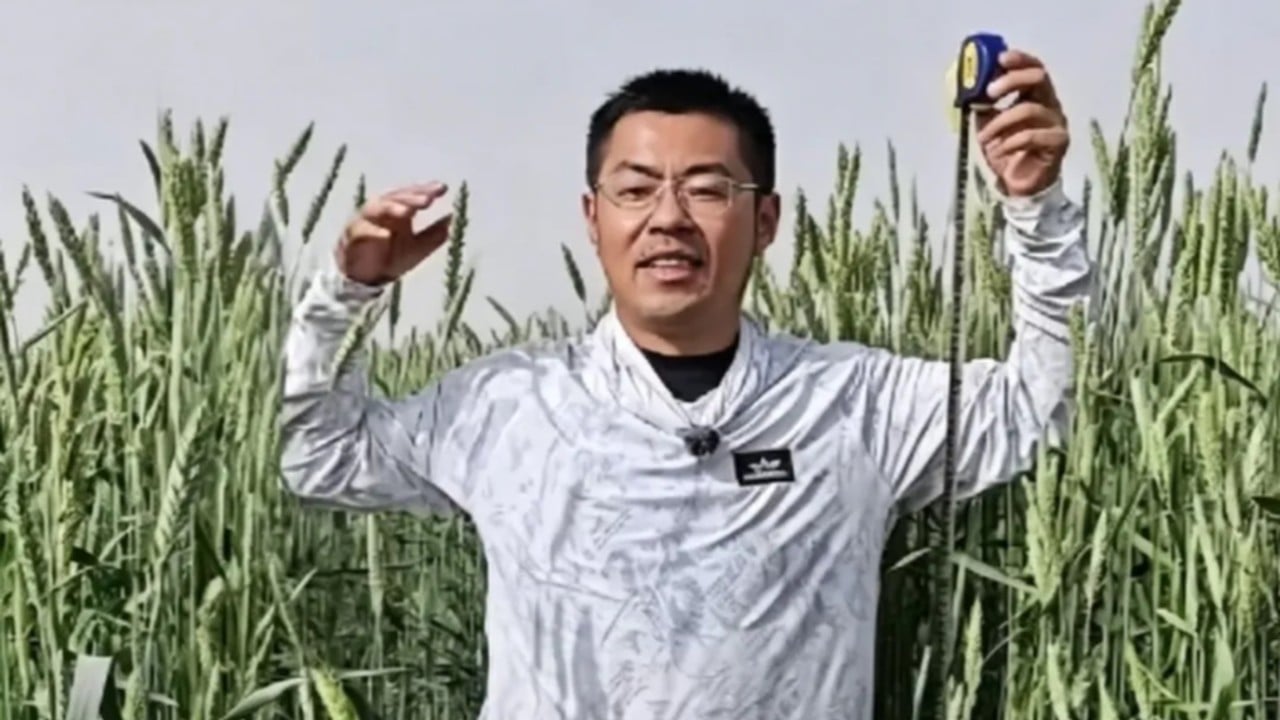
Scientists in China are growing towering hybrids of wheat and rye – taller even than some humans – in the deserts of its western Xinjiang region.
The hybrids, known as triticale, can adapt more easily than wheat to challenging conditions and, in addition to providing food for humans, their stalks and leaves can be used for animal feed.
“It is tolerant of poor soil, cold, drought, salinity, and wind and sand,” Kuang Feiting, the executive director of Xinjiang Maishengdao Biotechnology, the firm playing a leading role in the project, told China News Service earlier this month.
Advertisement
“In newly reclaimed desert saline-alkali land, it may be difficult for ordinary wheat to even sprout, and it may take two or three years to become profitable.”
Kuang said triticale could produce up to 4 tonnes of forage per mu – a Chinese unit of land measurement equivalent to 667 square metres (7,180 sq ft) – each year, making bumper harvests possible.
Advertisement
Triticale, a synthetic hybrid produced by crossbreeding the grains of wheat and rye, was first bred in laboratories in Scotland and Germany in the late 19th century.