
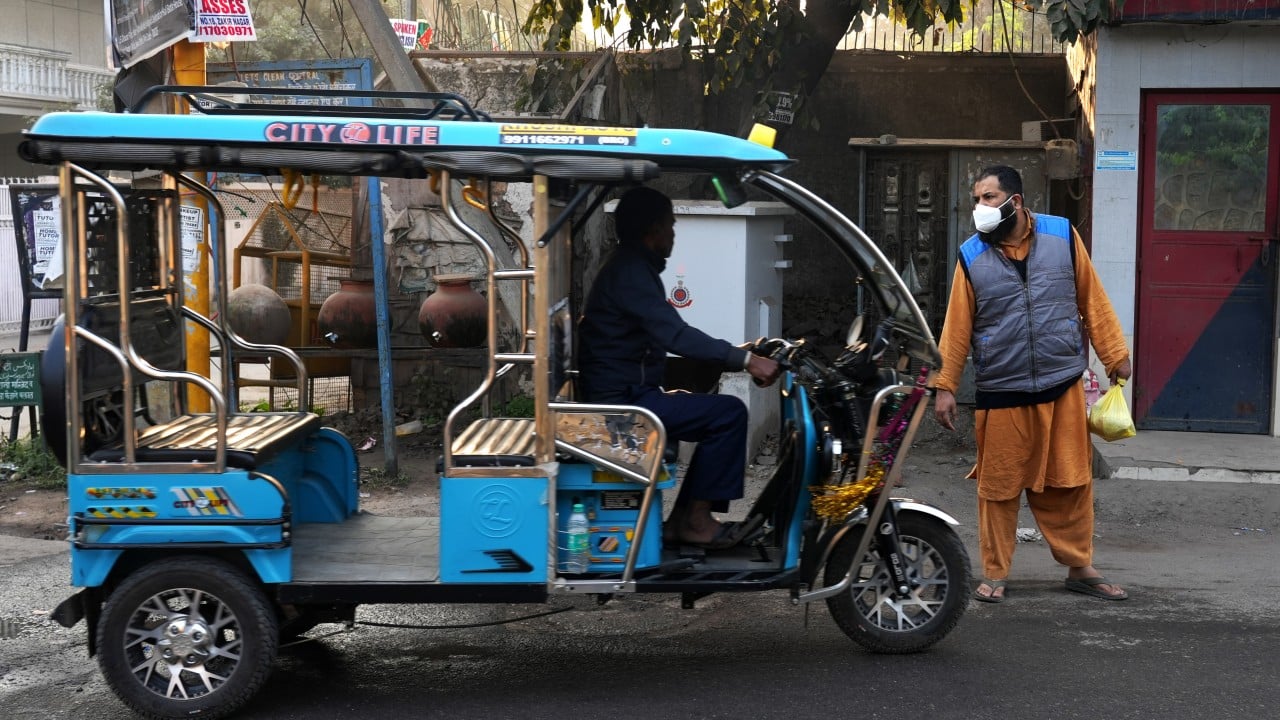
It was supposed to be just another hectic day on New Delhi’s roads. Instead, early this month, several e-rickshaws on the Indian capital’s crowded streets reportedly came to a halt mid-ride in separate incidents that left drivers stranded and passengers searching for answers.
Videos of the disruption quickly went viral on social media, turning a local transport breakdown into a national debate. The alleged culprit was not a mechanical failure – it was software. And the trail led to China.
Chinese battery management apps – including BAT-BMS, Epoch Li-ion and Lossigy – were said to have been used to remotely disable the vehicles, raising concerns over the security of connected electric vehicles and the possibility of Bluetooth-enabled tampering.
The apps did not respond to requests for comment from the South China Morning Post.
India’s IT secretary S. Krishnan later confirmed that a probe had been launched and that the government had ordered the removal of at least three Chinese battery management applications from app stores amid worries that connected EV systems could be exploited. Some reports mentioned up to seven apps being targeted.

The incident comes at a delicate moment in India-China relations. Years of tensions triggered by the deadly 2020 border clashes and India’s subsequent ban on Chinese apps such as WeChat and TikTok have given way to a cautious diplomatic thaw, with Delhi and Beijing seeking to restore economic engagement despite enduring strategic mistrust.