
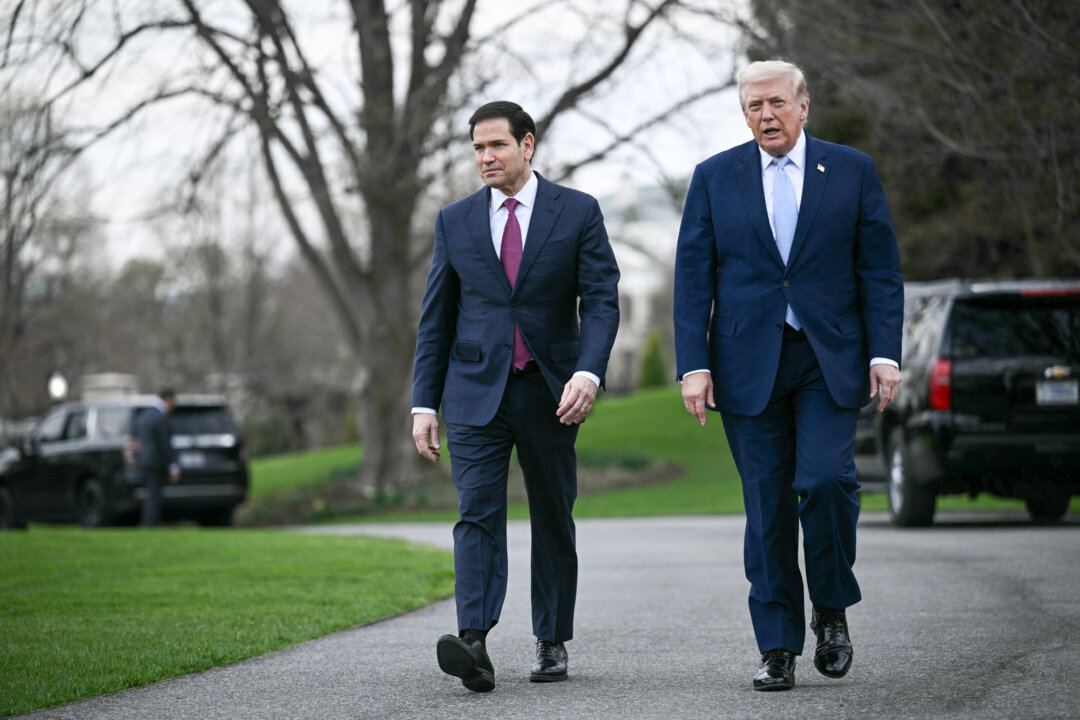
A new deal with Venezuela that gives the United States majority control of more than 65 billion barrels of proven oil reserves is expected to reshape global oil markets and give Washington significant control over oil prices.
U.S. President Donald Trump described the pact as “the biggest oil deal in world history.”
Although many details remain unclear, here is what has emerged so far and how observers are responding to the deal announced Friday evening.
Inside the Financial Structure of the Deal
Under the agreement, the U.S. government will form a joint venture with an unnamed private business in Venezuela.
“The deal we have negotiated will secure the United States 55% effective output of a new private joint venture,” a U.S. official told The Epoch Times in an email.
The U.S. government, in partnership with the “experienced private operator in Venezuela,” has secured 100-year concessions for oil fields with 65 billion barrels in proven reserves.
“This new entity will be the second-largest corporate holder of proven reserves [in the world] after Saudi Aramco,” the U.S. official said.
The U.S. government will control more than half of the new entity’s value through direct equity and guaranteed at-cost offtake, meaning discounted oil purchases.
Trump said the deal was negotiated by U.S. Secretary of State Marco Rubio, U.S. Defense Secretary Pete Hegseth, and Interim President of Venezuela Delcy Rodríguez.
He emphasized that the deal comes “at no cost to the American taxpayer.”
In a statement, Rubio described the deal as “a huge win” for Americans and Venezuelans.
The agreement, he said, “will bring nearly $100 billion in private investment” to Venezuela, creating new jobs and reviving the country’s economy.
Rodríguez celebrated the oil deal in a televised address on Aug. 29.
She said the project seeks to develop “17 strategic oilfields with a production target of more than 1.5 million barrels per day.”
Venezuelan Oil to Refill US Strategic Reserves
Trump on Sunday stated on Truth Social that oil purchased through this agreement will be used to replenish the U.S. Strategic Petroleum Reserve (SPR).
In late August, the SPR fell to nearly 290 million barrels, reaching a 44-year low.
“One of the things I am going to do with the Venezuelan Oil is fill up the Strategic National Reserves,” Trump said. He criticized the Biden administration for depleting the reserve.
“The ‘topping out’ process will begin very shortly, and is a Gift from Venezuela to the People of the United States,” Trump wrote.
The U.S. official stated that as the company increases production, the consistent supply of at-cost oil will help replenish the U.S. strategic petroleum reserve and support the needs of the U.S. military.
The announcement of the deal comes as gas prices in the United States have remained high six months into the conflict with Iran, and roughly nine months after American military forces captured Venezuelan leader Nicolás Maduro.
Venezuela holds the world’s largest proven oil reserves, estimated at 303 billion barrels. However, oil production has declined significantly during the Maduro regime due to mismanagement and underinvestment.
How the Deal Could Shift Global Oil Markets
According to Trump, the “historic transaction” would more than double American oil reserves, which currently stand at 46 billion barrels.
He said the deal would increase oil supplies and lower gas prices for Americans.
Evan Ellis, a military strategist and former Latin America policy adviser to the U.S. State Department, stated that the deal is expected to strengthen the U.S. position in global oil markets.
He told The Epoch Times that America’s “control of 65 billion barrels of recoverable oil would significantly impact the U.S. position in international petroleum markets and access to that oil at cost.”
In addition, it’s a big win for U.S. refiners, particularly those in Houston, which are accustomed to processing high-sulfur, heavy Venezuelan oil.
Venezuela may also withdraw from the Organization of the Petroleum Exporting Countries (OPEC), which it helped found in 1960. Such a move could further weaken OPEC’s decades-long influence over global oil markets.
On May 1, the United Arab Emirates officially left the cartel after nearly 60 years of membership.
Questions Surround Venezuelan Private Operator
Multiple media outlets, citing anonymous sources, have reported that the U.S. government plans to work with North American Blue Energy Partners, a company owned by Alejandro Betancourt López, as the project’s private Venezuelan operator.
It has also been reported that the project would receive financial backing from the Pentagon’s Office of Strategic Capital.
However, both the White House and the Pentagon declined to identify the private operator involved in the transaction.
“The Office of Strategic Capital (OSC) does not take equity stakes in private companies,” chief Pentagon spokesman Sean Parnell told The Epoch Times.
“Under its statutory authority, OSC’s role is strictly limited to providing capital assistance in the form of a loan, loan guarantee, or technical assistance,” Parnell said.
Addressing concerns about the private operator, a source familiar with the negotiations told The Epoch Times that the U.S. government has ruled out any partnership with Venezuelan government entities, including the state-run oil giant Petróleos de Venezuela, S.A.
The U.S. Departments of State and War negotiated with the private operator to hammer out the deal, according to the source, adding that they put strong oversight measures in place to ensure the venture is managed effectively.
Pentagon press secretary Kingsley Wilson declined to comment on specific commercial or legal considerations related to the conditional loan commitment process.
“Before any capital assistance is provided or loan is disbursed, OSC conducts extensive due diligence and comprehensive legal review of potential transactions to fulfill all applicable legal and regulatory requirements,” Wilson told The Epoch Times.
Reactions to the Deal
The agreement between the United States and Venezuela has received mixed reactions from politicians and economists.
Ricardo Hausmann, a Harvard professor and former minister of planning of Venezuela, criticized the agreement as a “shameful deal” and a “fiasco,” arguing that the head of the interim government, Rodriguez, has “no legitimacy or constitutional power to commit Venezuela to any such deal.”
Venezuelan economist Francisco Rodríguez criticized the deal on X, saying it was made under pressure from Trump and does not benefit Venezuelans. He called on Venezuela’s National Assembly to reject what he described as a “predatory deal.”
According to Ellis, signing a deal with the interim government introduces some political risks for Washington. He emphasized that Washington needs a legitimate democratic government and the rule of law in Venezuela to achieve lasting policy goals.
Some Democrats also pushed back on the deal, arguing that it would benefit oil companies rather than advance democracy in Venezuela.
Sen. Tim Kaine (D-Va.) criticized Trump, arguing that the removal of Maduro was primarily motivated by the prospect of expanding corporate access to oil resources.
“Using our troops for a private oil grab is corruption at epic scale!” he wrote on X.
Sen. Chris Van Hollen (D-Md.) echoed that criticism.
“Let’s be clear: this isn’t a win. This is proof Trump put our service members at risk to get Venezuelan oil for his billionaire buddies,” he wrote.
However, some Republicans argued that the pact would benefit both the United States and Venezuela.
“If it were up to DC Democrats, Maduro would still be in power, Venezuelan oil would be going to China at half price, and the people of Venezuela would be getting robbed by a corrupt regime,” Sen. Bernie Moreno (R-Ohio) wrote on X.
“Instead, this historic deal benefits both countries for generations!”
Ryan Morgan, Troy Myers, and Tom Gantert contributed to this report.
We had a problem loading this article. Please enable javascript or use a different browser. If the issue persists, please visit our help center.