
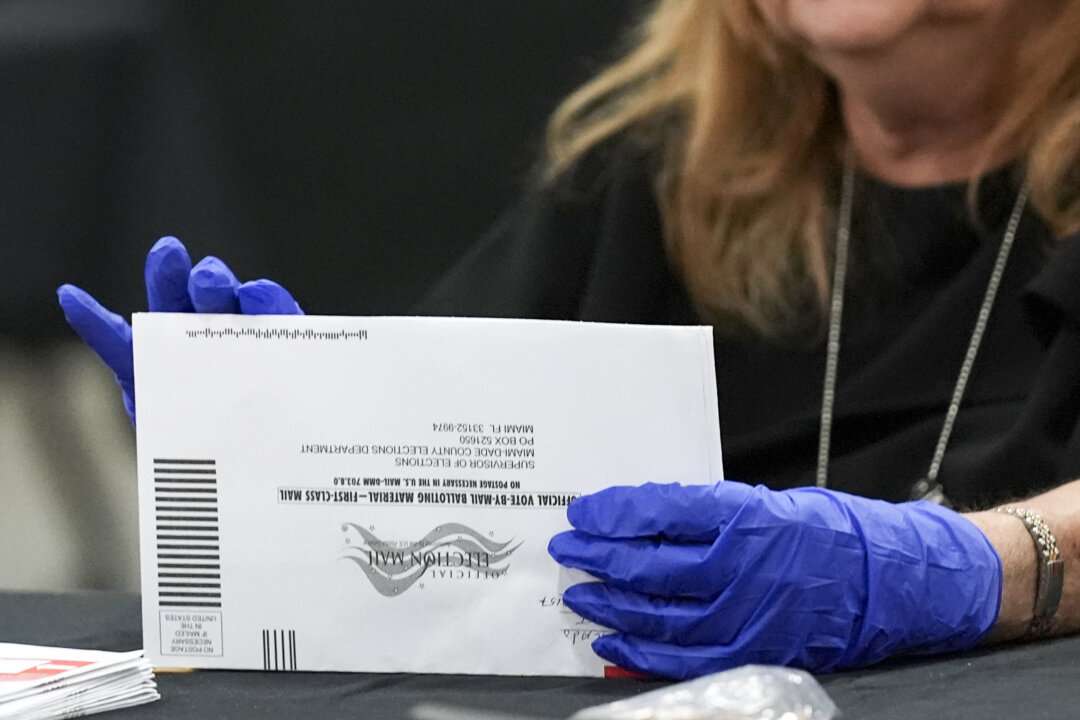
The Trump administration on Aug. 28 appealed a district judge’s ruling that temporarily blocks the U.S. Postal Service (USPS) from implementing parts of a rule aimed at tightening mail-in voting requirements ahead of the November congressional elections.
On Aug. 27, U.S. District Judge Indira Talwani in Boston issued a 14-day temporary restraining order at the request of several states and voting rights organizations, following the U.S. Supreme Court’s Aug. 24 ruling that led to the lifting of earlier injunctions blocking President Donald Trump’s plans to ensure only U.S. citizens receive and cast ballots. The lead case in the consolidated proceeding is known as League of Women Voters of Massachusetts v. Trump. About two dozen state attorneys general filed the other lawsuit that the district court dealt with in the same ruling.
The judge said the agency had presented no evidence of fraudulent mail-in voting that would justify the new USPS rule, and that the rule itself was likely unlawful and adopted in violation of the U.S. Constitution, which gives states primary authority to administer elections.
“USPS’s interest in correcting an unsubstantiated problem through likely unconstitutional means is dwarfed by the overwhelming risk of pervasive disenfranchisement of citizens who need access to mail ballots in order to vote,” she wrote. “The balance of harms and public interest warrants a [temporary restraining order].”
The judge added that compliance with the rule is “practically impossible” because many states have “already ordered their mail ballots,” and some must mail them “as early as next week.”
The new notice of appeal filed by the U.S. Department of Justice (DOJ) advises the U.S. District Court for the District of Massachusetts that the federal government is appealing the Aug. 27 ruling to the U.S. Court of Appeals for the First Circuit.
The notice, filed days before some states begin sending midterm ballots, does not provide reasons for the appeal.
The Supreme Court’s procedural ruling on Trump’s Executive Order 14399 on election integrity did not settle the legal issues in the litigation, which is still active. The court said that its order “does not mean that any measure taken by the Government to implement the Order will necessarily be lawful.” The decision had the effect of briefly postponing the fight over voting-by-mail restrictions.
Critics say the justices’ decision allowing federal agencies to attempt to implement the executive order will cause disorder for election administrators and voters.
New York Attorney General Letitia James said Aug. 26 that the new postal regulation issued under the order will “create confusion, unnecessary costs, and unacceptable risks for voters going into Election Day.” She said officials will have to rush to redesign envelopes, obtain federal approval, and develop new list-transmission systems while already preparing to mail ballots.
The Trump administration says the order will help to keep federal elections honest. The DOJ argues USPS is imposing mailpiece design and data standards under its general authority to regulate the mail, not deciding who is eligible to vote; states are still free to set voter lists and count ballots.
On Aug. 26, the USPS finalized a rule on mail-in and absentee ballot standards, after which lawyers renewed challenges to Trump’s policy.
The rule requires that states use USPS-approved envelopes, place a tracking barcode on each mail ballot, and upload the names of intended recipients to a USPS portal. Ballots that do not comply will not be delivered.
Talwani’s temporary restraining order is narrow. It prevents the postal service from enforcing the envelope, barcode, portal, and non-delivery rules for the November midterms.
It does not block all of the executive order, or prevent the federal government from building lists of citizens.
Naveen Athrappully contributed to this report.
We had a problem loading this article. Please enable javascript or use a different browser. If the issue persists, please visit our help center.