
TAIPEI—Taiwan’s local elections on Nov. 28 delivered significant gains for the ruling party and key victories for the opposition in two major cities, as Beijing reiterated that reunification remained inevitable.
The ruling Democratic Progressive Party (DPP) won 10 of the 22 mayoral and county magistrate races, doubling its 2022 total after flipping six seats from the opposition while losing one.
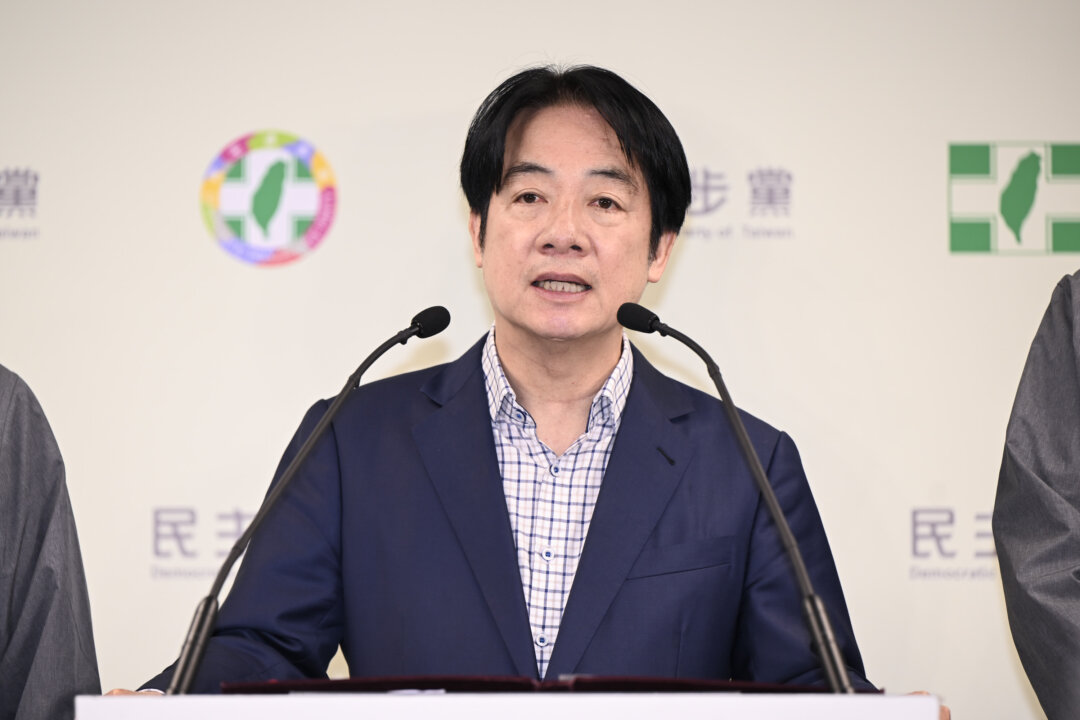
Taiwanese President Lai Ching-te, speaking at the DPP headquarters Saturday night, thanked voters and pledged that the central government would work with local governments regardless of party affiliations.
“Although elections always have winners and losers, democracy is always the winner,” Lai said.
Meanwhile, in China, Zhang Han, a spokeswoman for the Taiwan Affairs Office, warned that “the motherland must and inevitably will be reunified,” according to a statement on Nov. 29.
Beijing claims Taiwan as part of its territory, although the Chinese Communist Party has never governed the island.
In response, Taiwan’s Mainland Affairs Council, a government agency that handles cross-strait affairs, called on Beijing to “respect Taiwan’s democratic system and the voices of the Taiwanese people,” according to a statement on Nov. 29.
The council also urged Beijing to “pragmatically face Taiwan’s election results” and engage in dialogue with Taiwan’s democratically elected government on the basis of “parity and dignity.”
The DPP’s biggest win was Taichung, Taiwan’s second-most-populous city, where it ended eight years of rule by the main opposition Kuomintang (KMT). It also retained its traditional southern strongholds of Tainan and Kaohsiung.
The KMT won 11 races, down from 14 in 2022, retaining control of Taiwan’s capital, Taipei, and neighboring New Taipei, the island’s most populous city.
The Taipei mayoral race was one of the most closely watched contests, pitting incumbent Mayor Chiang Wan-an of the KMT against Puma Shen, a DPP lawmaker known for his work countering Chinese disinformation and promoting civilian defense preparedness.
Chiang won more than 781,000 votes, or 53.72 percent, while Shen finished second with over 664,000 votes, or 45.69 percent, according to Taiwan’s Central Election Commission.
Independent candidate Kao Hung-an retained her seat in Hsinchu, a city home to many of Taiwan’s semiconductor companies.
The mayoral and county magistrate races were part of Taiwan’s “nine-in-one” local elections on Nov. 28, covering about 11,000 posts across 22 cities and counties.
In city council elections across Taiwan’s six special municipalities—Taipei, New Taipei, Taoyuan, Taichung, Tainan, and Kaohsiung—the DPP won 166 seats, and the KMT won 157, according to Taiwan’s national media outlet, Central News Agency, citing data from the Central Election Commission.
The KMT, however, remained the largest party in local councils nationwide, winning 344 seats compared with the DPP’s 309.

Pressure From Beijing
Tensions across the Taiwan Strait have intensified since the DPP regained the presidency in 2016, with Beijing cutting off formal communications with Taipei after Lai’s predecessor, Tsai Ing-wen, became president, and ramping up military activities and gray-zone operations around the island.
Such tactics routinely include dispatching Chinese military aircraft and naval vessels around Taiwan—pressure that continued right up to the vote.
In the 24 hours ending at 6 a.m. local time on election day, Taiwan’s Defense Ministry detected 33 sorties by Chinese military aircraft near the island, as well as eight navy vessels and four official ships.
Joseph Wu, secretary-general of Taiwan’s National Security Council, condemned the Chinese deployments in an X post on Nov. 27, criticizing China’s People’s Liberation Army (PLA) for trying to sway voters.
“Right before the people of Taiwan go to the polls to choose their mayors & local reps, the PLA sent a large group of military aircraft to intimidate us in a blatant act of election interference,” Wu said.
“Well, the Taiwanese won’t budge: our future is for us to decide, not China.”
All Eyes on 2028
Taiwanese authorities and international researchers have repeatedly accused Beijing of trying to influence Taiwan’s elections toward outcomes more conducive to closer cross-strait ties.
A week before the Nov. 28 elections, Wu warned on X that China was “intensifying its interference,” citing tactics including illicit political funding, cyber intrusions, illegal election betting, and the spread of disputed online messages via bot accounts and content generated by artificial intelligence.
Wu further warned of China’s “overt interference” on Nov. 28, posting on X that Beijing ran a “particularly harsh” media campaign targeting Shen and sharing screenshots of Chinese media reports.
China sanctioned Shen in 2024 over what it called “separatist” activities in connection with the Kuma Academy he co-founded.
According to its website, Kuma Academy provides specialized training and educational publications to “empower citizens to understand modern warfare” and “counter information manipulation” in the face of potential Chinese aggression.

The U.S.–China Economic and Security Review Commission, in its annual report to Congress released earlier this month, said that Taiwan’s Nov. 28 local elections and its 2028 presidential and legislative elections “may alter China’s perceptions of the viability of a non-military solution to Taiwan.”
Given the Taiwanese public’s overwhelming opposition to political integration with China, neither a DPP nor a KMT victory in 2028 may produce the cross-strait shift that China expects, the report said.
“Beijing may conclude in 2028 that no political outcome can yield leadership willing or able to move in Beijing’s preferred direction and timeline and therefore begin a sharper escalation of pressure,” the report stated, adding that such measures could include imposing a quarantine or blockade.
Taiwan’s Defense Minister Wellington Koo has previously warned that Taipei would consider it an act of war if Beijing decided to impose a blockade on the island.
Li Linyi, a China affairs commentator based in the United States, told The Epoch Times’ sister media NTD that he wasn’t surprised by the Nov. 28 election results.
With Chiang’s victory in Taipei and the DPP making gains overall, Li added that Taiwan’s 2028 presidential election would be crucial to the situation in the Taiwan Strait.
“I think the Chinese Communist Party will continue to observe and wait for the outcome of Taiwan’s presidential election before reaching a final conclusion on what it will ultimately do,” Li said.
We had a problem loading this article. Please enable javascript or use a different browser. If the issue persists, please visit our help center.