
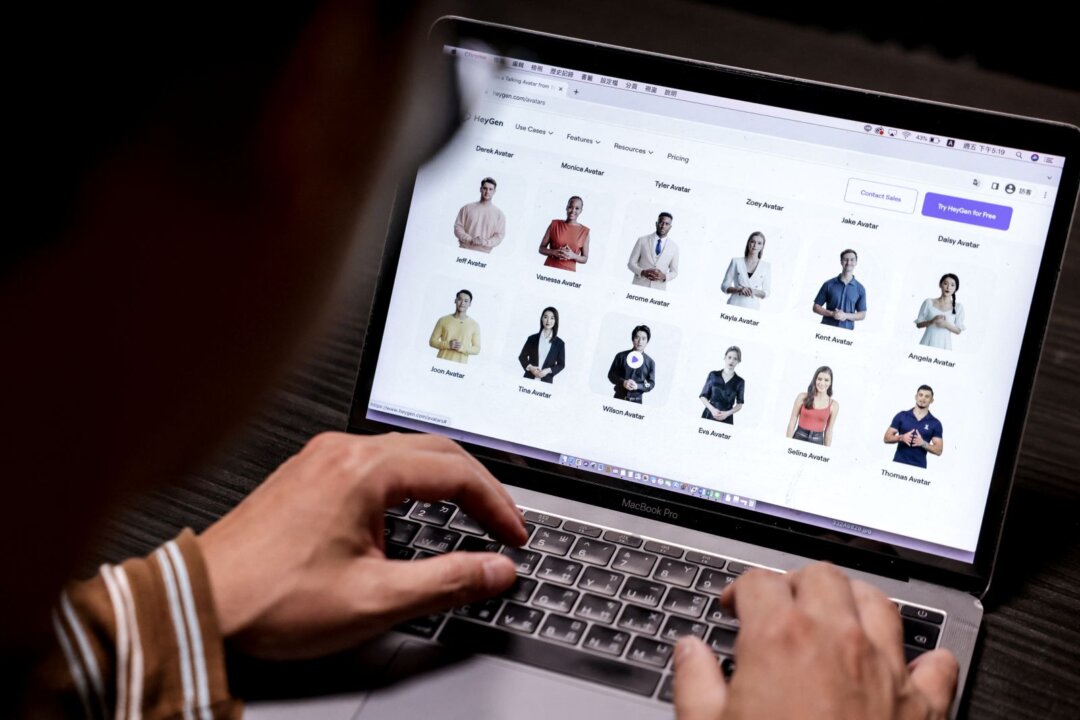
Photographs downloaded from the internet and taken of random passersby on Taiwanese streets were allegedly used by Chinese operatives to create fake Facebook identities, raising official concerns about the misuse of citizens’ personal data.
Taiwanese prosecutors issued a statement Nov. 20 alleging that a Chinese online operations team created 20,000 Facebook accounts posing as Taiwanese citizens, using some to promote a local political candidate and publish posts criticizing U.S. military action.
Taiwan’s Mainland Affairs Council (MAC) told The Epoch Times on Nov. 25 that the Chinese Communist Party (CCP) has long collected Taiwanese citizens’ personal information for political influence operations, infiltration, and even transnational repression—the intimidation or persecution of individuals beyond a country’s borders.
“This is not an isolated case,” Joanna Wu of the MAC said in a written response.
The warning came ahead of Taiwan’s Nov. 28 local elections and weeks after researchers identified China-linked social media accounts allegedly posing as American voters.
Manufacturing Fake Online Identities
The alleged operation emerged from the investigation of Chou Hsiao-yun, a Taiwan People’s Party candidate for the Taoyuan City Council, who was indicted on Nov. 20 over alleged Chinese campaign funding and other offenses.
Chou has denied receiving foreign campaign funds or acting on instructions from foreign forces.
During a meeting in the Chinese coastal city of Xiamen in November 2025, Chinese operatives allegedly asked Chou to supply background information for 2,000 fictitious identities and photographs of Taiwanese citizens in everyday clothing to disguise the origins of their online accounts.
Chou allegedly instructed an associate to download 100 photographs from the internet and asked an assistant to photograph random passersby using a smartphone.
Prosecutors alleged that the Chinese team used the photographs in two ways: placing real citizens’ photographs on Facebook accounts it already controlled and using artificial intelligence (AI) to generate new faces based on the facial features of Taiwanese people.
The operatives also used AI tools to give accounts Taiwanese names and personal descriptions consistent with life on the island.
The accounts were allegedly used to post comments and likes on Chou’s Facebook posts, creating a false impression of widespread public support.
When the United States captured Venezuelan leader Nicolás Maduro on Jan. 3, the Chinese team allegedly published posts criticizing the U.S. military operation. They allegedly used the incident as a training exercise to make their future online comments sound more like those of ordinary Taiwanese citizens.
One operative also allegedly instructed Chou on using specific software to influence what prosecutors described as the AI databases of OpenAI’s ChatGPT and Anthropic’s Claude. The Prosecutors Office’s press release did not identify the software or establish whether the instructions were implemented.
Meta, OpenAI, and Anthropic did not respond to requests for comment by publication time.
Similar impersonation tactics have been documented in the United States. On Oct. 30, online intelligence firm Graphika reported that accounts associated with a Chinese influence operation known as Spamouflage were among those posing as American voters and distributing divisive political content on X ahead of the U.S. midterm elections.
Data Collection and Surveillance
Citing findings by Taiwan’s National Security Bureau, Wu said CCP-linked entities have used technology companies to collect information online about Taiwanese politicians, elected officials, and opinion leaders, including their personal relationships and political views.
The information is then analyzed to target individuals with propaganda or attacks, she said.
Chinese authorities have also allegedly recruited people inside Taiwan to conduct physical surveillance.
On Nov. 17, Taiwanese prosecutors indicted three individuals associated with two private investigation firms over allegations of illegally collecting personal information and secretly monitoring and photographing Taiwanese citizens and their families on instructions from Chinese police.
Information supplied to Chinese police has been used to issue public wanted notices offering rewards and to intimidate targeted individuals, Wu said.
Whether the photographs collected through such operations have been used in facial recognition systems requires further investigation, she said.
“The CCP has already made extensive use of facial recognition and AI surveillance technologies in mainland China,” Wu said, warning that combining such technologies with collected personal information could enable Chinese authorities to identify individuals and track their activities and personal relationships.
Strengthening Legal Protections
Taiwan has established an interagency mechanism to counter transnational repression and is considering amendments to its Anti-Infiltration Act to strengthen penalties for individuals who conduct illegal surveillance, harassment, or threats on behalf of hostile foreign forces, Wu said.
She added that Taiwan is sharing information about CCP interference and transnational repression with international partners.
The Taipei Economic and Cultural Representative Office in the United States did not respond to a request for comment by the time of publication.
In Washington, the U.S.-China Economic and Security Review Commission recommended on Nov. 18 that Congress establish a Taiwan Democratic Resilience Initiative by amending and extending the Taiwan Enhanced Resilience Act.
The proposed State Department-led initiative would be implemented through the American Institute in Taiwan in coordination with U.S. intelligence and other government agencies. It would strengthen Taiwan’s civil society, help counter CCP political infiltration, election interference, and disinformation, and include information sharing with U.S. allies and partners.
We had a problem loading this article. Please enable javascript or use a different browser. If the issue persists, please visit our help center.