
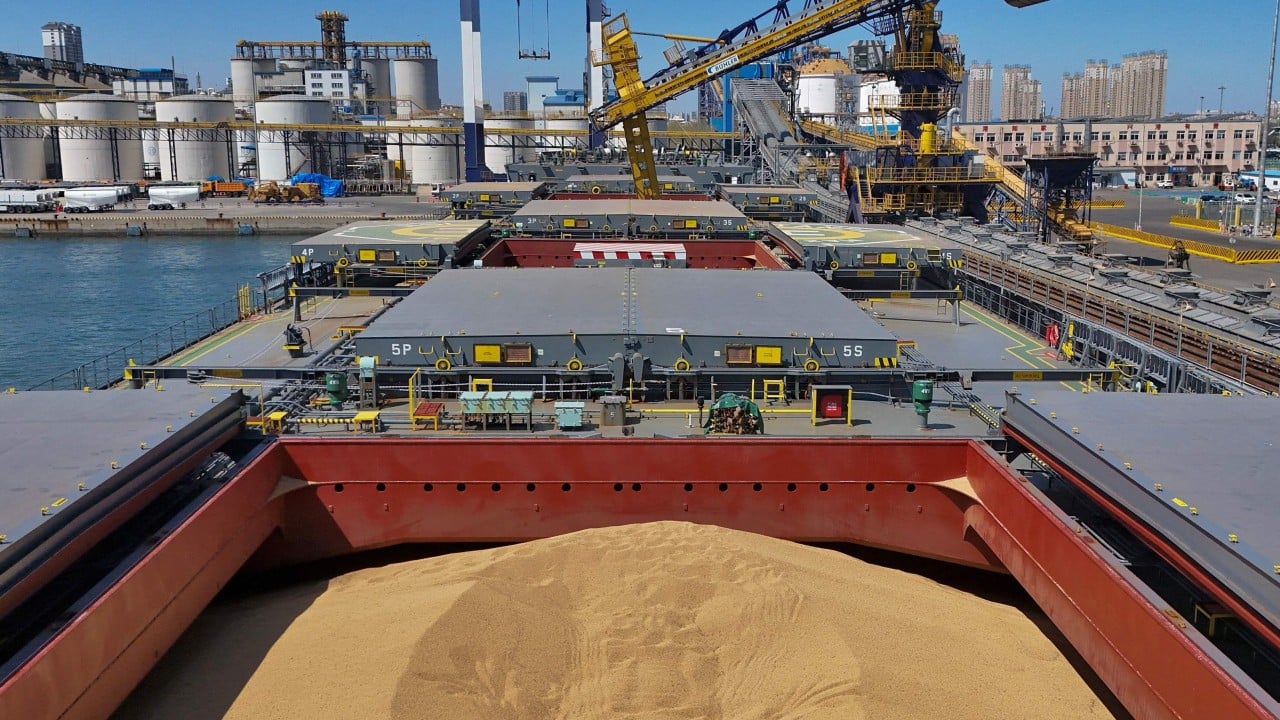
China’s purchase of “double-digit billions” in American agricultural products touted by US officials following President Donald Trump’s state visit to Beijing appears to be a marginal addition after factoring in previous commitments, analysts said, adding that new orders could reduce the country’s reliance on Brazil for soybeans and other items.
US Trade Representative Jamieson Greer said on Friday that he expects to see China buy a 10-figure sum in agricultural products annually over the next three years, including soybeans and other unspecified items, but most of this estimate appears to be based on earlier soybean purchase agreements.
Advertisement
Per the White House, China had already agreed to buy at least 25 million tonnes of soybeans annually from the US from 2026 to 2028 following a summit between the two countries’ leaders in Busan, South Korea last autumn. This, according to data for previous shipments from the US Department of Agriculture (USDA), would meet that estimate on its own.
Meanwhile, Chinese analysts said any new purchases of products aside from soybeans would be incremental, as Beijing was reluctant to accept purchase demands that exceed its actual needs or hinder its goal of building up its domestic supply.
“Beijing will not accept purchase demands exceeding its actual needs or driven purely by political motives,” said Lin Shen, a researcher with the Institute of World Economics and Politics at the Chinese Academy of Social Sciences.
In 2024, before Trump’s second term and his renewal of the bilateral trade war, China imported about 27 million tonnes of American soybeans worth about US$12.6 billion, according to the USDA.
Advertisement
US Treasury Secretary Scott Bessent suggested the latest deal might not be focused around soybeans in an interview with CNBC on Thursday, saying that soybeans have been “taken care of” in reference to the previous purchase commitment.