
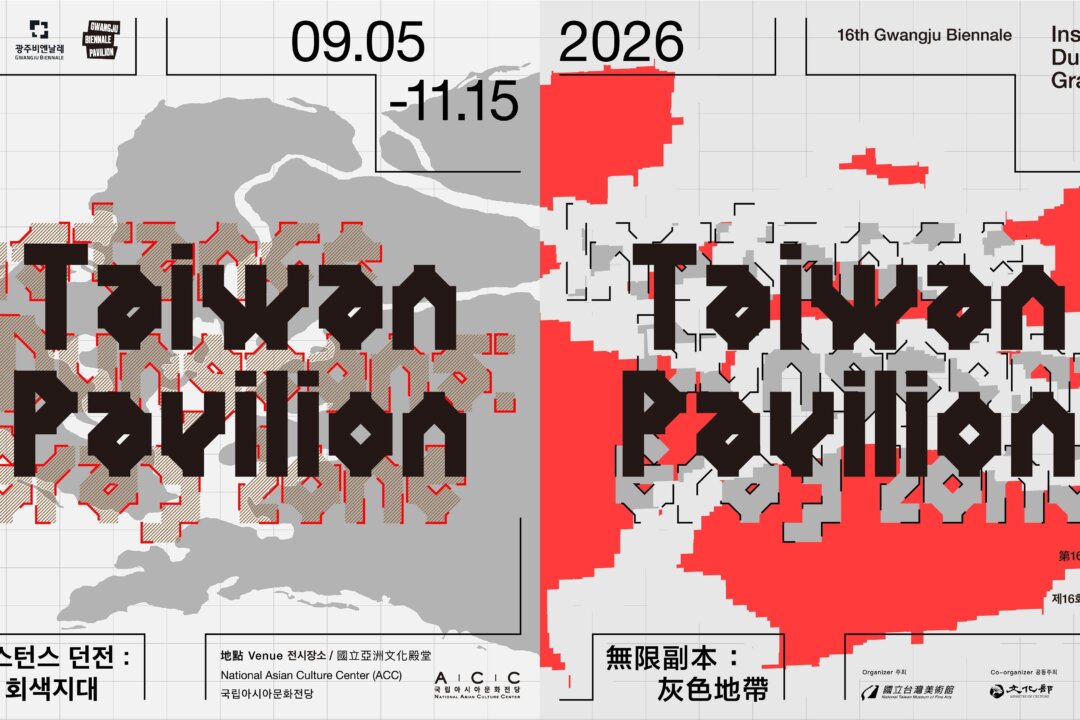
Taiwan’s exhibition at the 16th Gwangju Biennale in South Korea is set to open on Sept. 5 under the name “Taiwan Pavilion,” after organizers reversed an earlier decision to replace the name with an institutional acronym.
Taiwan’s Culture Ministry said “Taiwan Pavilion” had been used during the project’s proposal, review, contracting, and preparations since April. In June, the Gwangju Biennale Foundation began using “NTMoFA Pavilion” instead, an abbreviation for the National Taiwan Museum of Fine Arts.
The foundation didn’t say Chinese pressure prompted the June change. It has said the Taiwanese museum had been classified as an institutional participant rather than a national pavilion.
Beijing has previously pressured foreign companies over how they identify Taiwan. In 2018, China’s civil aviation regulator ordered 44 foreign airlines to change Taiwan references on their websites.
Taiwanese artists took their objections public in August, drawing support from dozens of other artists and curators participating in the biennale. On Aug. 25, the foundation restored the name “Taiwan Pavilion.”
Chinese diplomats then pressed Gwangju authorities and organizers to reverse the decision. The Chinese pavilion team stopped installation work and announced on Sept. 3 that it was withdrawing from the pavilion project.
Artists Insist on ‘Taiwan Pavilion’
Taiwan Pavilion curator Chen Hsiang-Wen and participating artists publicly challenged the name change on Aug. 15, saying the foundation had replaced “Taiwan Pavilion” without their consent and despite repeated objections from the National Taiwan Museum of Fine Arts.
“This goes beyond the removal of a name,” the artists wrote. “It is a threat to freedom of expression and to the global artistic community.”
Thirty-six artists and curators participating in the biennale signed an open letter calling on the foundation to restore “Taiwan Pavilion.” The signatories included participants from the main exhibition and 11 other pavilion projects.
“Art institutions should not become instruments for suppressing how people identify themselves,” the letter said.
Taiwan’s team also said the Asia Culture Center, a state-run arts complex in Gwangju that manages the exhibition venue, repeatedly refused it access beginning Aug. 18, leaving the team unable to begin installation as scheduled.
Name Restored
The foundation’s Aug. 25 decision allowed “Taiwan Pavilion” to appear at the exhibition and in official documents and promotional materials, according to Taiwan’s Culture Ministry.
Culture Minister Lee Yuan said a statement announcing Taiwan’s withdrawal had already been drafted, but the Taiwanese side kept negotiating because it had confidence in South Korea as a democracy and the support of fellow artists.
“We believe in Korean democracy,” Lee wrote. “We believe in the power of the Korean people, as well as in the friendship of artists from around the world.”
Lee recalled witnessing firsthand South Korea’s June Democratic Struggle in Seoul in 1987.
“That is the true reason we did not give up,” he wrote.
Chinese Pressure Follows
Chinese diplomatic pressure became public after the name was restored. Chinese Ambassador Dai Bing raised the restored name during an Aug. 27 meeting with Gwangju Mayor Min Hyung-bae and expressed concern over the decision, Yonhap News Agency reported.
China’s Consul General in Gwangju said on Sept. 3 that Chinese diplomatic representatives had repeatedly contacted the city government and biennale organizers seeking a reversal.
South Korea’s Foreign Ministry said the pavilion designation had been decided independently in the cultural and arts sector and did not represent a change in Seoul’s existing policy toward Taiwan, Yonhap reported.
Akio Yaita, a Taiwan-based Japanese journalist and commentator, described the result as a victory for Taiwan.
“In the end, it wasn’t Taiwan that was forced out,” Yaita wrote. “‘Taiwan Pavilion’ stayed, and China itself left.”
The pavilion program is scheduled to run from Sept. 5 through Nov. 15. As of Sept. 3, the biennale’s official participant list continued to identify Taiwan by name.
We had a problem loading this article. Please enable javascript or use a different browser. If the issue persists, please visit our help center.