
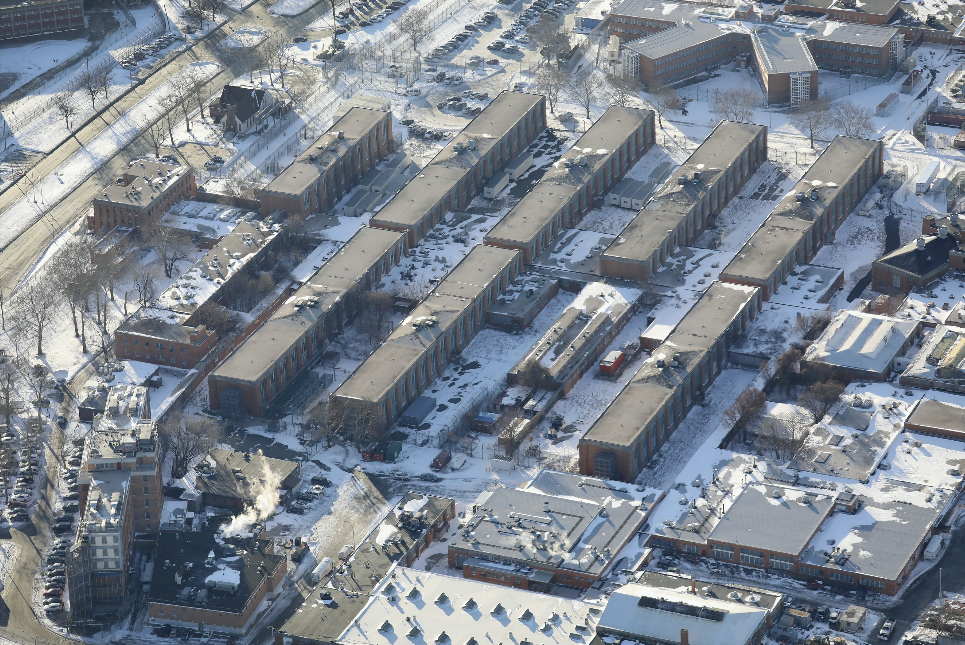
New York Mayor Zohran Mamdani has released the city’s comprehensive plan to close the Rikers Island jail complex, aiming by 2032 to move everyone held there into four smaller jails, plus three Outposted Therapeutic Housing Units and hospital facilities across the boroughs.
The Brooklyn jail would open in 2029, followed by the Bronx and Queens in 2031, and Manhattan in 2032, according to the plan. The city would also spend $146 million next fiscal year on mental health care, substance use treatment, education, job training, and services for crime victims, the mayor’s office said in statement.
“This is five years later than the original deadline of 2027, a new timeline made necessary by the prior administration’s delays,” Mamdani said on Nov. 20 at a City Hall news conference.
Former Mayor Eric Adams said in March 2025 that “everyone seems to agree with me that 2027 is not a realistic time to close it,” adding that the city needed to deal with mental health crises.
The Independent Rikers Commission, a panel appointed to study how to close Rikers, also concluded that the city could not meet the deadline because “every facility is significantly behind schedule.” They said delays in signing the construction contracts were due mainly to the COVID-19 pandemic and market conditions.
The city’s decision to finish all design work before starting construction added roughly a year to each jail, it said, and construction costs had risen from an estimated $8.7 billion to $15.5 billion since 2019 because of post-pandemic inflation.
The plan to close Rikers was approved in 2019, and a 2021 law required the city to stop holding people on the island by Aug. 31, 2027.
Supporters pointed to decades of violence and poor conditions at the complex, which has been under a federal consent decree over the use of force since 2015, according to the city’s plan. They also cited the island’s isolation. With only a single bridge for access, trips can take hours for families and legal representatives.
The city’s design and construction department estimated that rebuilding would cost 8 percent to 15 percent more than construction of facilities in the boroughs and take years longer, according to the Independent Rikers Commission’s report.
The City Council must pass a bill to set the new date.
The plan depends on shrinking the jail population. About 6,600 people are held at Rikers today, according to the plan and city officials. The city projects that number will fall to no more than 4,100—contingent on the plan’s measures—by the end of 2032 through diversion programs, faster case processing, and reentry services.
Asked what happens if the population doesn’t fall that far, Mamdani said the four jails will have 4,160 beds, plus 340 therapeutic beds in city hospitals. He said he is confident the city won’t face that situation because of the plan’s upfront investments.
Chief Administrative Judge Joseph Zayas said the city brought Rikers’ population under 4,000 in 2020 and can do it again.
The plan lists $16.1 billion for the borough-based jails and hospital-based therapeutic units.
Council Member Sandy Nurse said closing Rikers will cost “a small fortune” but is necessary and urgent.
Addressing the concerns of residents near the planned sites, Mamdani said the borough jails “bring us closer to delivering that public safety.”
The plan also adds 236 therapeutic beds in Brooklyn and Bronx hospitals, restores an online bail payment portal that has been down since 2023, and creates a task force to reduce case delays.
Harvey Kushner, chair of the criminal justice department at Long Island University, who worked with programs at Rikers for years, said closing the complex is “a big mistake.”
“I think Rikers is a valuable asset and, if done correctly, can keep a damaged population away from the rest of society,” he told The Epoch Times.
Kushner said he didn’t think it was realistic to cut the jail population to 4,100, noting the system held about 21,000 people when he worked there. He acknowledged that many people held at Rikers have not been convicted, but said the public’s safety has to come first.
“To place these people in close proximity to the general public, I think, does the general public a great disservice.”
Nicole Gelinas, a senior fellow at the Manhattan Institute, told The Epoch Times the plan “makes no more sense today than it did seven years ago.”
She said the city could solve the problems by building new jails on Rikers itself and running more buses from neighborhood hubs to the island. Calling the borough jails the city’s most expensive capital project ever. she said they won’t have enough room for a realistic number of people in custody.
“For all of that money and delay, when the jails open, they will be immediately obsolete,” Gelinas said.
The Correction Officers’ Benevolent Association (COBA), the union for the city’s correction officers, praised parts of the plan but opposed its central premise. COBA Union President Benny Boscio said in a statement to The Epoch Times that this is the first time a plan to close Rikers has emphasized officers’ working conditions.
He welcomed the city’s commitment to fix more than 2,000 broken cell doors by April. The plan says 2,450 doors on Rikers still need to be replaced.
Boscio said capping the number of beds in the new system is “ill-conceived, irresponsible, and jeopardizes the safety of all New Yorkers.” He said the city can’t hold its jail population near 4,100 without releasing people charged with violent felonies, and that the only way to build a safe system is to invest in new facilities on Rikers.
“Public safety cannot be sacrificed to meet an arbitrary jail population target,” he said.
Nicholas Zifcak contributed to this report.
We had a problem loading this article. Please enable javascript or use a different browser. If the issue persists, please visit our help center.