
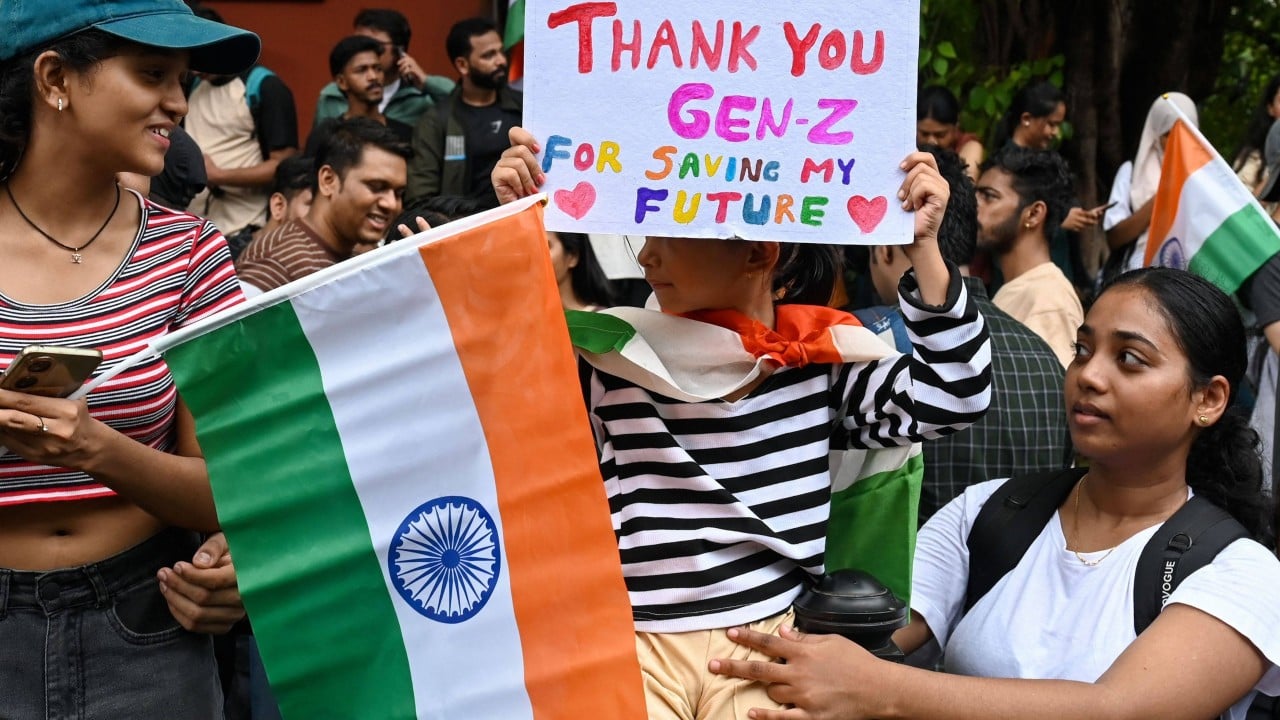
India’s latest youth protests began after examination papers were leaked. They could ultimately be seen as a referendum on the country’s development model.
The immediate trigger was the controversy around the National Eligibility-cum-Entrance Test (NEET), India’s highly competitive medical entrance exam. Evidence surfaced that examination papers had been leaked and sold. This scandal affected millions of candidates, leading to retests and the resignation of Education Minister Dharmendra Pradhan after weeks of nationwide demonstrations. This was a significant concession from a government that has often resisted calls for ministerial resignations.
The developments have surprised even seasoned observers of Indian politics. A satirical online movement called the Cockroach Janta Party, inspired by remarks comparing unemployed young people to “cockroaches”, quickly turned into a nationwide protest movement. Police crackdowns only drew more public attention through social media, while opposition politicians tried to turn the protests into a broader challenge to Prime Minister Narendra Modi’s government.
Whether these protests will reshape Indian politics remains uncertain. Their longer-term significance lies elsewhere. They highlight growing tensions between rapid economic growth and declining confidence in social mobility among India’s youngest generation.
For much of the past decade, India has been one of the world’s most promising economic stories. The World Bank describes India as one of the world’s fastest-growing major economies, noting that its economy has nearly quadrupled in real terms since 2000 while its share of global GDP has more than doubled. However, the same institution emphasises that sustaining growth now depends on job-rich private-sector expansion, investment in human capital and institutional reforms rather than just infrastructure spending.
India’s headline growth conceals structural vulnerabilities. Its labour force continues to add millions every year, but graduate underemployment remains high. The International Labour Organization has warned that educated young Indians increasingly struggle to find jobs in the formal labour market despite rising educational attainment, creating a disconnect between qualifications and opportunity.