
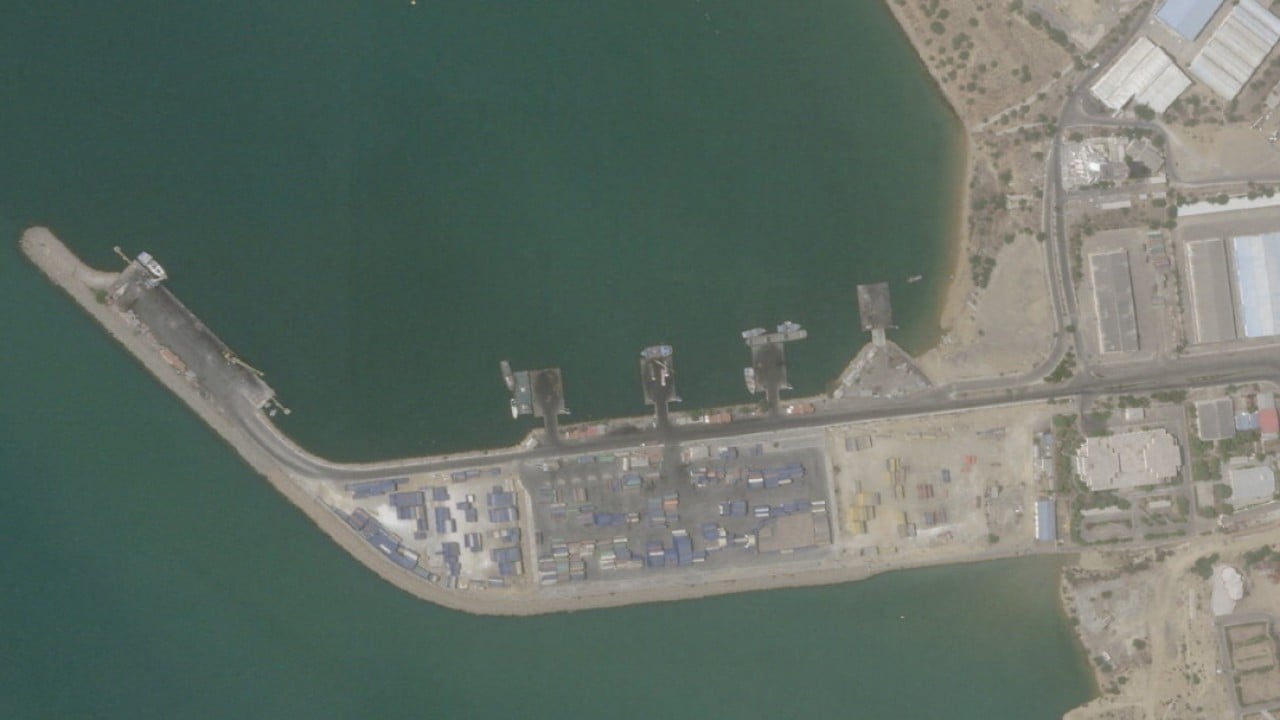
The United States has spent decades trying to blunt China’s strategic rise. Yet in the Middle East, sanctions and the war against Iran are now dismantling one of the few assets built to constrain Beijing’s influence in the region.
The Iranian port of Chabahar has received strong backing from India, which hoped it would gain both a trade corridor into Afghanistan and Central Asia that bypassed Pakistan and a strategic counterweight to the Chinese-operated Pakistani port of Gwadar.
Both Washington and New Delhi have long feared that Gwadar – the key element of the China-Pakistan Economic Corridor (CPEC) – could give the Chinese navy a logistics hub and intelligence window close to the Strait of Hormuz.
Successive US administrations recognised Chabahar’s value in helping to counter that risk and quietly granted sanctions waivers that allowed the Gulf of Oman port to continue operating even as Washington turned up the heat on Iran.
The core Indian commitment to the port terminal stood at US$120 million – a modest sum compared with the estimated US$62 billion poured into the CPEC, a flagship project for Beijing’s Belt and Road Initiative.
But the calculation has shifted under US President Donald Trump, who has adopted a more conciliatory tone towards China. Meanwhile, he has shown markedly less enthusiasm for the Quad – a security partnership between the US, India, Australia and Japan – even to the extent of causing a summit to be cancelled last year when he refused to travel to India for the event.