
After China became only the second nation after the US to achieve the controlled recovery of an orbital-class rocket booster, the spotlight has fallen on the domestic shipbuilder behind the design of the recovery platform.
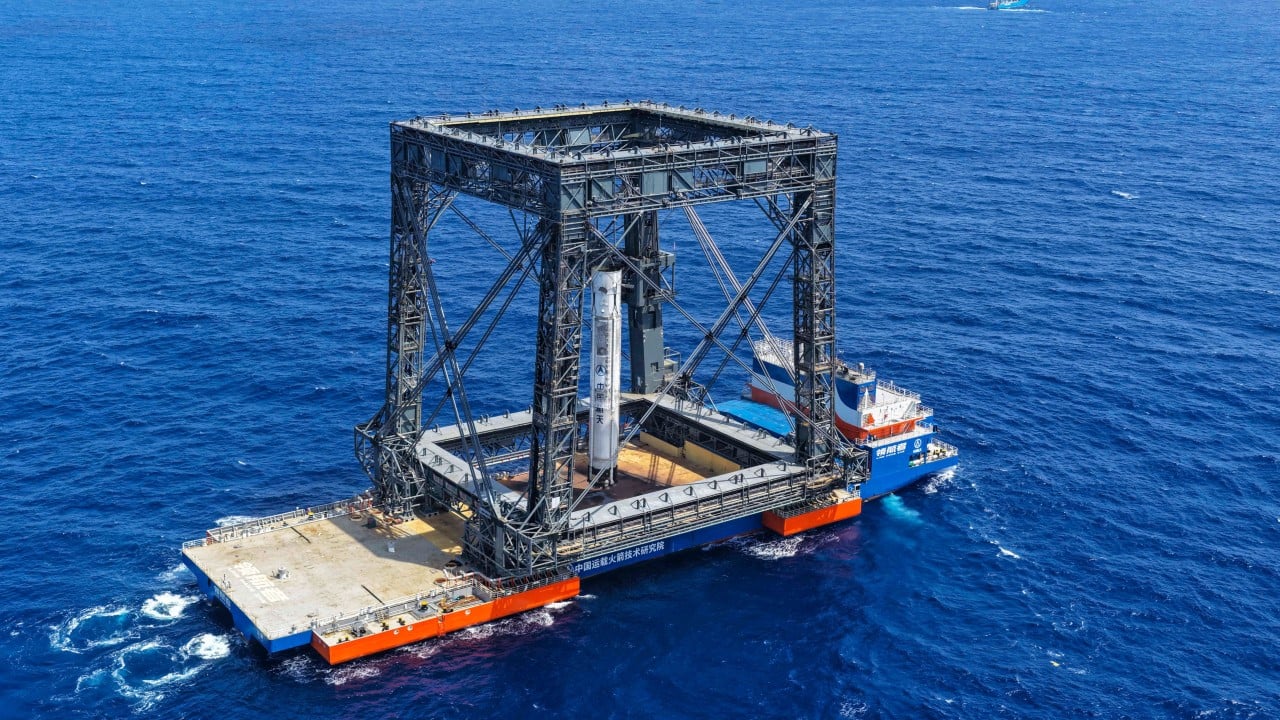
Following the maiden launch of China’s reusable Long March-10B rocket on Friday, the vehicle’s first-stage booster returned vertically and was caught by the Linghangzhe recovery platform, China’s first sea-based rocket recovery vessel to use a net-capture system.
The platform was developed by Guangzhou Shipyard International (GSI), a subsidiary of China State Shipbuilding Corporation, in collaboration with the Chinese Academy of Sciences, according to the China-based maritime industry news platform eWorldship.
The feat marks another step in China’s efforts to narrow the gap with the United States in reusable launch technology – a gap that opened after Elon Musk’s SpaceX began developing reusable rockets to slash costs – while showcasing the country’s expertise in shipbuilding.
Unlike reusable rockets developed by SpaceX and Jeff Bezos’ Blue Origin, which land autonomously on deployable legs, the Long March-10B uses four hooks that latch onto a net suspended from a sea-based recovery platform.
“The successful recovery marks China’s mastery of the full recovery technology for heavy-lift liquid rockets, ending the long-standing dominance of a single overseas-developed rocket recovery approach and establishing the world’s first sea-based net recovery system,” eWorldship said.
According to the news platform’s report, published on Saturday, the Linghangzhe was converted from an unpowered barge, a vessel without engines that must be towed by other ships.