
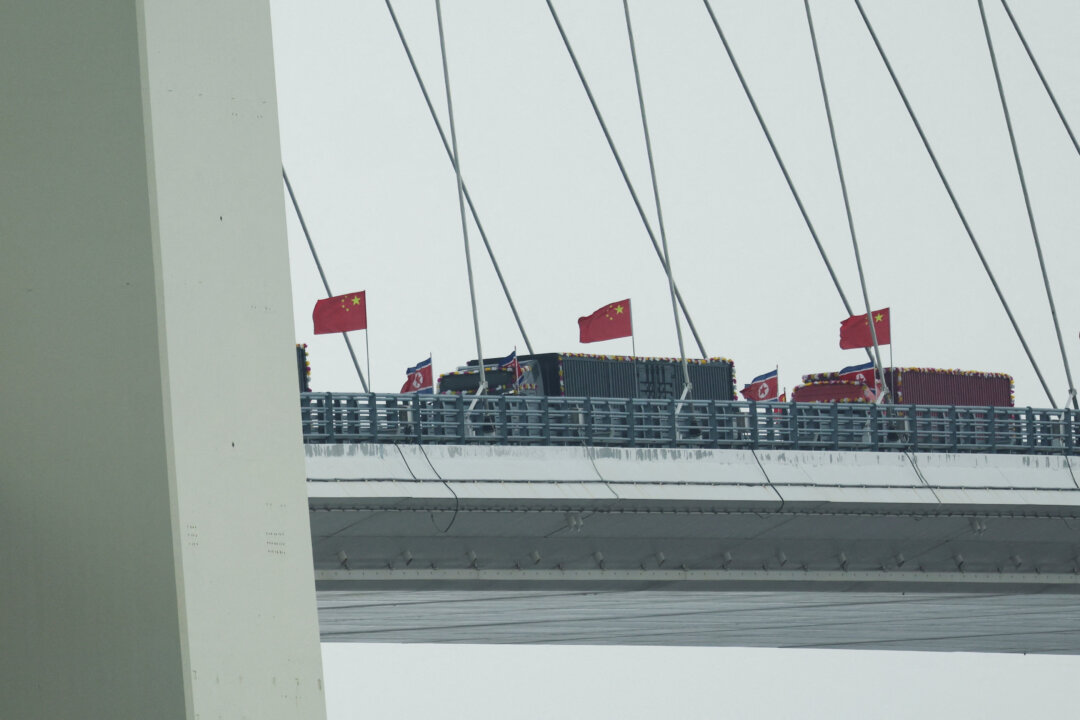
China and North Korea officially opened the biggest border bridge between the two countries on Oct. 15, after years of delay. Analysts said it shows the delicate dynamics in geopolitics in the region.
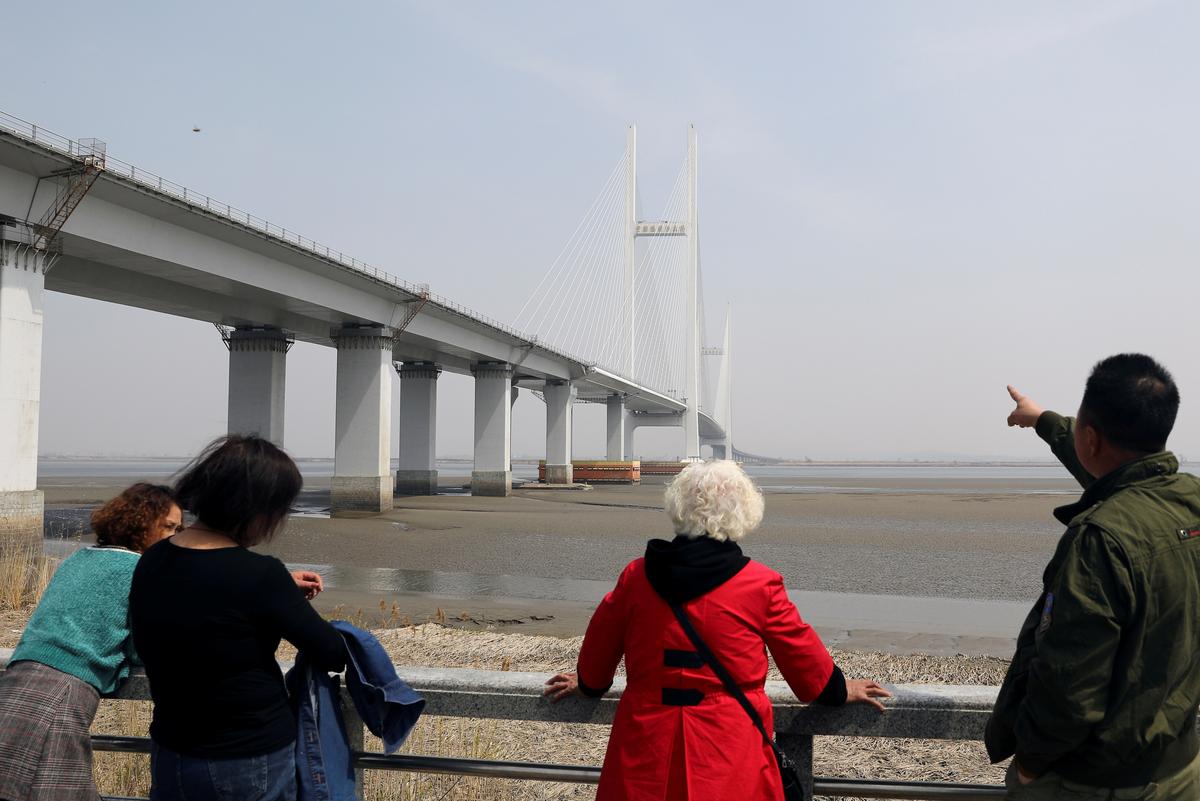
The New Yalu River Bridge, connecting Dandong city in China’s Liaoning Province with Sinuiju city in North Korea’s North Pyongan Province, officially opened to traffic on Thursday after sitting idle for nearly 12 years.
The opening ceremony for the New Yalu River Bridge was held with the premiers of China and North Korea delivering video addresses, according to Chinese state media Xinhua News Agency.
The bridge is a four-lane highway bridge spanning 1.9 miles. Its construction was funded by China at a cost of approximately 2.2 billion yuan ($329 million). Although the main span was completed in 2014, the bridge had never opened to traffic because the North Korean side halted the construction of connecting roads and border crossing facilities.
Construction work on the New Yalu River Bridge resumed following Chinese leader Xi Jinping’s visit to North Korea in June.
The opening of the bridge followed the Sept. 7 opening of the first road bridge between North Korea and Russia, which spans the Tumen River and connects North Korea’s Rason region with Russia’s Khasan region.
North Korea is in dire need of external support due to international sanctions, and mostly relies on China and Russia for support, Ma Chun-wei, an assistant professor at the Graduate Institute of International Affairs and Strategic Studies at Tamkang University, told The Epoch Times.
“Because of the sanctions, most supplies need to be transported from the Chinese side. The opening of the bridge facilitates increased cross-border trade, which is not a bad thing for North Korea,” he said.
Kim Gyu-beom, an associate research fellow at the National Intelligence Service’s Institute for National Security Strategy in South Korea, pointed out in a report published Oct. 14 that the bridge’s opening is a signal that North Korea–China economic ties, long constrained by international sanctions, are beginning to find a new path forward.
However, the new bridge could increase the inflow of Chinese goods into North Korea, thereby exacerbating its trade deficit and deepening its dependence on China, according to the report. North Korea’s trade deficit with China reached $1.85 billion in 2025.
During the COVID-19 pandemic, North Korea largely sealed its border with China, and relations between the two countries cooled. High-level official visits between China and North Korea have gradually resumed over the past two years, and the countries have restarted passenger train services as well as direct flights between Beijing and Pyongyang.
Meanwhile, North Korea and Russia relations have become much closer, as North Korea has supplied weapons to Russia and sent troops to help Russia in its war against Ukraine. In return, Russia has supplied North Korea with missile development technology.
Ma said the Chinese regime is taking steps to reaffirm its status as North Korea’s primary partner after observing the deepening ties between North Korea and Russia.
“Both China and Russia seek to maintain influence over North Korea, yet North Korea has drawn closer to Russia since the outbreak of the Russia–Ukraine war,” he said. “Beijing worries that North Korea’s continued tilt toward Russia undermines its own control over the country. It hopes that the opening of the Yalu bridge will allow it to exert more influence on North Korea through economic means.”
In recent days, U.S. President Donald Trump stated he “may” meet with North Korean leader Kim Jong Un during his trip to Asia in November.
“What North Korea is seeking right now is leverage. If Pyongyang maintains good relations with both China and Russia, its bargaining power in negotiations with the U.S. will be maximized,” Ma said.
“So, the opening of the new Yalu bridge this time shows North Korea’s such intention, while China has its calculations,” he said.
Yi Ru and Tang Bing contributed to this report.
We had a problem loading this article. Please enable javascript or use a different browser. If the issue persists, please visit our help center.