
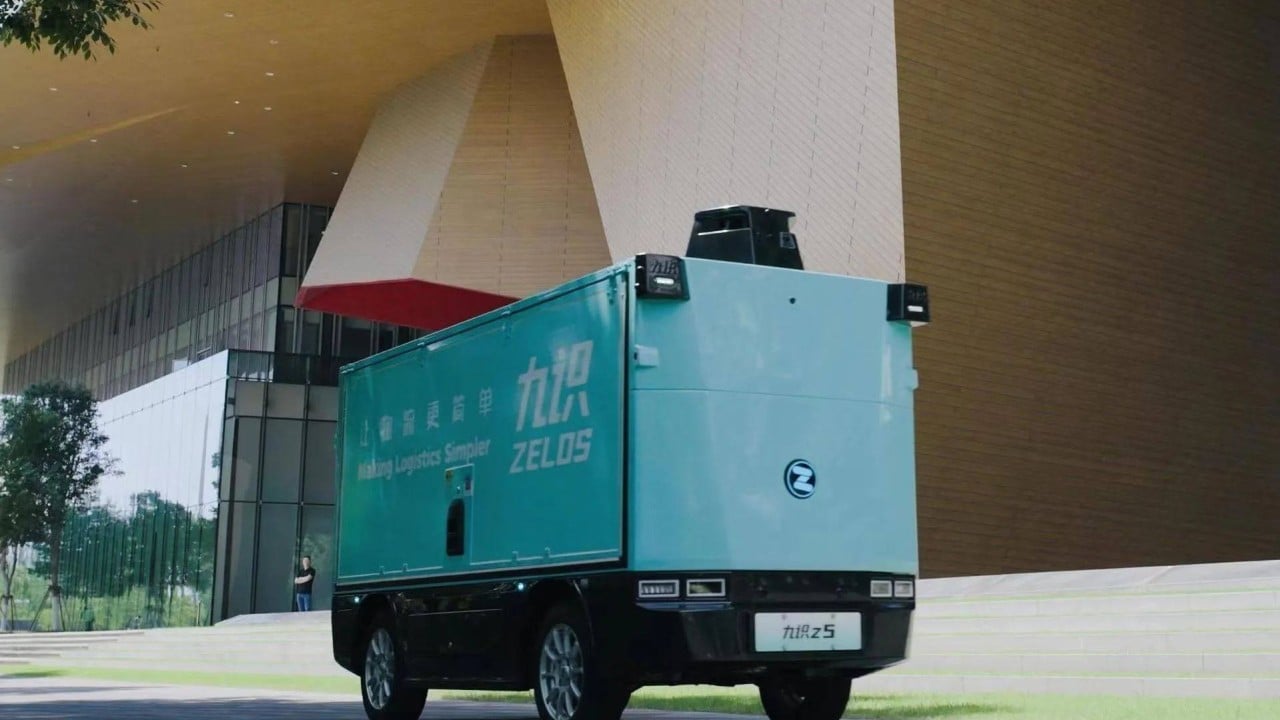
Chinese robovans could generate twice as much revenue in Southeast Asia and the Middle East than in the domestic market, making overseas expansion a must for profitability, according to autonomous driving leader Zelos Technology.
The company claims to have built the world’s largest robovan fleet since it was founded in Suzhou in 2021, but scaling up international business was key for survival, said Sean Zhang Xuchen, co-founder, chief operating officer and head of global business at Zelos.
“Ultimately, the key to competitiveness lies in the capabilities of AI,” he said, adding that the company had positioned itself as an artificial intelligence solution provider rather than a vehicle operator.
Advertisement
China’s robovan industry has entered a period of consolidation, marked by the merger of Zelos with Cainiao’s autonomous vehicle unit in January to form a US$2 billion automated delivery giant. Alibaba Group Holding, which controls Cainiao, owns the South China Morning Post.
In addition, conventional carmakers like Changan Automobile and Guangzhou Automobile Group are collaborating with robovan start-ups, while Geely’s Farizon unit has launched robovan models.
Advertisement
Southeast Asia and the Middle East are the top markets for Zelos, even though robovan charges there are lower than in Europe and the US. Zhang said revenue from the two emerging markets combined was double that of mainland China, driving up gross profit margins to above 50 per cent.