
News Analysis
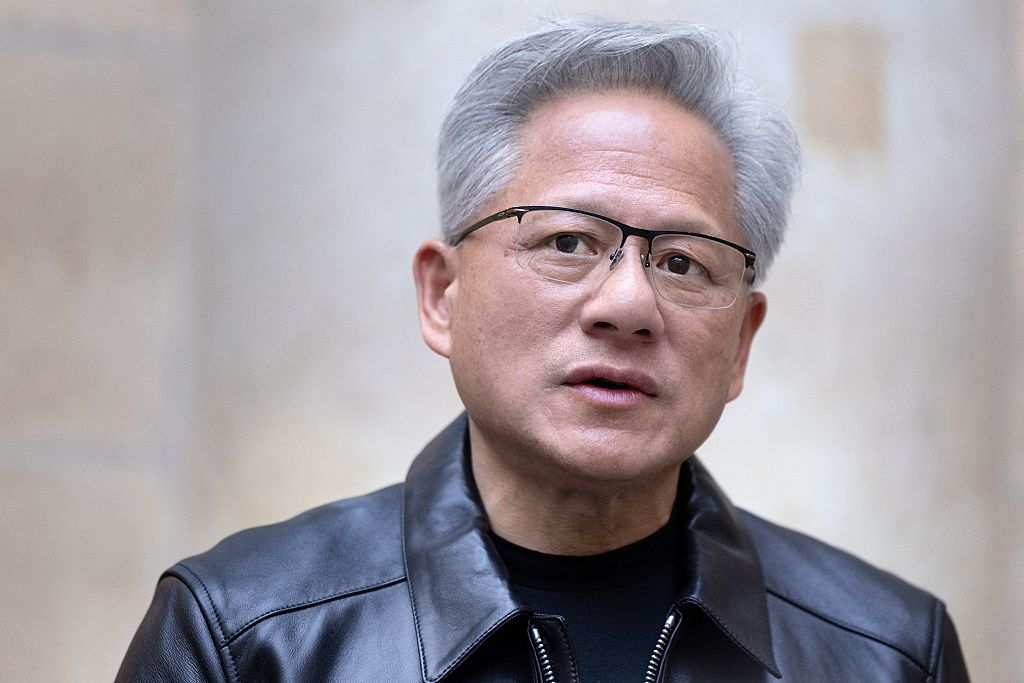
Nvidia co-founder and former CEO Jensen Huang is facing growing scrutiny regarding corporate and national security following allegations of a relationship with Chinese businesswoman Alice Huang.
The New York Times first reported on the Nvidia CEO’s relationship with Alice Huang, also known as Huang Le, who previously served as an executive at Megaspeed International, a Singapore-based data center operator and one of Nvidia’s largest overseas customers.
Citing unnamed sources, a New York Times report published on Nov. 6 stated that Alice Huang was identified by U.S. intelligence officials as having been recruited by China’s Ministry of State Security, the regime’s premier intelligence agency.
Washington is already moving to tighten advanced-chip export controls, close transshipment loopholes in Southeast Asia, and strengthen security vetting of technology executives.
Four analysts interviewed by The Epoch Times say additional actions are possible, and they also warned that Beijing’s intelligence operations targeting influential Western figures reflect its ambitions extending beyond acquiring advanced semiconductors to competing for global AI leadership.
A Broader CCP Tech Strategy
Billions of dollars’ worth of Nvidia’s advanced AI chips have reached Chinese companies through both U.S.-approved sales and alleged illicit transshipment networks.
Sun Kuo-hsiang, a professor in the Department of International Affairs and Business at Taiwan’s Nanhua University who specializes in Asia-Pacific security and international relations, told The Epoch Times that if the allegations against Alice Huang are accurate, the case could point to a broader technology strategy by the Chinese Communist Party (CCP).
“Beijing’s objective goes beyond obtaining AI chips and commercial secrets,” Sun said. “By cultivating relationships with influential corporate executives such as [Jensen] Huang, the CCP could gain insight into U.S. technological development, supply-chain arrangements, and the practical effects and vulnerabilities of American export controls.”
Tang Jingyuan, a U.S.-based current affairs commentator specializing in Chinese politics, CCP elite dynamics, and U.S.-China geopolitical competition, described AI and semiconductor technology as the central battleground between the two countries.
“AI and chip technology are equivalent to the nuclear technology contested by the United States and the Soviet Union during the Cold War,” Tang said. “They are decisive strategic assets that will determine the direction of the new Cold War and whether the United States can maintain its position as the world’s leading power.”
Allen Zeng, a U.S.-based Chinese-language journalist with the Sound of Hope network and former senior computer engineer in Silicon Valley, offered a broader perspective on Beijing’s ambitions.
According to Zeng, even if China cannot surpass the United States in the most advanced semiconductor technologies in the near term, securing enough computing power to sustain relatively advanced AI models could give China-linked companies a competitive advantage in international markets.
The CCP’s pursuit of AI chips is therefore not simply about narrowing the technological gap with the United States. It also reflects Beijing’s ambitions to compete in the global AI industry and expand its technological influence in developing countries, Zeng said.
Southeast Asian Networks Under US Scrutiny
U.S. intelligence agencies suspect that Alice Huang used Megaspeed to help China circumvent American export controls and obtain advanced Nvidia processors.
China expert Peng Jian said the explosive growth of Alice Huang’s Singapore-based firm is a key reason it has drawn intense scrutiny.
In August 2019, Alice Huang sold a mainland Chinese gaming company she controlled to Hong Kong-listed developer 7Road for 1 billion yuan (about $150 million), according to Peng. In March 2023—shortly after Washington imposed its first sweeping AI chip export restrictions on China—7Road spun off its Singapore subsidiary, 7Road International Pte Ltd, to British Virgin Islands holding company Huang Le Limited. The Singapore unit was renamed Megaspeed International Pte Ltd, where Alice Huang served in senior management overseeing chip procurement and fundraising until leaving the company in 2025.
Despite maintaining only a modest storefront office in Singapore and listing between two and 10 employees on LinkedIn, Megaspeed saw its total assets jump 90-fold within a year—from roughly $33 million to nearly $3 billion—becoming Nvidia’s largest chip buyer in the Asia-Pacific region. In May, short-seller Culper Research alleged that Chinese tech giant Alibaba was secretly bankrolling the firm.
Peng told The Epoch Times that conventional business logic could not explain such rapid expansion. Instead, he said, Megaspeed’s real value lies in its corporate shell as a Singapore-registered entity.
“This is most likely a case of ‘Singapore laundering.’ Since U.S. export controls primarily screen buyers by nationality and place of registration, a Singapore corporate identity could allow shipments of restricted advanced chips to be cleared as compliant orders,” Peng explained.
Those suspicions were reinforced on Nov. 12, when Singapore’s Ministry of Home Affairs said servers purchased by Megaspeed had transited through Singapore and were re-exported directly to Malaysia without entering the local market.
“In other words, Singapore functioned here not as a market, but as a transit pipeline,” Peng said.
Tang shared a similar view, citing reports on Malaysian and Indonesian customs records. He added that the enormous procurement volumes, combined with Alice Huang’s relationship with Jensen Huang, warrant a thorough investigation by U.S. authorities.
“Through this special relationship between Alice Huang and Jensen Huang, the CCP has, in effect, broken through the containment wall of U.S. chip controls,” Tang said.
He noted that Jensen Huang held considerable influence in the global semiconductor industry and had a good personal relationship with President Donald Trump. If Beijing can influence Jensen Huang, it might also gain leverage over the direction of U.S. government policy, Tang said.
Sun said Nvidia’s crisis with Jensen Huang has exposed the systemic vulnerabilities in American export controls. Washington may now respond by reviewing its technology-control framework and further strengthening security scrutiny of corporate executives, chip transactions, and third-country supply chains, making it more difficult for China to obtain advanced technologies, he said.
Security Concerns Over Alleged MSS ‘Chip Team’
Reports on Alice Huang’s background have raised significant national security concerns.
Taiwan’s Liberty Times, citing U.S. sources, reported that the CCP’s central leadership had established an AI task force focused on competition with the United States. China’s Ministry of State Security (MSS) was part of the force and had established an internal unit known as the “Chip Team,” the outlet reported.
Alice Huang was alleged to be a member of this specialized unit.

The report further claimed that she was not the only woman directed by the MSS to conduct similar operations, alleging that more than one woman involved in such activities had entered major U.S. technology companies at different levels.
According to Liberty Times’ sources, Alice Huang’s responsibilities included establishing shell companies in third countries to procure chips and high-end servers while cultivating a personal relationship with Jensen Huang. The alleged objective was to encourage him to lobby Washington for relaxed export controls, while also increasing Nvidia’s commercial profits.
These allegations have not been independently verified.
According to the latest U.S. official statements, while the FBI has opened an investigation into related national security concerns and chip diversion allegations, U.S. Attorney General Todd Blanche stated that neither the Justice Department nor the FBI has reached a final conclusion on whether Alice Huang is a Chinese spy. Before departing for Asia on Nov. 16, President Donald Trump likewise said that “nobody has confirmed that,” noting that her status as a spy remains unproven.
Zeng said the controversy could have wider international political implications by drawing attention to the CCP’s alleged intelligence activities.
“This incident is quite shocking. It gives the whole world a clear opportunity to recognize the CCP’s unscrupulous tactics—stopping at nothing—while also reminding prominent figures everywhere, especially Western political and business leaders, to stay vigilant against the CCP’s ’swallows’ and romantic enticements,” he said.
In Chinese intelligence terminology, “swallows” refers to female operatives allegedly deployed to cultivate romantic relationships with influential targets to obtain confidential information or exert influence over important decisions.
Zeng said his warning—that prominent political and business figures in the United States and allied countries must remain alert to attempts to exploit personal relationships for strategic purposes—extends beyond the semiconductor industry.
Li Jing and Luo Ya contributed to this report.
We had a problem loading this article. Please enable javascript or use a different browser. If the issue persists, please visit our help center.