
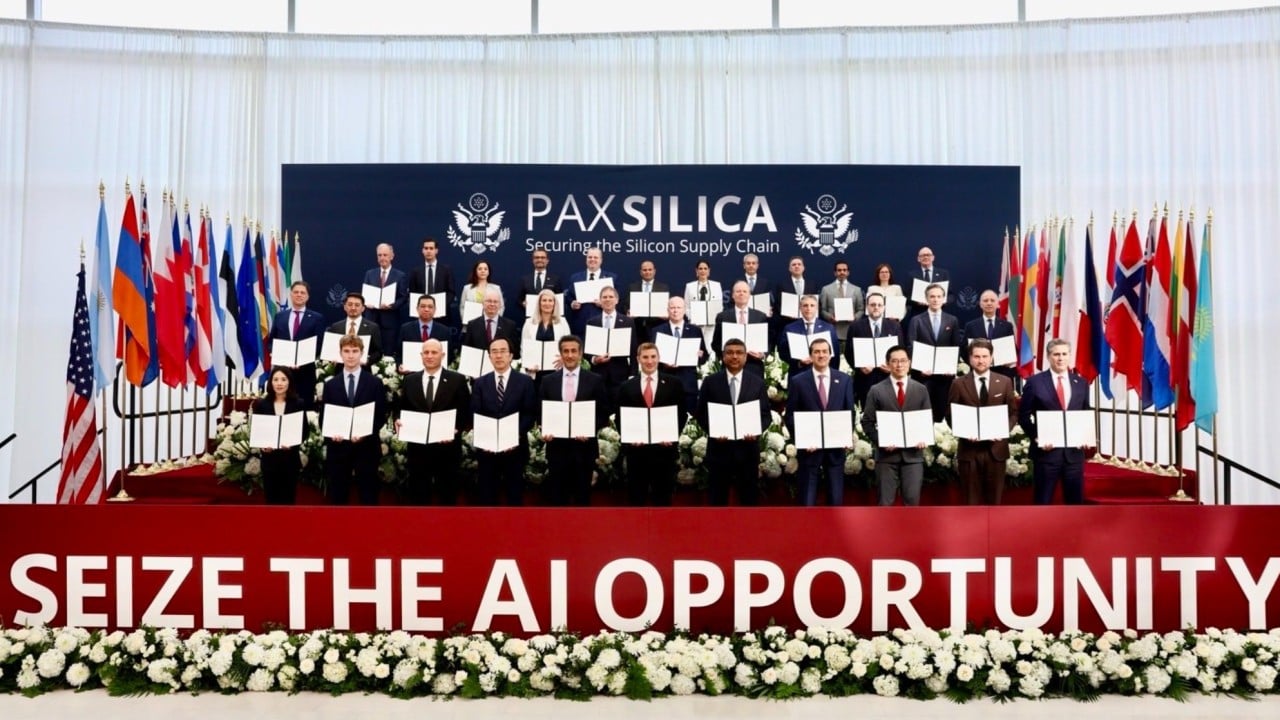
The struggle between the US and China over who will lead in artificial intelligence is one of the defining competitions of our time. In the second part of our exclusive interview with a key player defining Washington’s policy on AI, Jacob Helberg, US undersecretary of state for economic affairs, discusses America’s efforts to rally its allies and cut dependence on China by securing alternative rare earth and critical mineral supply chains.
By the time US President Donald Trump signed his military supply chain executive order on Monday, the need to cut dependence on China for critical minerals was already clear to American allies, according to a senior administration official leading parallel diplomatic efforts to rally partners.
“When it comes to the world, our allies were really put on alert by China’s export controls of minerals that have really come back to bite them in pretty serious ways,” Jacob Helberg, US undersecretary of state for economic affairs, told the South China Morning Post in an exclusive interview days before Trump’s action.
Helberg cited Japan and European countries as among those adversely affected by “supply imbalances” stemming from China’s export controls on seven rare earth elements imposed in April last year in response to US tariffs.
Beijing’s restrictions set off a scramble for supplies and led to factory shutdowns across the developed world, including in the United States.
While a temporary US-China truce in October resumed the flow of exports, countries such as Japan have continued to face shortages.