
A leading Chinese brokerage house has ended market making for the mainland’s only South Korea-focused exchange-traded fund (ETF), as Beijing steps up efforts to stabilise its capital markets and protect retail investors amid volatility in its East Asian neighbour’s stock market.
Shenzhen-headquartered China Merchants Securities withdrew as a liquidity provider for the Huatai-PineBridge China-Korea Semiconductor ETF barely a month after assuming the role on June 17, according to Shanghai Stock Exchange filings.
The retreat came amid heightened turbulence in South Korea, where time zone differences and foreign exchange risk in cross-border arbitrage left market makers exposed to sharp price swings and liquidity constraints, said Yiming Li, senior analyst for manager research at Morningstar.
“The decision was purely commercial and did not reflect our view on market directions,” China Merchants told financial media outlet JWView on Monday, the same day it quit the ETF.
The brokerage also ended market-making services – the provision of buy and sell quotes to provide liquidity – for five other Qualified Domestic Institutional Investor (QDII) products linked to Japan’s Nikkei 225 and the United States’ Nasdaq 100 indexes. QDII funds allow approved institutions to invest overseas within regulator-set limits.
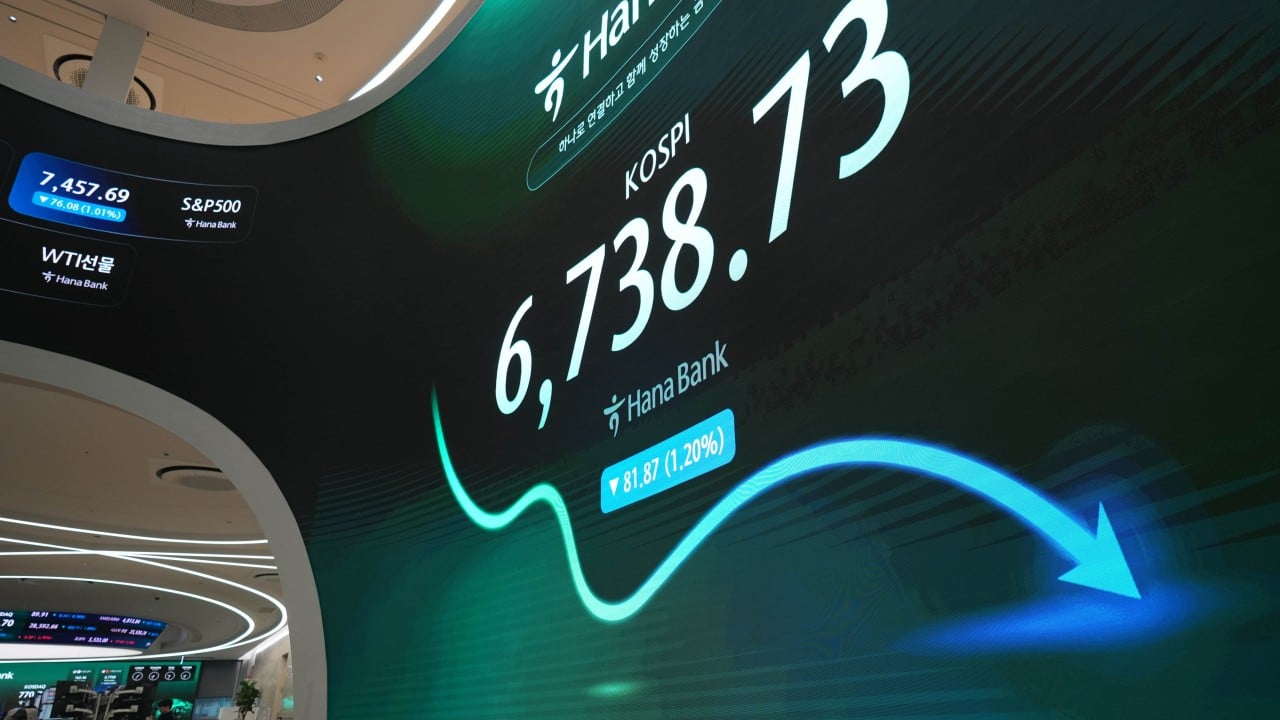
In Seoul, the benchmark Korea Composite Stock Price Index surged 116 per cent from about 4,224 points early this year to a record 9,385.59 on June 19, before plunging over 28 per cent to 6,516.27 on Monday. The sell-off triggered eight marketwide circuit breakers and 37 “Sidecar” trading halts – automatic cooling-off periods that temporarily pause algorithmic trading during volatile sessions.