
Social media companies moving to police their platforms at the risk of lawsuits shows how artificial intelligence (AI) firms would apply similar “guardrails” to their technology, a former Google executive argued in a recent interview.
YouTube rapidly evolved from a platform hosting illegal content to the household name it is today, and AI companies have a similar incentive for safety, according to former Google senior vice president Vic Gundotra.
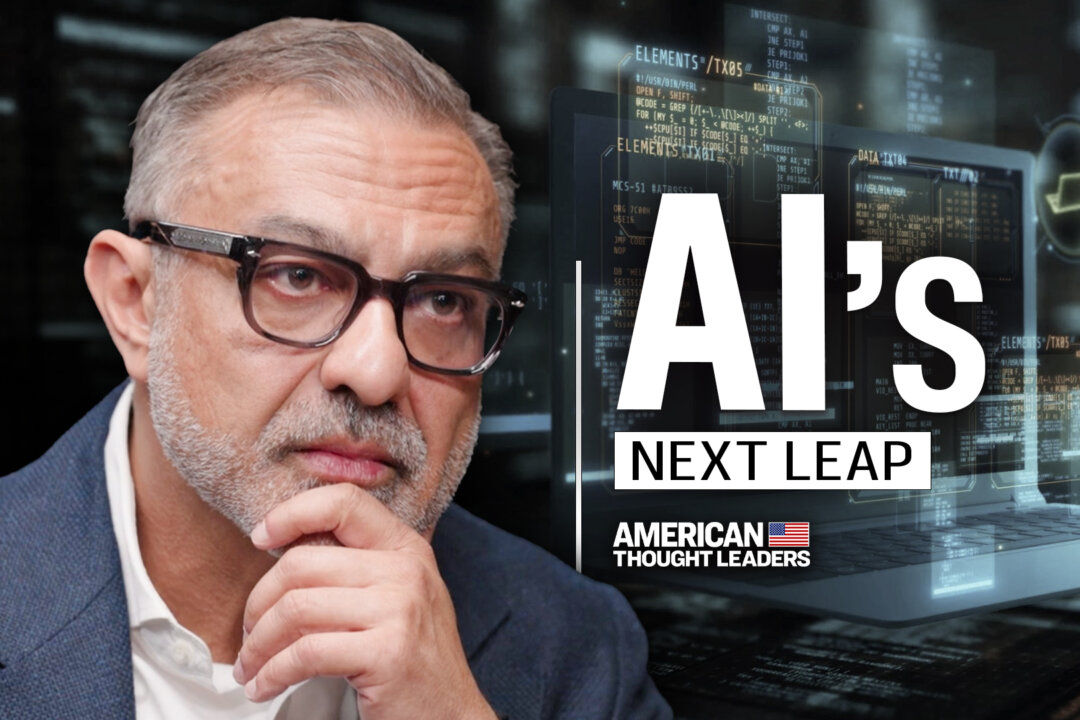
Gundotra discussed his thoughts on the calls for “guardrails” on emerging frontier AI in a wide-ranging interview with EpochTV’s “American Thought Leaders” that aired on Nov. 21.
As cutting-edge frontier AI models are linked to an increasing number of breaches of companies, websites, and government institutions, researchers and tech safety advocates have urged firms to adopt guardrails or safety protocols that would ensure the technology behaves the way humans intend.
Some argue that companies will not act unless compelled by the federal government through new regulations.
Gundotra believes AI companies will face legal incentives to keep their products safe, and described YouTube’s early evolution as a corollary.
Shortly after Google purchased the platform in 2006, Gundotra would go on to run an early version of YouTube mobile. He said that many were shocked that Google would purchase it in the first place, since early YouTube was notorious for users uploading illegal content, including professional sports games, entire movies, and music albums.
“People thought Google buying them was the equivalent of buying a hornet’s nest of legal problems, and it was a hornet’s nest of legal problems,” Gundotra said.
Despite these concerns, Gundotra said Google’s leadership believed in YouTube’s potential and even greenlit his efforts to assemble a team to build out an early mobile app. At the time, phone data was expensive, and the prospect of watching a video on a cell phone was almost unheard of, particularly with battery capacity limitations, he said.
YouTube was able to successfully evolve from an early-internet-era streaming platform with illegal content to the massive video and social media platform that it is today. This is a lesson in how tech companies have a financial incentive to institute the sorts of guardrails needed to keep their technology safe, Gundotra argued.
“Why isn’t porn on YouTube? Why isn’t it filled with horrible content of your neighbors posting salacious videos? Well, because Google was economically incentivized to build technology so that if you recorded a Monday night football game and you uploaded that to YouTube in seconds, we could detect that was copyrighted content and stop it,” he said.
“We proved to the courts that we were doing our best to stop movies, live television, music that we didn’t have a license to, and so those guardrails were an economic necessity for Google.”
If Google had not taken these use cases of its technology seriously and applied meaningful guardrails to stop them, the company would have been “sued out of existence,” Gundotra added.
“Today’s AI faces the exact same problem. If Anthropic or OpenAI or Google produces AI that breaks laws, the litigation burden is extraordinary, and somehow people seem to forget that,” he said.
Gundotra argued that those who worry AI firms will proceed with advancing their models “without any guardrails” don’t realize what incentivizes companies to keep their products safe.
“They don’t really think that these companies are filled with average executives like me, who have lawyers who come into the room and go, ‘Your AI is causing suicides. Your AI is breaking the electrical system. Your AI is causing harm in medicine,’” he added.
Gundotra acknowledged that YouTube’s early days were difficult, and suggested AI may go through a similar transition process but that the companies will make their AI safe.
“I’m not saying those companies aren’t going to make mistakes, but they’re going to be corrected very quickly,” he said.
The debate over AI safety has reached a breaking point this year after autonomous AI agents were linked to more than a dozen breaches, bypassing security protocols and hacking private companies, research institutions, public websites, and government agencies.
The Trump administration has downplayed fears over AI safety, with the president assuring concerned critics that self-regulation by tech companies is sufficient to rein in any excesses from the models’ capabilities.
Some AI safety advocates have gone as far as pushing for direct regulatory intervention from Congress, and others have called for a new agency to oversee the nascent technology.
In parallel with the litigation playing out in the AI industry, Facebook-maker Meta settled a landmark multi-state lawsuit earlier this year accusing it of deliberately designing its social media platforms to be addictive to children.
The lawsuit’s settlement forced Meta to implement significant changes to its algorithms and platforms for minors that many advocates had called for in the months and years leading up to the case.
We had a problem loading this article. Please enable javascript or use a different browser. If the issue persists, please visit our help center.