
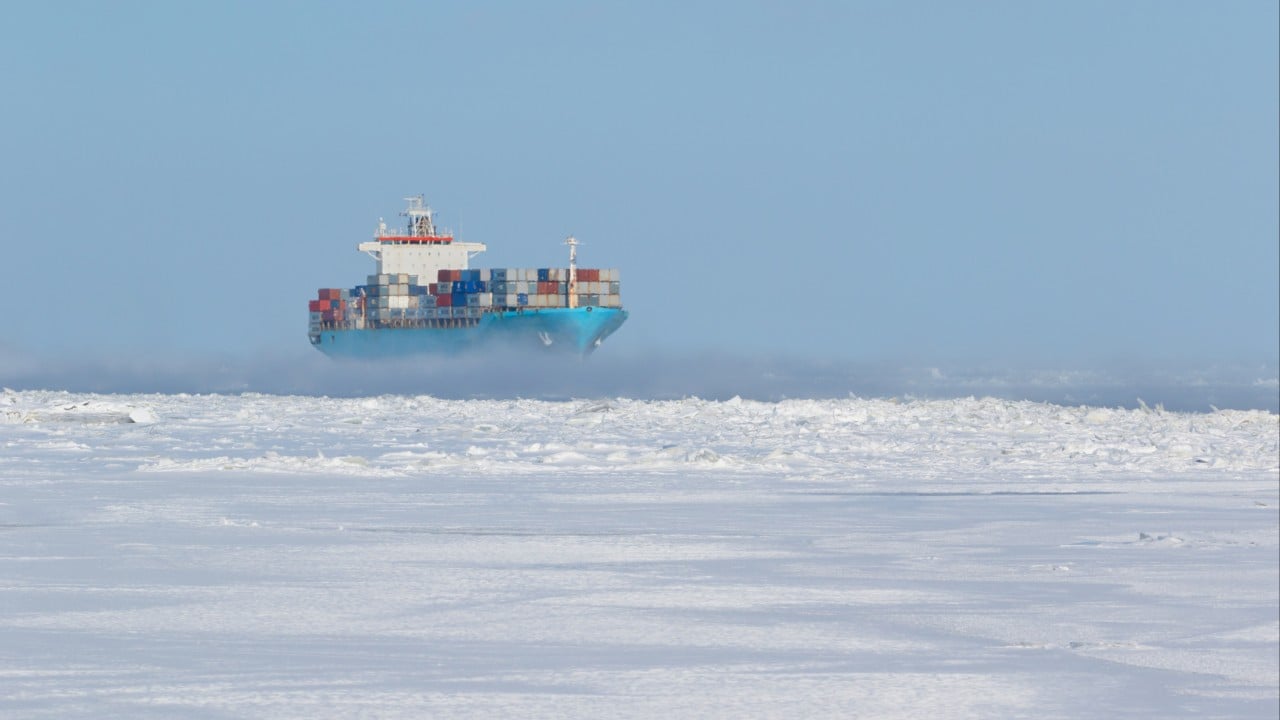
As Beijing and Moscow double down on the Arctic shipping route, Europe is hitting the brakes.
Despite being the main destination for goods along the route and accounting for most of the world’s shipping giants, Europe opposes the commercialisation of Arctic transits, wary of fragile polar ecosystems and navigational risks amid rising anxiety over Russia and China’s closer polar collaboration.
“In Europe, cooperation between China and Russia on container shipping is often viewed as another example of deepened collaboration between the two countries in the Arctic since Russia’s full-scale invasion of Ukraine in 2022,” according to Patrik Andersson, an analyst at the Swedish National China Centre at the Swedish Institute of International Affairs.
Andersson said the collaboration fitted into a broader partnership, which in recent years had expanded to include joint military drills in Arctic-adjacent areas, coastguard cooperation in the Arctic Ocean and joint projects in the mining and energy sectors.
Europe’s concerns are reflected in an updated EU Arctic policy that is expected to be issued later this year.
In recommendations for the policy released late last year, the European Parliament warned that expansion of Sino-Russian ties in energy, infrastructure and polar shipping “risks consolidating a geopolitical axis of resource exploitation and restricted access”.