
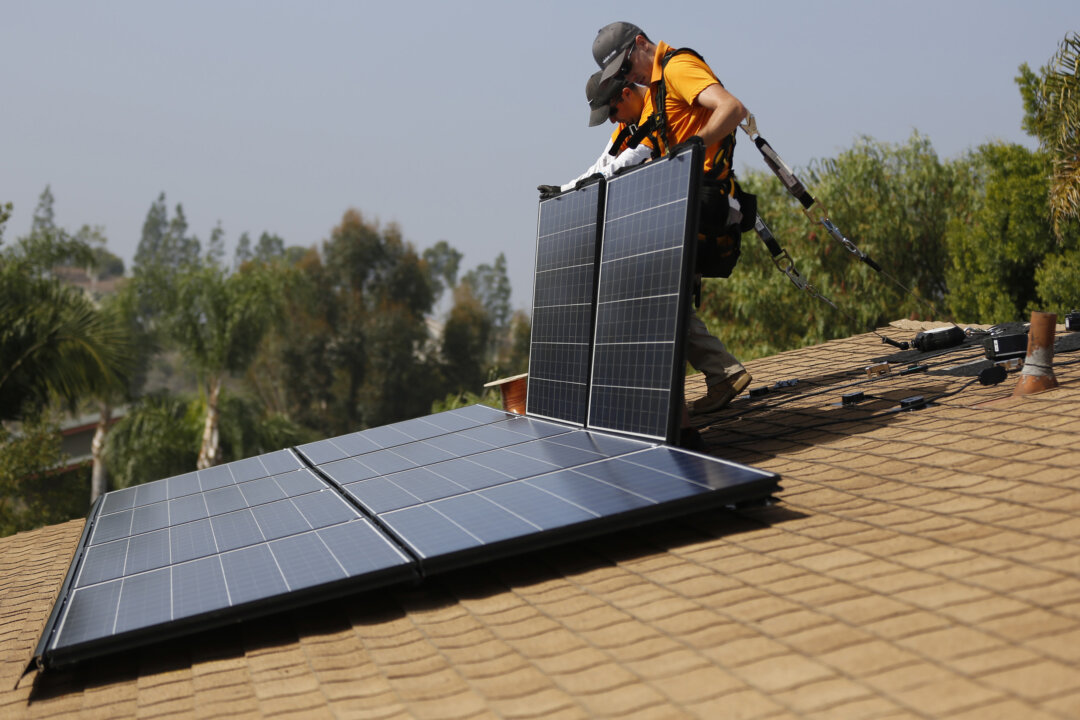
Small-scale or rooftop solar power generation in the United States has grown by nearly 400 percent over the past 10 years, between 2016 and 2025, according to an estimate from the Energy Information Administration (EIA).
The analysis is based on solar systems smaller than one megawatt of capacity. Total generation from these systems has risen from 18,812 gigawatt-hours (GWh) to 92,979 GWh during this period.
Four states with the highest small-scale solar generation are all in regions with abundant solar resources—California, Arizona, Texas, and Florida, the EIA said in an Oct. 16 statement.
California made up 37 percent of small-scale solar power generation in the country last year. During 2024–2025, the state’s rooftop solar generation jumped 8 percent, while Arizona accounted for more than 6 percent of total nationwide generation.
New York comes in fifth in the nation despite having lower solar exposure. The EIA attributed this to state tax incentives and technology improvements.
Solar panels installed at personal residences get a 25 percent personal tax credit, up to $5,000. In addition, New York households making less than 80 percent of the median income in their area may be eligible for additional incentives.
In Florida, tax exemptions are available for related equipment or components certified by the Florida Solar Energy Center.
Large-scale solar power generation projects are also on the rise. In a Jan. 16 report, the EIA said that almost 70 gigawatts of new solar generation capacity projects are set to come online in 2026 and 2027 across the country, a 49 percent capacity increase from 2025.
By 2027, solar and wind are expected to account for 21 percent of U.S. total electricity generation, up from 18 percent last year, the EIA said.
In July 2025, President Donald Trump signed an order to end federal subsidies for solar and wind projects, highlighting the unreliability of these energy sources and the risk of dependency on foreign-controlled supply chains.
The following month, Interior Secretary Doug Burgum signed an order to rein in “environmentally damaging” wind and solar power projects while ensuring that federal lands are optimally used when it comes to energy initiatives.
Last month, the Department of Energy issued an emergency order to mitigate blackout risks in South Carolina and North Carolina amid hot conditions, the department said in a Sept. 19 statement.
“It should come as no surprise that during the end of summer and early fall, there are fewer hours of daylight—and therefore, less power generation from solar power,” Secretary of Energy Chris Wright said in the statement.
On July 4, federal tax credit subsidies for new wind and solar projects not under construction ended, according to a statement from the Department of Energy.
Wright said that he was thrilled that these subsidies were terminated after about 35 years in effect. He said that solar and wind projects take “100 times more land for a similar amount of energy.” In addition, they also use up large quantities of materials, such as steel and polysilicon, he said.
Moreover, “they take an enormous amount of additional transmission lines to connect their large land, far flung production back to where there’s demand centers,” Wright said.
“And what do we get for all that is a relatively small amount of low value energy,” he said.
“It’s low value because the wind doesn’t always blow and the sun doesn’t always shine.”
We had a problem loading this article. Please enable javascript or use a different browser. If the issue persists, please visit our help center.