
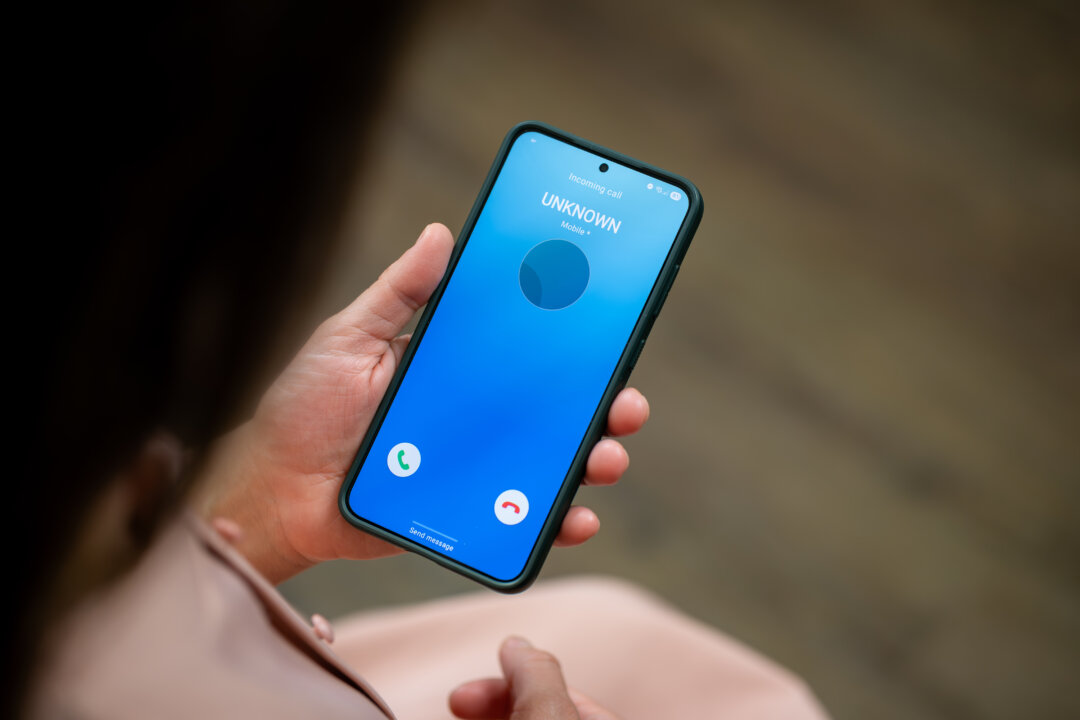
Senate Minority Leader Chuck Schumer (D-N.Y.) on Oct. 19 asked the Federal Communications Commission (FCC) to reject a conservative group’s request to let political callers reach cellphones with AI-generated or prerecorded voices without the recipient’s consent.
Schumer filed his letter on the last day for public reply comments in the proceeding, which the FCC opened in a Sept. 4 public notice.
Club for Growth filed its petition on Aug. 31 and asked the FCC to act quickly because the calls are planned for the lead-up to the Nov. 3 midterm elections.
FCC rules bar most calls to cellphones using artificial or prerecorded voices unless the recipient has agreed to receive them.
The group is seeking a waiver of that rule and an exemption from the matching provision of the Telephone Consumer Protection Act, the federal law that governs automated calls, according to the notice.
“There’s no excuse for flooding Americans’ phones with shady, dark-money-funded AI robocalls. Not this fall. Not ever,” Schumer wrote.
His letter lays out two hypothetical scenarios.
In the first, a cloned voice of a candidate admits to supporting Social Security cuts two days before Election Day.
In the second, a fake call the night before the election tells voters their polling place may have changed.
Schumer pointed to the 2024 New Hampshire presidential primary, when thousands of residents received a robocall imitating President Joe Biden’s voice that discouraged Democrats from voting early.
According to the letter, the FCC proposed a $6 million fine against the political consultant behind the call, and New Hampshire authorities brought criminal charges.
Club for Growth has proposed limiting callers to three calls per recipient within 30 days, with an automated opt-out and caller-specific do-not-call lists. Schumer argued those conditions address how often people are called, not whether the voice on the line is real or the message is true.
He wrote that his objection applies equally to every party, candidate, and advocacy organization.
In a statement released with the letter, Schumer accused Republicans of trying to cheat in the election and said he would fight to keep the FCC from changing the rule “this October or ever.”
In its petition, Club for Growth said current rules chill political speech.
It also said the rules expose callers, acting in good faith, to lawsuits carrying penalties of $500 to $1,500 per call.
The group said it and its affiliated political committees want to use AI-powered calling tools to reach potential voters more efficiently, including in more languages.
The group noted that noncommercial calls with artificial or prerecorded voices can already go to residential landlines without consent, under the same three conditions it proposes for cellphones.
Granting the request would make the rules uniform for both, it said.
The petition also argued that the change fits the Trump administration’s push to cut regulations and remove barriers to AI.
FCC Commissioner Anna Gomez, the only Democrat among the commission’s three active members, said in a CNN interview on Oct. 19 that the agency “could act any day now” because the comment period would close later that day.
Gomez said she doesn’t know how the commission would rule and said, in her opinion, that a full commission vote would require a process that couldn’t be finished before the November election.
Gomez added that she believed the FCC could act at the staff level instead to bypass the process and judicial scrutiny.
An FCC spokesperson told The Epoch Times on Monday that no one at the agency has shown interest in ruling on the petition and that there are “zero plans” to do so.
The spokesperson added that the FCC seeks comment on incoming petitions as a matter of procedure.
Club for Growth did not respond to requests for comment from The Epoch Times by publication time.
We had a problem loading this article. Please enable javascript or use a different browser. If the issue persists, please visit our help center.