
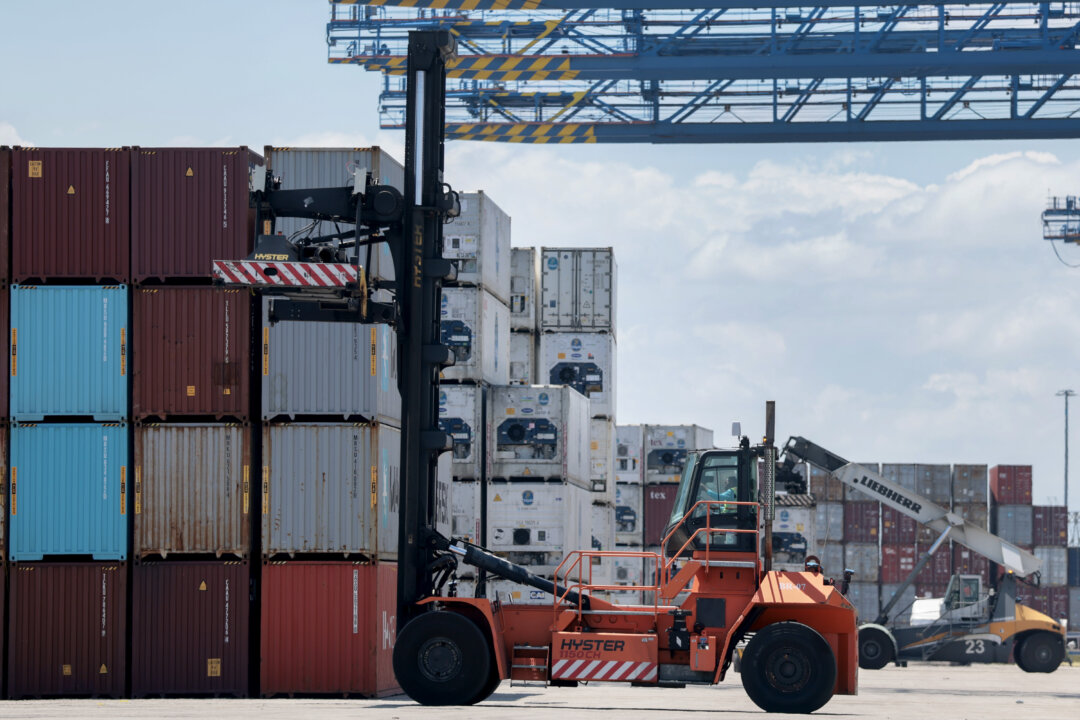
WASHINGTON—The United States has been expanding exports in Southeast Asia as it seeks to diversify agricultural trade and reduce dependence on China, a senior U.S. Department of Agriculture official told The Epoch Times.
The region has emerged as the fourth-largest buyer of American farm goods, according to a new USDA report seen by The Epoch Times ahead of its release.
Vietnam led growth among the 11 countries in Southeast Asia, taking in about $4.7 billion in American farm commodities last year—a 38 percent increase from 2024.
U.S. cotton sales to Southeast Asia nearly doubled last year and were trending higher over the first eight months of this year.
Rising shipments were driven by Vietnam, which accounted for nearly 80 percent of the trade and offset reduced purchases from China, according to the USDA report.
U.S. corn exports to the region hit record highs in 2025, and tree nut exports also surged more than 40 percent from a year earlier, the report stated.
Southeast Asian nations also ramped up their purchase of U.S. ethanol.
The Philippines alone imported a record $192 million worth in 2025, fueled by rising consumption and limited domestic production.
That made Manila the sixth-largest market for U.S. ethanol, according to the USDA.
“These are really huge market increases for us in this region,” Michelle Bekkering, acting under secretary for trade and foreign agricultural affairs at the USDA, told The Epoch Times.
She said expanding market access in the region is “an important tool in strengthening the stability for our American agricultural producers.”
“The U.S. is a top agricultural exporter, and our producers need stable, reliable markets with international partners who operate in good faith,” she said.

Washington has looked beyond China as the communist regime repeatedly used soybeans as a bargaining chip when trade ties soured.
China, the world’s largest soybean importer, halted its U.S. purchases in 2018 and again in early 2025 as trade tensions heightened, resulting in huge losses for American farmers.
China fell out of the top five U.S. export destinations in 2025 to sixth place, with shipments dropping 66 percent from 2024 to $8.4 billion, according to a June USDA report.
While China has pledged to step up purchases from American farmers after the leaders of the world’s two biggest economies met in South Korea last October, the United States has been expanding agricultural trade with other buyers—including those in China’s backyard.
“We’re not going to put all of our eggs into one basket,” Bekkering said. “A smart business plan is all about diversification.”Bekkering said the United States has to “constantly be ahead of the game.”
“Because if we don’t get in there soon and start building those relationships, we lose ground on demand,” Bekkering said.
After the U.S. President Donald Trump and Chinese leader Xi Jinping met in May, Beijing agreed to buy at least $17 billion of U.S. farm products annually through 2028, according to the White House.
That pledge built on China’s October 2025 commitment to buy at least 25 million metric tons of U.S. soybeans.
Meeting these targets could bring agricultural trade to pre-2025 levels, according to a June analysis by the Center for Strategic and International Studies.
Bekkering said her department has a team to track Beijing’s progress toward its commitment weekly, including purchases of soybeans, sorghum, and wheat.
“China is an important trading partner, and will be. But we do demand changes,” Bekkering said.
She said the United States seeks “a constructive trade relationship that is built on fairness and reciprocity.”
“The ball is in their court.”
U.S. trade negotiators are seeking further reduction of Chinese tariffs, as well as the removal of administrative and regulatory barriers that prevent U.S. goods from entering, according to Bekkering.
China has agreed to cut tariffs on a slew of U.S. agricultural products, as part of a deal reached during the Trump-Xi summit in late September. That includes corn, wheat, dairy, and meats such as fish and beef.
But there are other trade restrictions. Bekkering said one of the biggest impediments is the non-tariff trade barriers.
They are “clever loopholes” to “keep our products out while still saying they’re being open to business,” she said.
One example she cited is access to the Chinese beef market.
After the Trump administration imposed additional tariffs on Chinese products in early 2025, Beijing allowed import authorizations for U.S. pork, beef, dairy, and poultry facilities to lapse.

The Chinese regime renewed import licenses for more than 400 U.S. beef plants in May, ahead of the bilateral summit involving Trump and Xi in Beijing, according to the U.S. Meat Export Federation.
Still, 38 beef facilities remain suspended, the trade group said. That includes 25 plants whose permits were renewed but that remain ineligible for export.
Beijing requires food exporters to register with its customs administration before selling products in China.
Other non-tariff trade barriers include requiring imported products to undergo extra inspections that don’t follow globally recognized science and safety standards, Bekkering said.
“China has thrown up roadblocks and barriers to our trade in agricultural commodities; we have really had no choice but to look to increase that market access in other countries,” Bekkering said.
“We’re going to send that commodity to countries who want it. And right now we have that in Southeast Asia.”
We had a problem loading this article. Please enable javascript or use a different browser. If the issue persists, please visit our help center.