
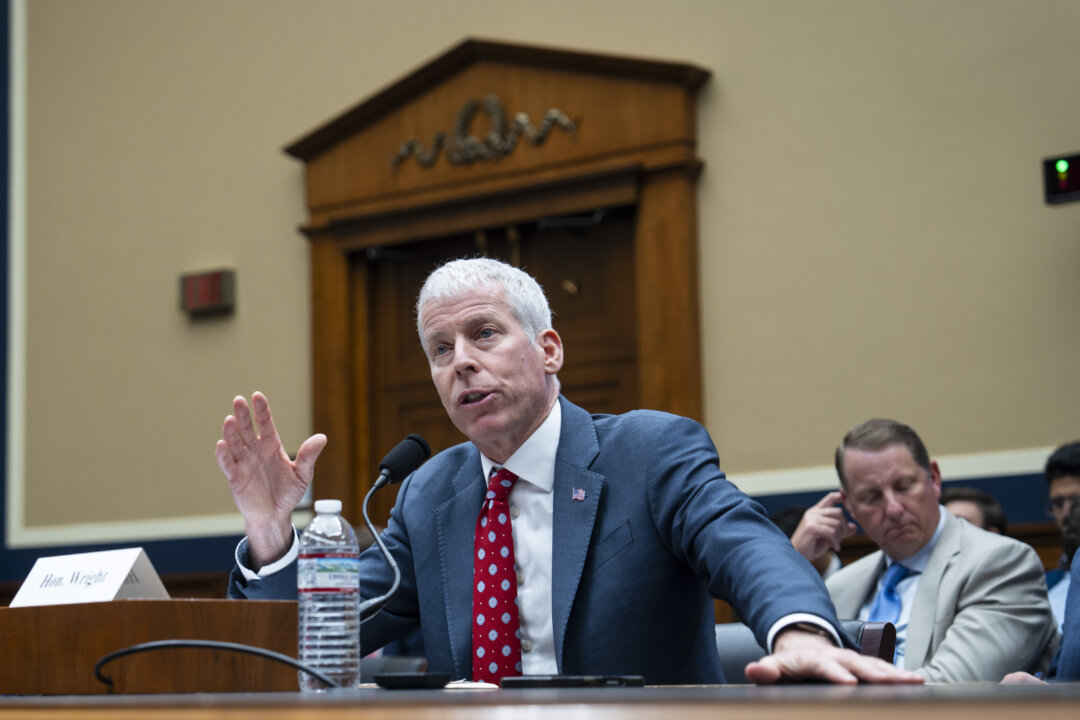
The Trump administration’s energy chief has said Washington is confident the first cargo of Russian diesel headed for the United States will eventually sell on the global market, despite delays to the tanker’s voyage.
U.S. Energy Secretary Chris Wright, when asked whether he was concerned that the vessel, which had originally signaled it was headed to New York, had been turned away, said he had no worries.
“We just want that diesel going into the world markets.”
Ellie Valencia, a senior analyst at analytics company Vortexa, said on Tuesday that the ship’s speed had dropped from 10 knots several days ago to about 2 knots.
“What you can interpret from the speed is directly related to the status of the ship, which is ‘FOR ORDERS,’ most likely meaning that it doesn’t yet have a specific buyer,” Valencia said.
According to MarineTraffic vessel-tracking data, the Agioi Fanendes was sailing in the Atlantic Ocean off the U.S. East Coast at 9.2 knots as of 11:03 a.m. GMT on Nov. 11. It remains unclear where it is heading.
Trump announced the U.S.–Russia diesel agreement last month as part of his effort to bring down fuel costs, which have risen sharply during the Iran conflict and as Ukrainian strikes against Russian refining facilities have intensified.
The Malta-flagged Agioi Fanendes loaded ultra-low sulfur diesel at Russia’s Baltic port of Primorsk on Oct. 22 and was expected to arrive in the United States on Nov. 7, according to LSEG shipping data. The buyer and seller were not immediately known.
The Russian Embassy in South Africa said on Oct. 23 that a tanker carrying 326,800 barrels of petroleum products had left Primorsk for New York. This amount is roughly equivalent to the 40,000 metric tons LSEG reported.
Eastmed, the Greece-based company that manages the tanker, said the vessel was proceeding, awaiting orders, and that a port of discharge had not yet been nominated or finalized.
“Nothing has changed regarding the vessel’s destination; she is still awaiting orders,” Greece-based vessel manager Eastmed said on Tuesday.
Earlier this month, New Jersey Gov. Mikie Sherrill warned local port officials and terminal operators against accepting Russian diesel, saying those shipments break federal law.
In a Nov. 2 letter, Sherrill said Congress banned Russian energy imports under the Ending Importation of Russian Oil Act in 2022 after the Russia–Ukraine conflict began.
“New Jersey will not stand by while Donald Trump supports Vladimir Putin at the expense of Americans. Instead of lowering costs, these imports help finance Putin’s war against Ukraine and a campaign of violence and terror that endangers our servicemembers abroad,” she wrote in a Nov. 2 X post.
“As a Navy veteran, I cannot let that stand unchallenged, and New Jersey’s ports shouldn’t be complicit. Every port and terminal operator, intermediary, and buyer is on notice: do not help bring illegal Russian diesel into New Jersey,” she said in a statement.
Russian diesel is exempt from certain U.S. sanctions under a temporary general license issued by the Treasury Department’s Office of Foreign Assets Control on Oct. 9, allowing its sale, delivery, and importation, including into the United States. The license remains valid until April 7, 2027.
Reuters and Tom Ozimek contributed to this report.
We had a problem loading this article. Please enable javascript or use a different browser. If the issue persists, please visit our help center.