
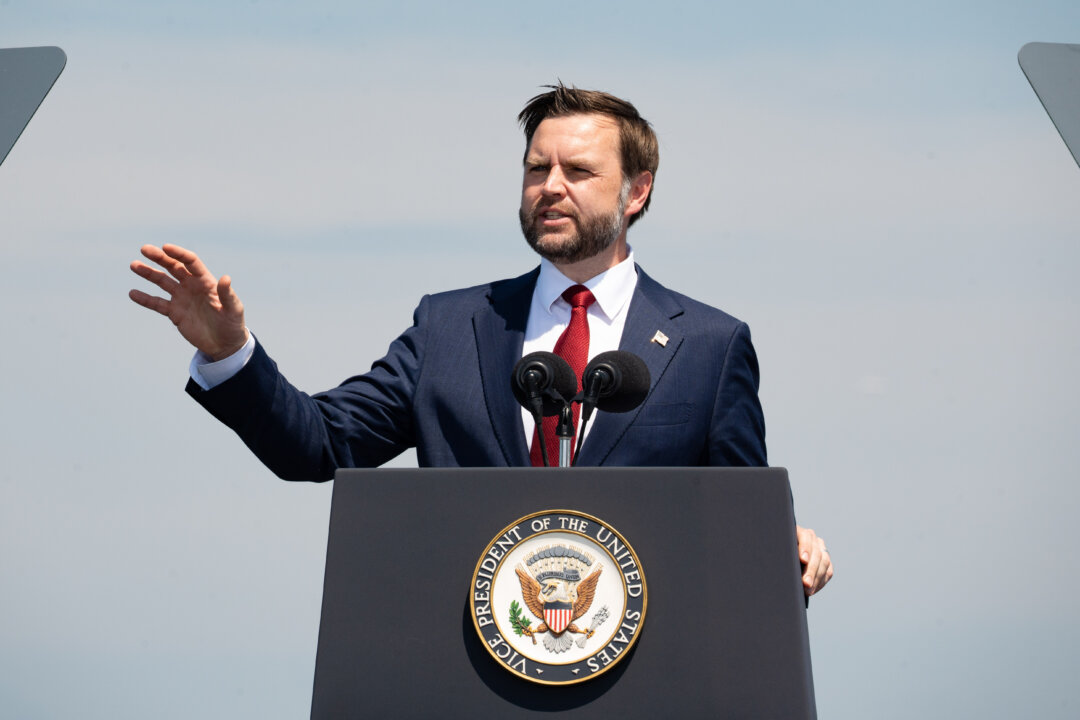
Vice President JD Vance said that President Donald Trump’s choice to post what appears to be an artificial intelligence-generated video of Iran’s Kharg Island oil hub being “blown to smithereens” should serve as a warning to Tehran.
“The president likes to switch it up on social media a little bit. He would be the first to say he doesn’t make announcements about military actions on social media, but I think that he’s sending a message to the Iranians,” Vance told reporters when he was asked about Trump’s post.
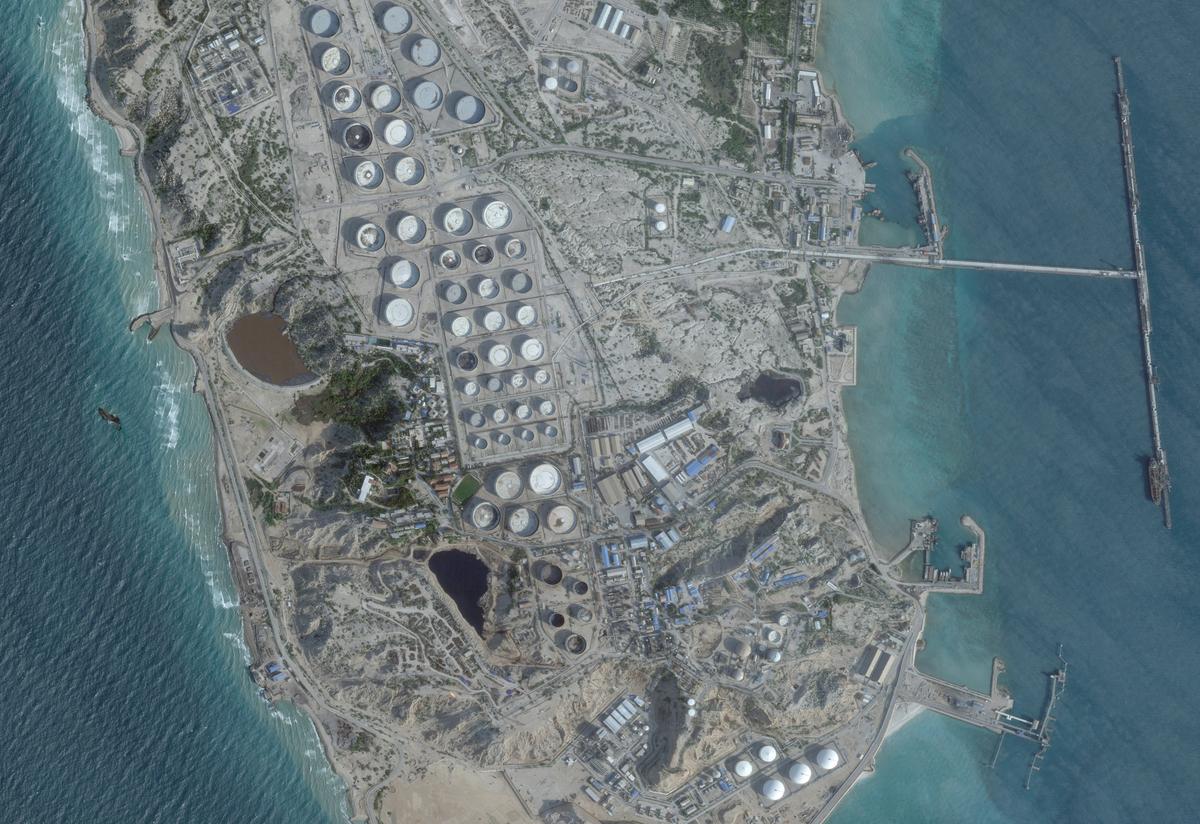
The president posted a video showing what appeared to be AI-generated video footage of explosions and strikes on Kharg Island, a key Iranian oil production hub in the Persian Gulf. “Kharg Island being blown to smithereens!!! President DJT,” Trump wrote. He did not provide any additional context.
“Look, we know that they continue to shoot at commercial shipping,” said Vance, referring to Iran’s military having fired at oil tankers in the Strait of Hormuz. “We continue to have a lot of tools at our disposal to prevent them from doing so, or at least cut down on them from doing so.
“And that’s what the president is saying is, ‘Look, you guys are shooting at commercial shipping. You guys are behaving like a terrorist country. You’ve got to stop, or there’s going to be some consequences.’”
In the first U.S. attack launched against the country in more than a month, the U.S. military on Aug. 30 struck Iranian rocket launchers on Larak Island in the strait.
Iranian officials said two people were killed and several others wounded on Larak Island. Iran responded by launching missiles at U.S. bases in Jordan, which were intercepted.
“Aggression and crimes will not solve the enemy’s desperation in attempting to weaken the Islamic Republic’s control over the Strait of Hormuz, and every attack will be met with even more devastating responses,” Iran’s Islamic Revolutionary Guards Corps (IRGC) said in a statement on Monday through the Iranian state-run Fars News Agency.
The United Arab Emirates on the same day said its air force intercepted an Iranian drone over its territorial waters earlier in the day. Allies of the United States in the Gulf region, including the UAE, Saudi Arabia, Kuwait, Bahrain, and Qatar, have faced Iranian attacks since the war erupted.
The on-and-off-again attacks between Iran and the United States began on Feb. 28 when the United States and Israel launched strikes, killing dozens of members of Iran’s leadership, including top leader Ayatollah Ali Khamenei.
This past week, the conflict appeared to take a new turn when Trump administration officials announced sweeping economic measures against Tehran, including expanded punishments for countries that do extensive business with Iran.
Trump has said that Iran cannot be allowed to obtain a nuclear weapon and that Tehran must reopen the Strait of Hormuz, a key waterway through which about a fifth of the world’s traded crude oil passes.
Both Iran and the United States have made competing claims about ships being struck by sea mines in the strait, with the U.S. Central Command disputing an IRGC claim that an oil supertanker was hit in recent days.
U.S. forces launched an attack against Kharg Island in mid-March, hitting more than 90 Iranian military sites while deliberately avoiding damaging oil or gas facilities and infrastructure, officials said at the time.
The White House did not respond to a request for comment on Monday.
The Associated Press contributed to this report.
We had a problem loading this article. Please enable javascript or use a different browser. If the issue persists, please visit our help center.