
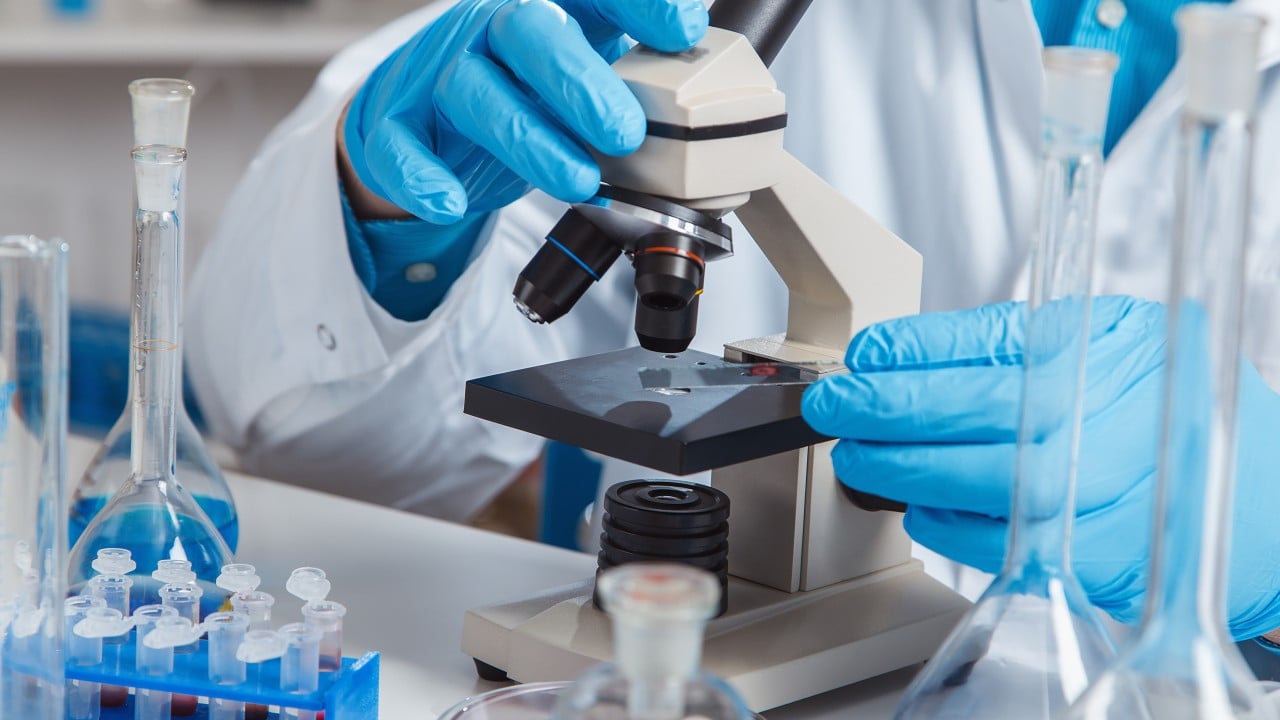
A single drop of blood could soon be used to screen for early-stage cancer, according to Wen Liaoyong of Westlake University in Hangzhou.
Wen’s team has compressed what was once a refrigerator-sized detection system into something that fits in your hand – and boosted accuracy to about 10,000 times that of conventional methods.
The findings were published in the journal Nature Photonics on May 13.
Advertisement
“This work establishes a scalable and robust nanophotonic biosensing paradigm for miniaturised, high-performance diagnostics in clinical, remote and at-home settings,” Wen wrote in the paper’s introduction.
A former University of Connecticut researcher, Wen joined Westlake University’s school of engineering in 2019 as an assistant professor and independent principal investigator. He was promoted to associate professor last July.
Advertisement
Wen’s research focuses on novel multi-component nanostructured materials and their multifunctional applications.