
One by one, Tesla Model Y Ls roll out of the company’s end-of-line inspection bays, gleaming in black, white and gold. They are a mix of left-hand and right-hand drive – one of many signs the electric vehicles (EVs) produced here are destined for ports around the world.
The company touts a total assembly time of less than 40 seconds at its sprawling Gigafactory in Lingang, a coastal area on the far southeastern edge of Shanghai. From there, Tesla says, a finished car can reach the port and be loaded onto a ship within an hour.
In July, one roll-on/roll-off vessel carried 7,738 Teslas out of Shanghai, marking an all-time record for a single shipment of finished vehicles from a Chinese port. The factory delivered 93,579 vehicles that month. As of July, more than half of the cars made there were exported overseas this year.
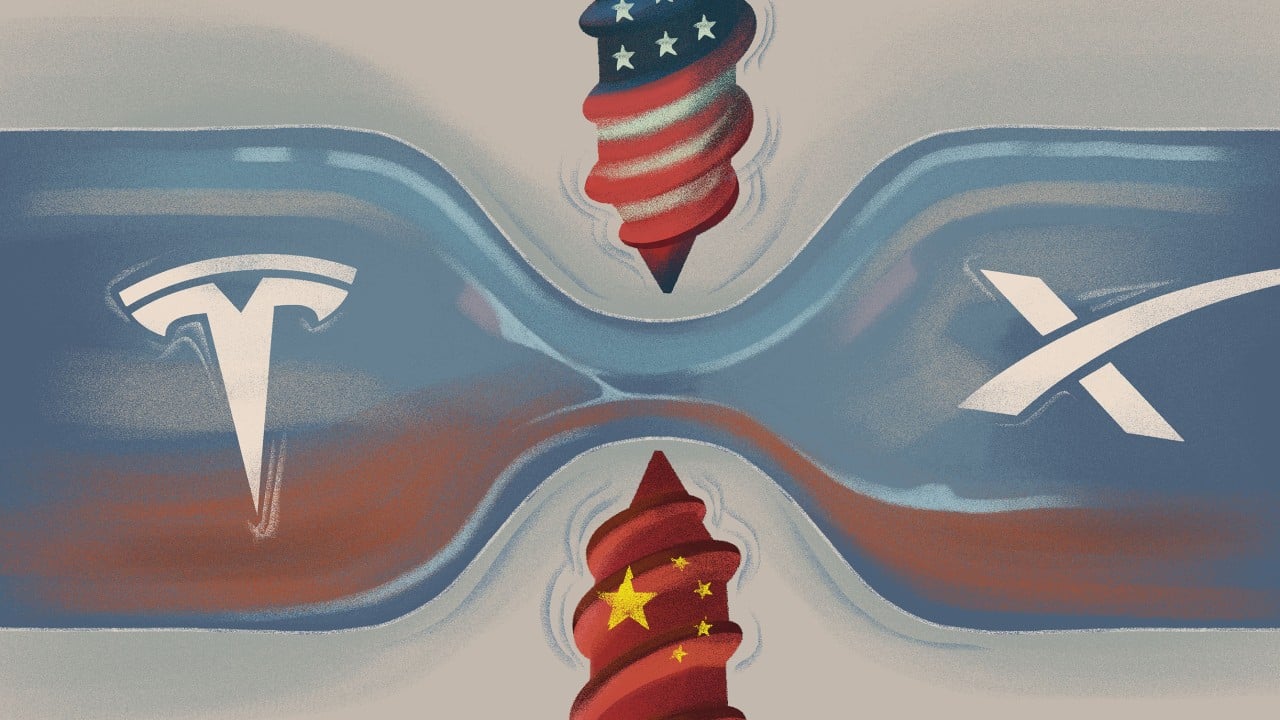
But because of its location, this highly efficient manufacturing powerhouse could present a vulnerability in Washington for Tesla CEO Elon Musk, whose sprawling empire spans EVs, autonomous driving, rockets, satellite internet, humanoid robots, artificial intelligence and brain-computer interfaces.
While his EV business relies heavily on China’s supply chain to fulfil global demand, Musk’s commercial aerospace company SpaceX has become a core national security contractor for the Pentagon.
That poses a dilemma for the CEO, as he looks to navigate the geopolitical waters between the world’s two biggest economies.
Musk must perform a balancing act between the competing interests, which would require a complicated, ring-fenced strategy for his China operations to satisfy regulators in both Washington and Beijing, according to industry observers.