

There is a bogus version of Singapore’s prime minister that exists only to steal money. It connected to a Zoom call, thanked a stranger for his time and helped relieve him of US$3.8 million – with the real Lawrence Wong, for a time, none the wiser about what had happened.
The victim had received a WhatsApp message purporting to be from the secretary to the cabinet, inviting him to a private meeting.
What followed was not some doctored photo or a 15-second clip designed to fool a distracted doomscroll. It was an entire fabricated summit, complete with assembled officials including Wong, President Tharman Shanmugaratnam, cabinet minister Indranee Rajah and foreign dignitaries, all rendered convincingly enough to believe they were discussing funding tied to the Strait of Hormuz.
The synthetic Wong closed the meeting by thanking the victim for attending. Then a fake lawyer took the call and S$4.9 million (US$3.8 million) vanished into an account that no longer exists.
Southeast Asia’s scam industry has found a powerful new weapon, and it isn’t malware, cunning or even greed – it’s borrowed faces.
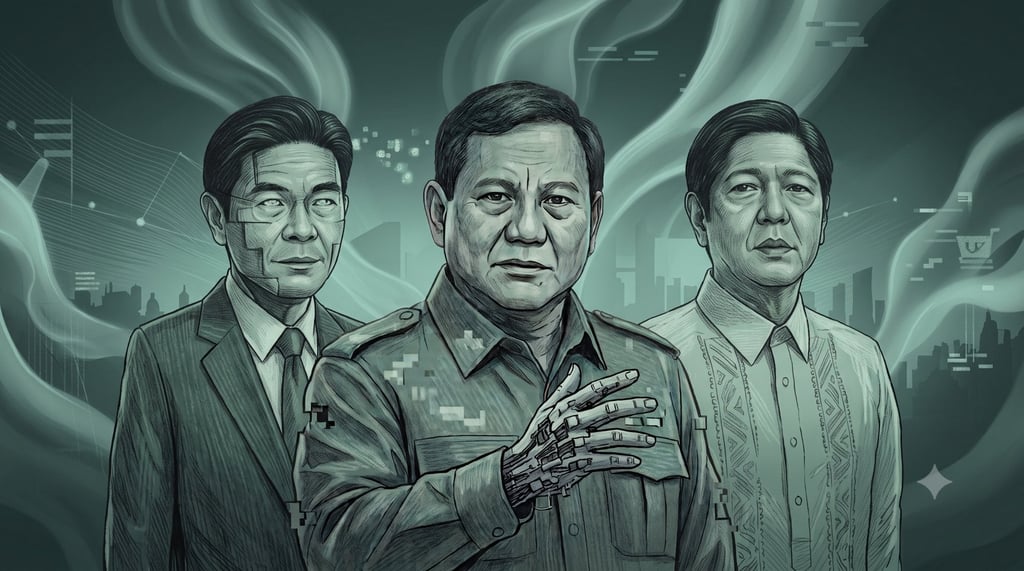
Criminals are increasingly cloning the region’s most trusted leaders using generative AI, wrapping fraud in the unimpeachable authority of a president’s voice or a prime minister’s visage and cashing in on the thing no security system can patch: human trust.