
South Korea’s programme to develop engines that can power flying drones to serve as loyal wingmen for fighter jets suggests that Seoul has set its sights on competing at the top level in the global market for autonomous military systems, analysts said.
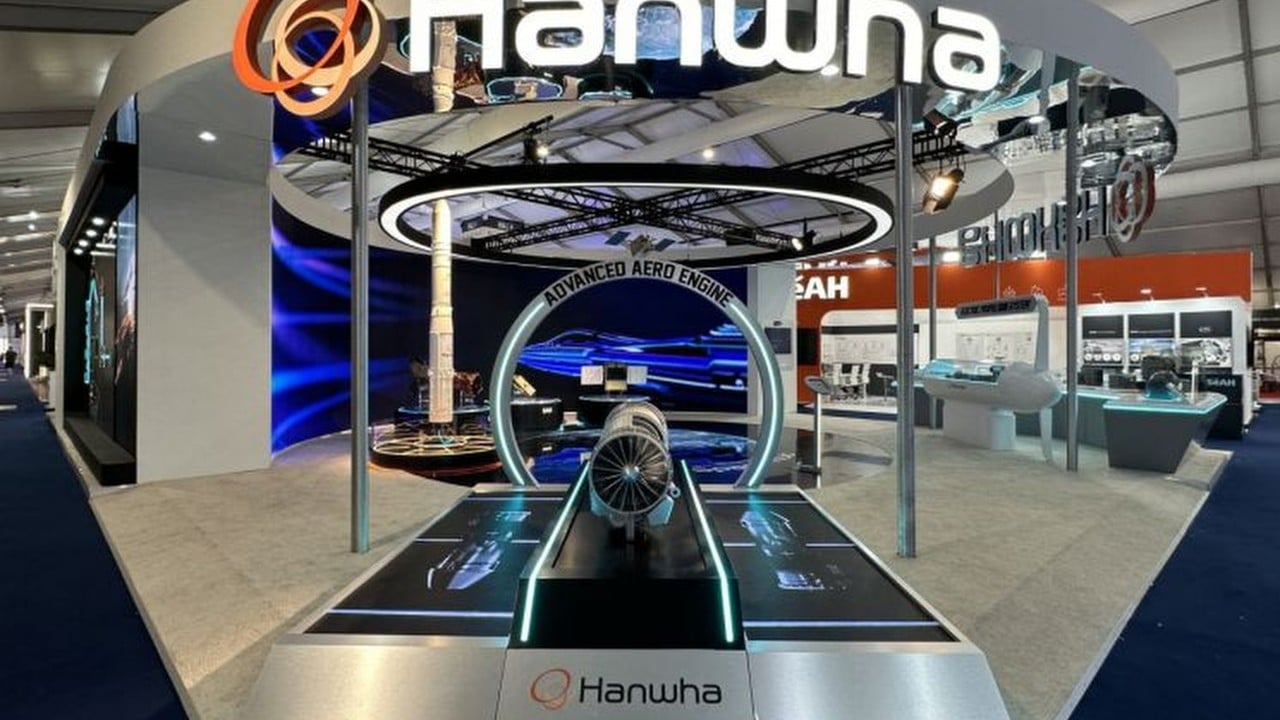
Hanwha Aerospace, one of the country’s largest defence contractors, announced the programme on Tuesday – a joint project with South Korean space agency Kasa to develop a 4,500-pound-class (2,040kg) turbofan engine by 2029.
The engine will be suitable for collaborative combat aircraft (CCA) systems and other unmanned aerial vehicle (UAV) platforms. It will be developed through matching-fund investment as part of the government-backed UAV propulsion portfolio.
Advertisement
This includes the development of a 5,500-pound-class low bypass turbofan for low-observable unmanned wingman aircraft and core technologies for a 10,000-pound-class turbofan for stealth platforms.
Seoul’s attempt to indigenise “the most complex” drone technology should be seen as a “deliberate bid to enter the top tier of UAV producers”, according to Liselotte Odgaard, a senior fellow at Hudson Institute in Washington.
Engines were key to shaping competitiveness and export potential, she said. South Korea’s indigenous UAV engine development was a significant step towards achieving the “most restricted and technologically complex subsystems”.