
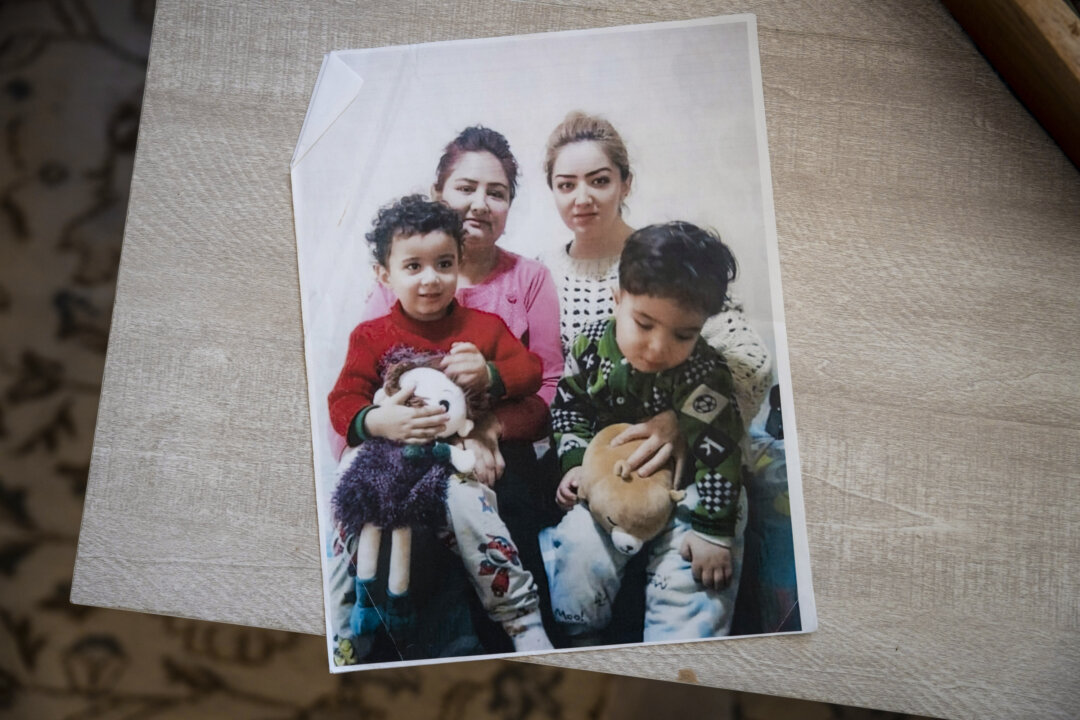
Mihrigul Tursun needed help. She was two months into motherhood, juggling three breastfeeding infants.
Now, she was at a Chinese airport, the triplets in her arms.
Then, two strangers appeared, a man and a woman. They offered to hold her newborns.
Tursun was only too grateful. But as soon as she handed her babies to them, their faces changed.
Follow us, they instructed.
They were the Chinese police.
Thus began an ordeal that cost Tursun one of her babies and stole years of her youth.
She didn’t know whether she would get out alive. And the memories of what came after haunt her as she rebuilds her life in the United States. It’s why she can’t stay silent, she told The Epoch Times.
No Sympathy
For Beijing’s political targets, going back to China carries a real risk.
The communist regime has a program called Operation Fox Hunt that’s dedicated to capturing political dissenters abroad. A network of unofficial Chinese police stations discovered in the United States and other countries also helped the regime track down overseas critics. Each human rights group has its share of horror stories, be it practitioners of Falun Gong, Christians in underground churches, democracy activists, or as with Tursun, Uyghurs.

The U.S. State Department in October warned Americans—especially those of Chinese heritage—of “serious risk of wrongful detention” when traveling to China. Even a private message critical of the regime sent from outside China could put them at risk.
In 2015, Tursun didn’t know that large-scale repression was shaping up in her home region of Xinjiang. She was 26 and just starting a family in Egypt, where she had studied and married.
Never did she expect that she would be heading to a Chinese jail straight from the airport.
When she gave birth to the triplets, her parents in China started calling her with a new level of intensity. They wanted to see the kids and care for them. She had to go back.
Tursun thought returning was a good idea. After all, it wasn’t easy looking after three babies.
Never did she expect that she would be heading to a Chinese jail straight from the airport.


The police first put her through three hours of interrogation.
She wondered about her babies. She had to feed them and change their diapers. But the police allowed no questions. Only they could ask questions—Tursun’s only role was to answer.
She burst into tears.
There was no sympathy. After the grilling, the officers duct-taped her mouth, put a black hood over her face, handcuffed her from the back, and shoved her into a car. During the rough handling, Tursun felt her nose hit something. Then blood spilled over her clothes.
The Child
The interrogation continued—for three days and nights in the basement of an Urumqi detention facility. Tursun’s next seven days were spent in a pitch black room. Then came weeks in a detention cell with dozens of others. She knew nothing about her children.
The next time she saw her babies was in a hospital. Her eldest son, Mohaned, was behind a glass window in an intensive care unit. All three had the marks of an operation on their necks.

The next day, the authorities handed her a piece of paper to sign. It was a death certificate for Mohaned.
Tursun looked at the tiny cold body in front of her. She refused to believe her baby was gone. She thought he might be sleeping. She begged for a blanket to warm him up.
She touched his finger and curly hair. He had so much hair.
As she held Mohaned, she collapsed to the ground.
Authorities handed her a piece of paper to sign. It was a death certificate for Mohaned.
When she opened her eyes again, she was in her father’s car. He was pleading for her to stay strong.
“You have two other children,” he told her. “They are waiting for you to take care of them.”
But Tursun couldn’t stop crying. What did her baby do? He was no more than 6 months old, and he had been healthy.
It took three days for the family to find a burial place.
During those three days, Tursun hugged Mohaned, trying to warm the little cold body, hoping by some miracle he would wake up. He never opened his eyes.
‘Confess’
Born in Cherchen, an oasis town on the rim of a desert in Xinjiang region, Tursun grew up proud of China.
She identified with the Chinese identity and felt a surge of pride when she saw the Chinese flag hoisted.
At 10, she got a top score on a large-scale student examination on Mandarin language skills. She was one of the few Uyghur students selected to leave home for a boarding school in southern China where Mandarin was the sole language spoken. In college, she studied business administration in Egypt, where she met her husband.
During the months when she was allowed to live at home, the police stayed in the house, watching the family’s every move.
The year her parents pressed her to return, the suppression in Xinjiang was escalating. The authorities had launched a “Strike Hard” campaign, setting the policy framework for mass detention in the name of combating religious extremism.
Tursun remembered sensing the urgency in her parents’ voices during calls from Egypt. They were persistent. Thinking back, she said, she believes they were under pressure.

Losing her son wasn’t the end of the torment.
The police arrested her twice afterward, first in April 2017 and then in 2018. She went back and forth between the detention center and the hospital. During the months when she was allowed to live at home, the police stayed in the house, watching the family’s every move.
They were given pills—some white and some in different colors, ostensibly for their health. But Tursun said the medication made her weak. She felt dizzy and cold, and she wanted to vomit, she said.
‘Kill me,’ Tursun said. She would rather die than go through the torture again.
“Confess, and you will receive leniency,” the detainees chanted in Chinese—it was one of the Party slogans they had to memorize in order to get food.
Once, when the police beat her, she chastised them.
“Why did you torture me like this? What did I do? You are an animal,” she told the officer. “One day God will punish you.”
He responded by shaving her hair and putting electrodes on her head.
“Where is God?” he said. “I will show you who is the God.”
Tursun screamed as the electric current ran through her.
“Kill me,” she said.
She would rather die than go through the torture again.
A Turning Point
In late 2017, officials sentenced Tursun to death. They gave her two options: death by drugs or death by bullets. She recalled that they said she would have to pay for the bullets.
Tursun was ready to die, but she wanted her children to be freed. They were Egyptian citizens and should have been allowed to go back to Egypt, she told the authorities.
They gave her two options: death by drugs or death by bullets. She would have to pay for the bullets, she recalled them saying.
All this time, Tursun had no communication with her husband. The authorities had her phone.
She didn’t know that her husband had applied numerous times to go to China, only to have his visa application rejected each time.
After many twists and turns, he made it to China through the help of the Egyptian Embassy. The two met in Cherchen—seeing each other for the first time in three years. He took her and the children away from the country she had once turned to. He saved her life.
Her final ordeal was to sign a statement denying that the detention and torture ever happened and declaring her love for China, and she was required to read that twice in front of a camera.
Tursun’s two children had been taken from her during the days she was in Chinese custody. When they were finally reunited, she found the boy and girl, Moez and Elina, wearing red clothes emblazoned with the word “China.”
3 Birthday Gifts
The wounds are slow to heal.
For years after the experience, Tursun’s children hid food in their pockets and ate it under their bed. A dog’s bark or a police car scared them. At night, they slept hugging their shoes along with Tursun’s. That way, if the Chinese police came again, they’d know. The police couldn’t take mom away without shoes.
Tursun always bought three birthday gifts. One of them she put in a donation box. She told Elina and Moez she was sending these to China—to Mohaned. She wanted to keep the truth to herself until after they turned 10.

But the revelation came earlier.
One month before their 10th birthday, Moez came across a video of Tursun on the internet recounting what happened to her in China.
The boy ran to his mom in tears.
Her children slept hugging her shoes, so if the Chinese police came again, they’d know. The police couldn’t take mom away without shoes.
He asked why she had lied to him. He had collected games, hoping to hand them to his brother when they went to China.
Tursun told Moez that Mohaned was lucky—he had gone to heaven early and was waiting for them there.
“Pray for your brother. He will listen to you,” she said.
When they died, she told Moez, they would meet in heaven.

We had a problem loading this article. Please enable javascript or use a different browser. If the issue persists, please visit our help center.