
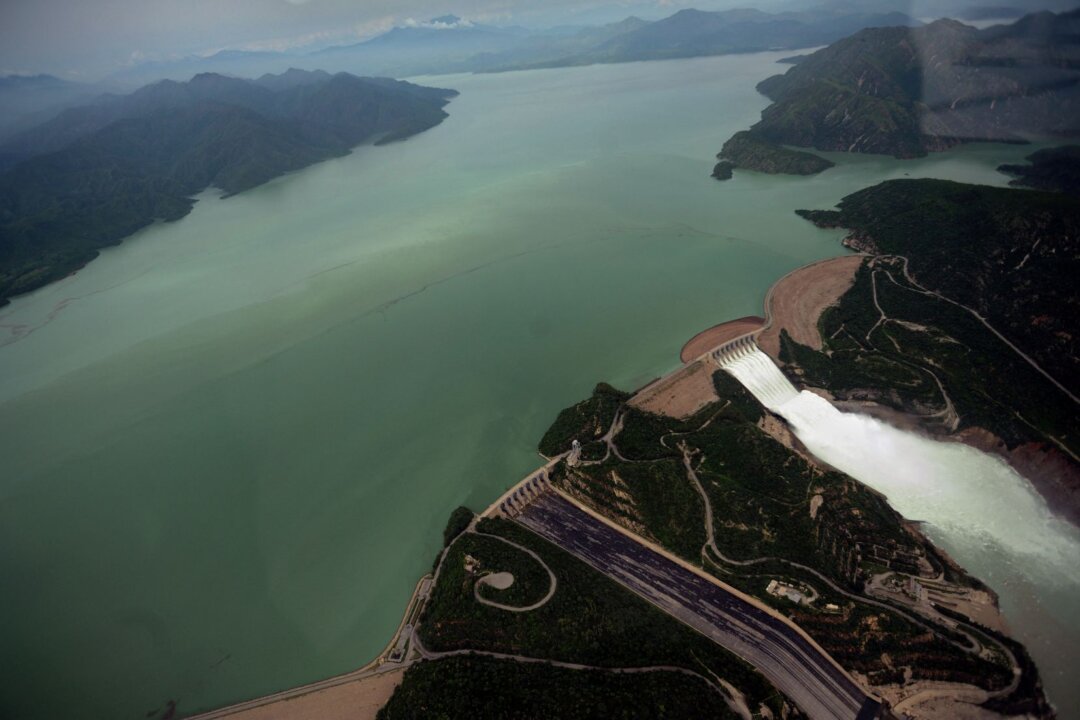
An emergency was declared, and routine construction was suspended at Pakistan’s flagship hydropower project after a rock mass collapsed during tunnel excavation on Nov. 9.
The collapse at Tarbela Dam 5th Extension Project (T-5) breached a protective bund, sending water surging into the under-construction tunnels and powerhouse facilities.
The 1,530-megawatt hydropower project is contracted to China’s state-owned Power Construction Corporation of China (PowerChina) and co-financed by the World Bank and the Asian Infrastructure Investment Bank (AIIB).
The incident marks the latest structural disruption to hit the strategic energy venture.
After an earlier cofferdam breach pushed the project’s target completion back to around 2028 and escalated costs by more than 285 percent, the new failure has triggered further investigations into site engineering and contractor execution.
According to technical bulletins released by the Pakistan Water and Power Development Authority (WAPDA), the collapse occurred during the excavation of the second bench connecting tunnel, where a fragile rock formation suddenly gave way. The structural failure compromised the protective bund, allowing reservoir water from the intake pit to flood the lower access tunnel and power station works.
Project supervisors sounded an emergency alarm, promptly evacuating all Chinese and Pakistani workers from the affected sectors. WAPDA confirmed that there were no deaths or injuries, and that the main Tarbela Dam embankment, primary tunnels, and operational facilities were not structurally compromised.
While routine excavation and structural construction were paused, site activity shifted to emergency mitigation. WAPDA confirmed that water accumulated in the intake pit was completely drained on Nov. 9, cutting off further inflows to downstream work zones. On-site engineering teams subsequently launched round-the-clock dewatering operations inside the flooded powerhouse while initiating structural reinforcements.
Following a two-day site inspection on Nov. 9 and Nov. 10, WAPDA Chairman Lt. Gen. (Retd.) Muhammad Saeed ordered a formal departmental inquiry to examine the causes of the rock collapse, according to The Associated Press of Pakistan (APP).
The Tarbela 5 expansion is designed to add three 510-megawatt generating units to the dam’s existing Tunnel 5, lifting total installed capacity from 4,888 megawatts to 6,418 megawatts and delivering an estimated 1.466 billion kilowatt-hours of clean electricity annually.
PowerChina was awarded the civil works package in 2021 under a contract valued at roughly $355 million, while electro-mechanical equipment was contracted to a Chinese consortium led by Harbin Electric International. The expansion is backed by a multilateral loan package comprising $390 million from the World Bank and $300 million from the Asian Infrastructure Investment Bank, supported by Pakistani counterpart funds.
This was not the first mishap at the facility.
According to the Pakistani media outlet Dawn, in August 2025, a construction cofferdam at the project collapsed, flooding work zones and forcing a stoppage of operations. A 15-page official inquiry report finalized in July 2026 determined that the contractor (PowerChina), the project consultants, and project owner WAPDA shared collective responsibility for that collapse. The probe revealed that the cofferdam’s design had been altered after the contract was signed to a weaker rock-filled option on the contractor’s proposal—a contractual violation that left the barrier vulnerable.
The 2025 cofferdam disaster contributed to a delay of at least two years from the original commissioning target of 2026 and increased the estimated total costs from 82 billion Pakistani rupees to approximately 317 billion rupees ($1.14 billion)—a 285 percent increase.
The project has also operated under broader governance scrutiny. Pakistan’s anti-corruption watchdog, the National Accountability Bureau (NAB), had previously opened investigations into senior WAPDA executives and project management over allegations of abuse of authority, irregular contract approvals, and financial mismanagement.
With the immediate response measures underway, Saeed has directed the project’s consultants to submit a detailed report covering all aspects of the incident as soon as possible, according to APP. He has also instructed the consultants, the contractor, and the WAPDA project team to implement remedial measures and finalize a contingency plan to minimize delays in completing the project.
We had a problem loading this article. Please enable javascript or use a different browser. If the issue persists, please visit our help center.