
[The content of this article has been produced by our advertising partner.]
Affluent parents in Hong Kong and mainland China have begun wealth transfer planning when their children are as young as four, according to a new survey by DBS Hong Kong.
“DBS Treasures Affluent Family Survey 2026 – From Education to Inheritance: Planning for Children’s Future”, which polled families in Hong Kong and mainland China, found that parents set aside an average of HK$5mn in liquid assets for the next generation.
Advertisement
Some 31 per cent of respondents reported that they had already started planning while their children remained in school.
This approach differs markedly from that of previous generations, when arrangements for passing on wealth tended to occur later in life. Today, many parents are integrating these plans from the early years of their children’s upbringing.
Advertisement
Planning earlier for the next generation
Mainland parents show greater readiness to use investments and life insurance for inheritance planning, while those in Hong Kong tend to prefer savings vehicles. Across both markets, however, flexibility and control over the timing of wealth transfers rank as top concerns.
Mainland parents, by contrast, favour investments combined with life insurance because of the potential for asset growth and the gearing effect of insurance. A relatively modest premium, sometimes supported by financing options, can secure a much larger sum for future generations.
Advertisement
Building strong financial foundations
Of equal importance is financial education. The survey showed that 94 per cent of parents regard financial awareness as essential to their children’s upbringing, with 67 per cent believing it should begin by age 13 or earlier.
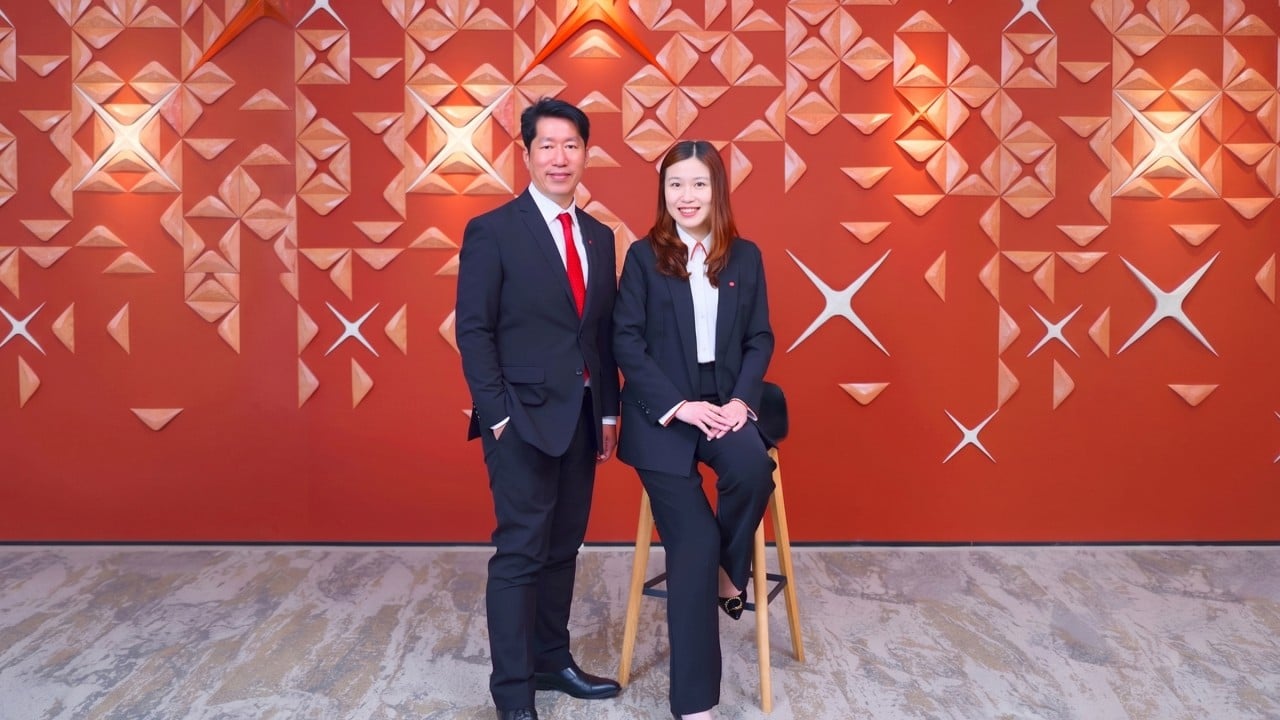
“Hong Kong parents most hope their children develop regular savings habits, while parents in mainland China place more emphasis on understanding investments,” said Amy Kwan, head of business planning, customer segment and ecosystem, consumer banking group & wealth management, DBS Hong Kong.
Advertisement
These goals are supported by the bank through joint parent-child activities, seminars on overseas education scenarios and tools that track asset allocation and progress towards goals.
One recent example was the “Future Tycoons Family Wealth Discovery Day” at the 18 QRC DBS Treasures Centre in Central, where families took part in simulated real-life scenarios covering life planning and financial management.
Overseas education is also an integral part of many families’ long-term plans. Some 91 per cent of parents remain open to sending children abroad, with mainland parents often favouring Hong Kong or Singapore and Hong Kong families preferring the UK, Australia or New Zealand.
Advertisement
For families pursuing these international pathways, DBS Treasures supports every stage of the journey with same-day remittances to 44 destinations, time deposits in 14 currencies for planned education funding, and UnionPay Diamond debit cards for overseas spending. DBS Treasures clients can also have their Treasures status recognized across our priority markets in Asia, enjoy equivalent privileges and benefits, helping families stay connected to their wealth wherever life takes them.
The value of integrated advice
Three quarters of parents indicated they would seek professional advice in the coming 12 months, with the figure rising to 88 per cent among respondents in mainland China.
Advertisement
Kwan said clients benefit most when one trusted bank brings together deposits, investments, insurance, cross-border payments and wealth planning within a single relationship.
“That means families can move from planning to execution to ongoing review within one coordinated framework, instead of managing separate providers for different needs,” she said.
With DBS Treasures, clients can tap relationship managers, insurance specialists and investment counsellors who work together to shape solutions around education planning, asset allocation, cross-border needs and intergenerational wealth transfer.
Advertisement
Parents share a common motivation rooted in responsibility and care for the next generation. Different products from Manulife enable smooth intergenerational transfers while preserving parental control.
Why families are planning wealth transfer earlier
The shift is driven by three main factors. First is the compounding value of time: the earlier wealth transfer tools such as participating life insurance policies are put in place, the longer those funds have to grow.
Advertisement
Second, many parents have experienced market volatility in recent years and now recognise that wealth preservation is as important as growth. In an environment of high inflation and uncertainty, life insurance offers stability and asset segregation.
Third, overseas education costs continue to rise, prompting them to combine education funding with inheritance arrangements through long-term insurance products that can provide a more substantial financial buffer for their children’s future needs.
“Legacy is essentially a long-distance race against time. Starting planning during a child’s schooling definitely gives them a head start,”said Wing Lo, head of bancassurance & insurance financing, consumer banking group and wealth management, DBS Hong Kong.
Advertisement
A savings product co-developed with Manulife he cited that the earlier the purchase, the earlier it starts to accumulate value, which helps accumulate wealth sufficient for generation-to-generation succession if the policyholder prefers.
Parents who act while they still receive stable active income can allocate premiums more flexibly and create buffers to support their children through home purchase, business ventures or other life changes, he suggested.
For a decade, DBS has partnered with Manulife to offer a range of well-rounded insurance solutions. Insurance products bring advantages that are difficult to match elsewhere.
Advertisement
They can deliver long-term returns that help mitigate the impact of inflation and short-term market swings. Many also feature multi-currency options, allowing customers to shift focus on a different currency to accommodate evolving needs or capture new market opportunities.
These options need not be seen as opposites. Lo suggested that families combine strengths from both savings and insurance strategies. Flexible insurance solutions, paired with different premium payment methods and financing arrangements, can deliver the liquidity valued by Hong Kong parents as well as the leverage sought by families in mainland China.
- DBS Bank (Hong Kong) Limited (the ‘Bank’), being registered with the Insurance Authority as a licensed insurance agency, is appointed as an insurance agency of Manulife (International) Limited (‘Manulife’). for the distribution of life insurance products in the Hong Kong Special Administrative Region. The Bank distributes the product for Manulife and the product is a product of Manulife but not the Bank.
- The content is provided for general information purposes only and does not take account of your individual needs and circumstances, and reference only and should not constitute any insurance advice, product recommendation or offer of services. You should read the related product information to understand the nature, features, risks and exclusions of the product(s) and determine if the above product(s) meets your needs and circumstances before proceeding with the application.
- If necessary or if you have any questions, please seek independent professional advice.
- For more information, please contact the licensed staff of the Bank.
Advertisement
Advertisement