
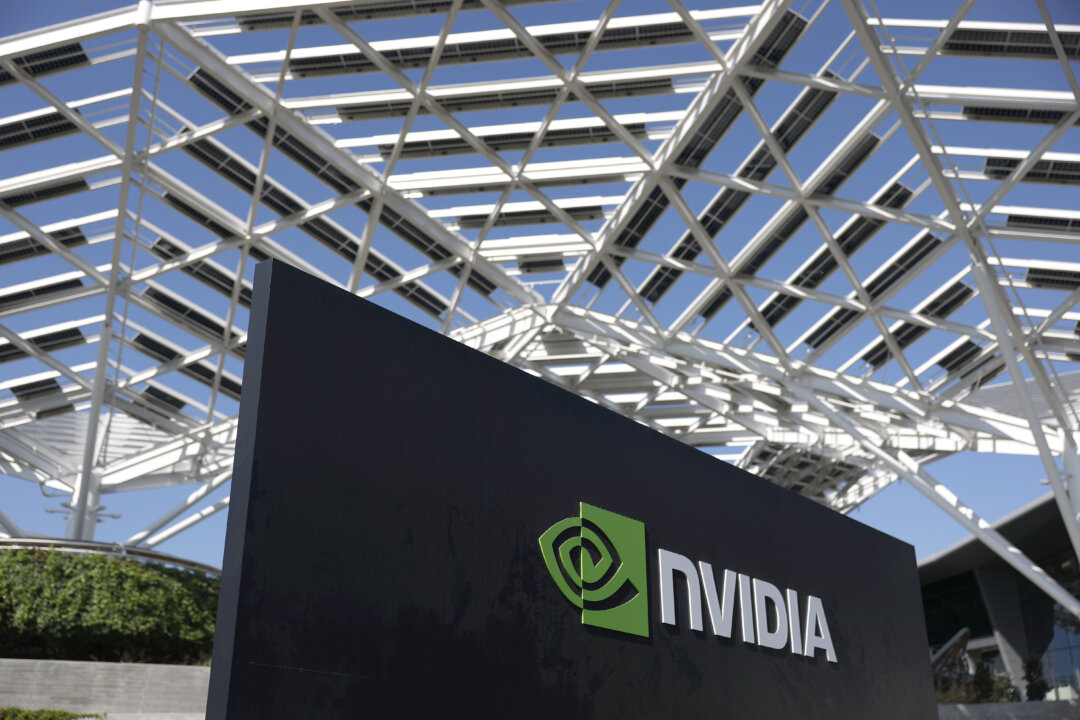

Nvidia has stopped shipping U.S.-licensed artificial intelligence (AI) chips to China despite Washington’s decision earlier this year to allow certain advanced processors to be sold to approved Chinese customers.
Colette Kress, Nvidia’s interim chief executive and chief financial officer, confirmed the halt during the company’s Nov. 17 earnings call.
“We are no longer shipping licensed Hopper Data Center products to China,” Kress said.
The products include the H200, a powerful chip used in data centers to develop and run AI systems.
Nvidia reported $2.4 billion in sales of licensed Hopper data center products to China during the quarter ended Oct. 25. However, its forecast for next quarter assumes no revenue from data center computing products sold to China.
The company did not specify why shipments had stopped or whether they would resume. Nvidia did not respond to The Epoch Times’ request for comment by publication time.
The shipment halt follows months of restrictions imposed by both Washington and Beijing on Nvidia’s advanced AI chips.
In January, the U.S. Commerce Department eased export restrictions on the H200 and comparable processors, allowing export license applications for approved Chinese customers to be reviewed individually rather than generally rejected.
The policy required safeguards, including requiring buyers to screen their customers and independently testing the chips in the United States.
Nvidia subsequently received U.S. licenses to ship limited quantities of H200 chips to specific Chinese customers. But permission from Washington did not guarantee sales in China.
In its August regulatory filing, Nvidia said Beijing’s restrictions had prevented it from selling all the H200 products covered by its U.S. licenses.
The company said Beijing encouraged Chinese customers to buy from domestic competitors while discouraging purchases, imports, or use of Nvidia’s data center products.
Nvidia also identified the Chinese regime’s plan to promote technical standards for computing performance and energy efficiency in data centers. The company warned that the standards could be implemented in ways that prevented some of its products from qualifying for use in China. It did not identify a specific H200 import ban or explain Beijing’s reasons for restricting sales.
Nvidia said it had made only a fraction of the H200 shipments permitted under the American licensing program. It also reported that a 25 percent U.S. tariff added costs that it could not pass on to Chinese customers.
The company said it could not widely sell a competitive data center computing product in China without approval from both Washington and Beijing. It continued to ship unrestricted graphics processors for gaming and professional workstations to China.
When asked about Nvidia’s shipment halt at a Nov. 18 press briefing, Chinese Foreign Ministry spokesman Guo Jiakun did not directly address the company’s decision. He said Beijing had previously stated its position on U.S. chip exports to China without elaborating.
Nvidia stated in its August filing that its exclusion from China’s data center computing market was helping Chinese competitors expand their networks of customers and software developers, potentially strengthening their ability to challenge Nvidia worldwide.
We had a problem loading this article. Please enable javascript or use a different browser. If the issue persists, please visit our help center.