
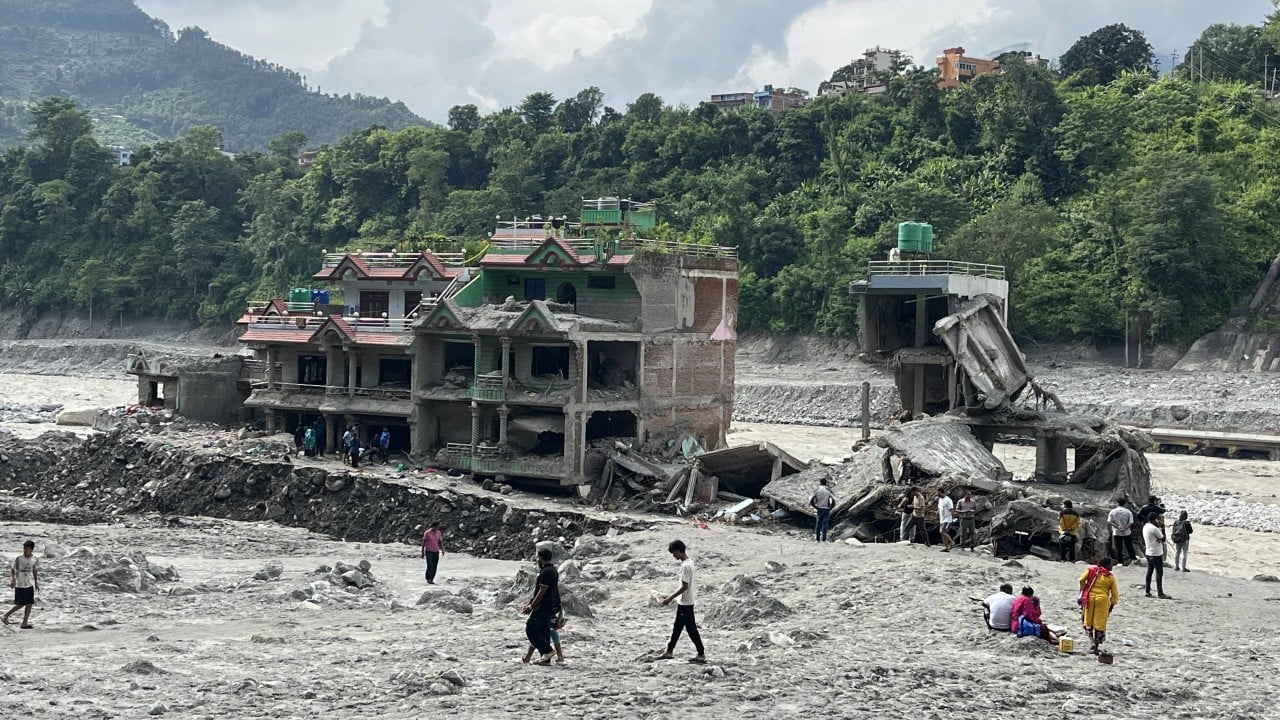
Taradevi Tamang’s village exists on official maps, but on the ground, it looks as though it was never there at all.
Two weeks ago, raging floodwaters ripped through her village in central Nepal’s Nuwakot district, sweeping away Tamang’s tin-roofed home alongside the modest savings and gold jewellery she had accumulated over the years. The Trishuli River also washed away her family’s main source of income: 265 piglets and 34 wild boars.
Tamang, 50, is among roughly 3,500 people currently sheltering in government-run facilities across the three worst-hit districts of Rasuwa, Nuwakot and Dhading. Having lost their homes, land and life savings, survivors now face an uncertain future, haunted by the daunting task of rebuilding from scratch.
“We lost our house during the earthquake but still had the land to rebuild with aid,” Tamang said tearfully at a shelter in Nuwakot, referring to the devastating quake that hit Nepal in 2015. “We thought our lives would improve, but it’s just one stress after another. My heart gets heavy thinking about what to do. We don’t have anything to hold on to now.”
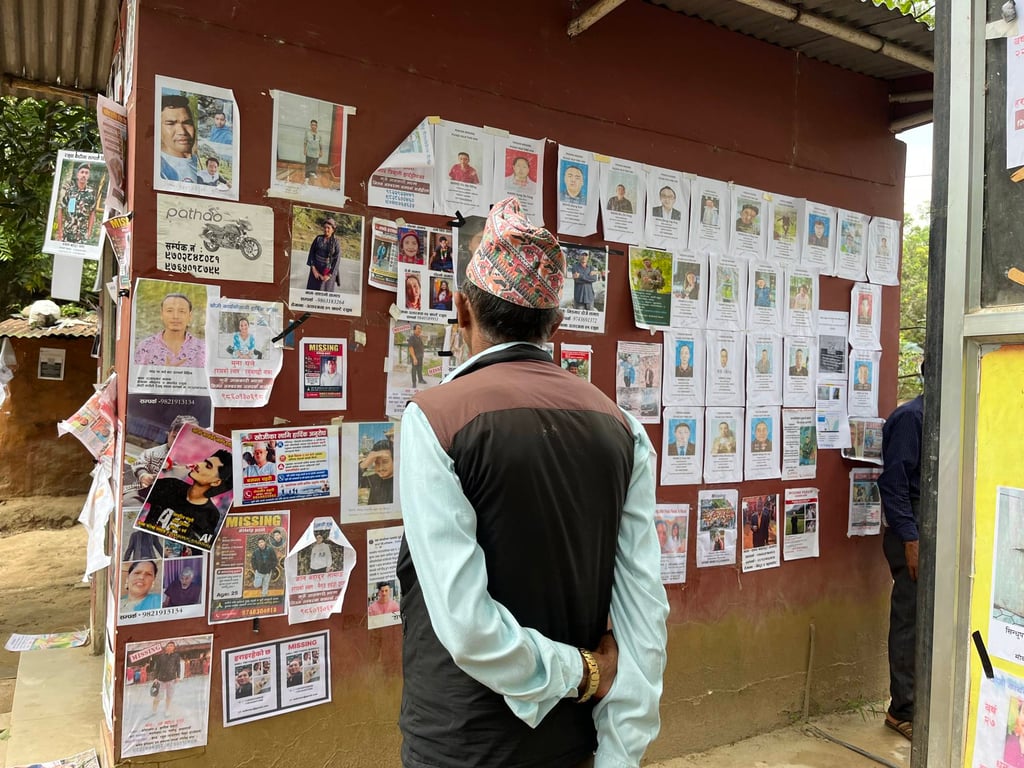
The swollen Trishuli River has receded since the August 26 disaster, which has left more than 1,300 people dead and over 5,000 missing. But outside the army camp in Bidur, where helicopters ferry relief materials, the search continues. Relatives arrive carrying photographs of loved ones, searching for news or looking for a wall to post fliers, hoping someone might recognise a face.
A short distance away in Dhunge Bazaar, entire settlements have been reduced to rubble. The ground beneath still feels unstable as the river roars past, while mud stains three storeys high on buildings far back from the bank reveal how high the water rose.