
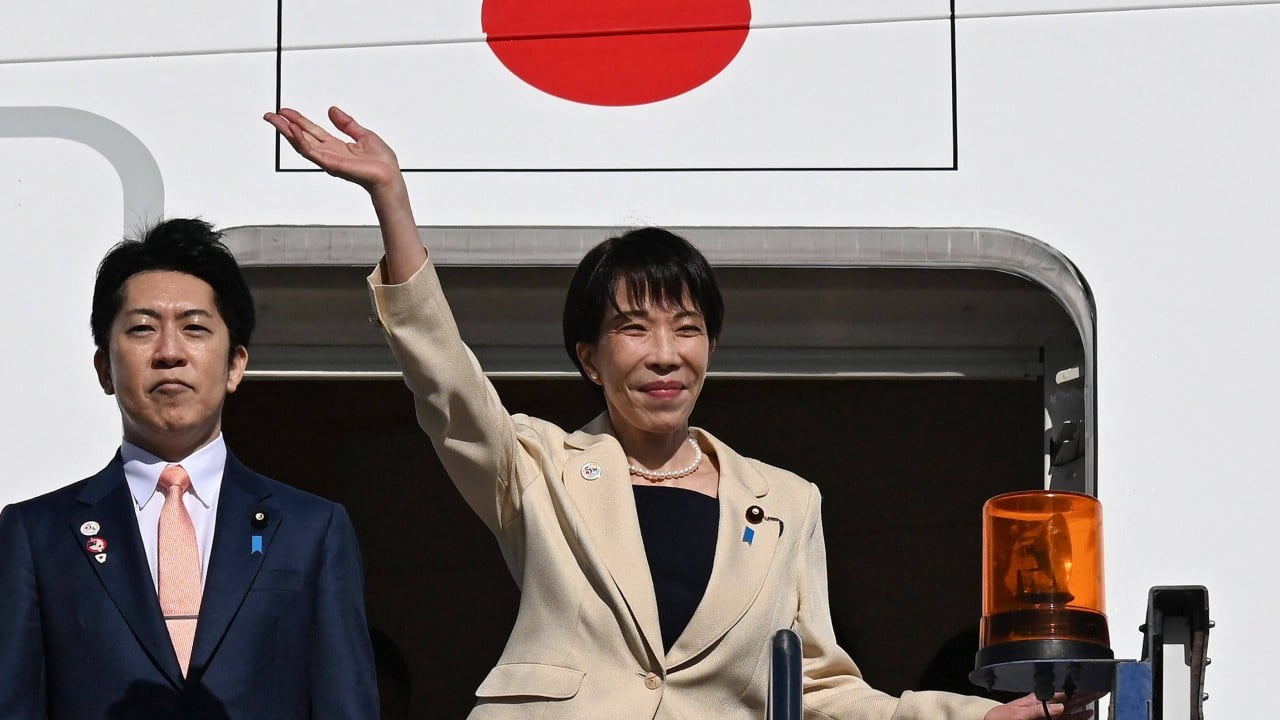
Japan’s Prime Minister Sanae Takaichi is pushing through legislation to establish the country’s first centralised intelligence agency since the second world war, driven by concerns that its existing set-up is too fragmented to keep pace with espionage, cyberthreats and “grey zone” operations.
The plan, recently endorsed by the US Federal Bureau of Investigation, would transform the Cabinet Intelligence and Research Office (CIRO) into a central hub, drawing in analysts, technologists and operatives from across the government and private sector.
It could be operational as early as July, pending final approval by the House of Councillors, and is expected to begin with around 700 staff, although the government anticipates that number will grow swiftly.
Advertisement
Late last week, Kazuya Hara, head of the CIRO, travelled to Washington for talks with FBI director Kash Patel, briefing him on the agency’s planned structure and scope. Patel was effusive about the plans on social media, writing that the new body would “greatly enhance our shared partnership” and help “centralise fragmented intelligence” that had long been scattered across Japanese ministries.
He further signalled Washington’s intent to support Tokyo “on cybersecurity, counter-intelligence, espionage and counterterrorism” measures.
Advertisement