
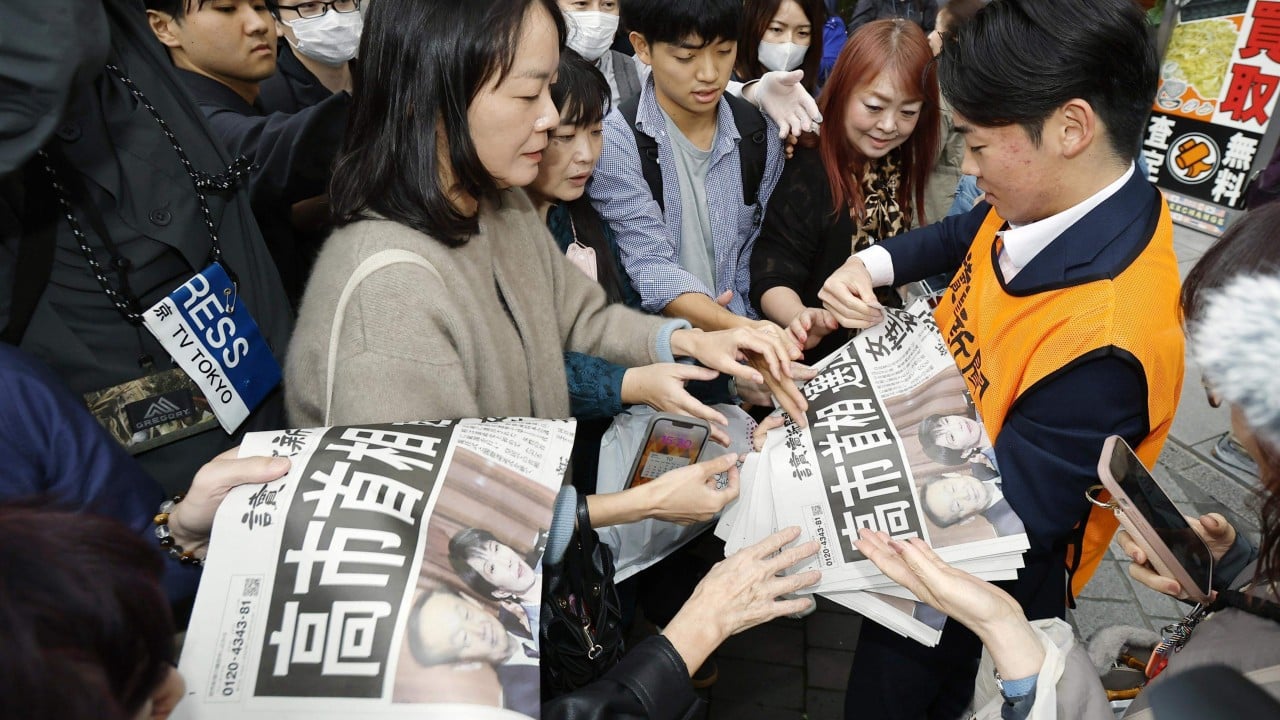
Japan is often seen as one of Asia’s most stable democracies, with a sophisticated media industry and constitutional protections for free expression, yet one of the world’s leading press freedom indexes has once again rated the country’s media environment as “problematic”.
Analysts and journalists said the label points to a contradiction at the heart of Japan’s press system – reporters are rarely subject to the overt repression seen in authoritarian states, but political pressure, access journalism and newsroom self-censorship have steadily narrowed the space for scrutiny.
While Japan rose four places in the 2026 World Press Freedom Index released by the Paris-based media watchdog Reporters Without Borders last month, it still came in 62nd out of 180 nations, leaving it well below many of its democratic peers and regional neighbours.
Advertisement
Norway topped this year’s rankings for a 10th consecutive year, while New Zealand ranked 22nd, Australia 33rd and South Korea 47th. Japan did, however, rank two spots higher than the United States, which fell seven places to 64th after Donald Trump returned to the White House.
Reporters Without Borders, known by its French initials RSF, ranks countries according to the political, legal, economic, sociocultural and security conditions in which journalists work, drawing on a tally of abuses against journalists and media outlets as well as questionnaires completed by press freedom specialists.
Advertisement