
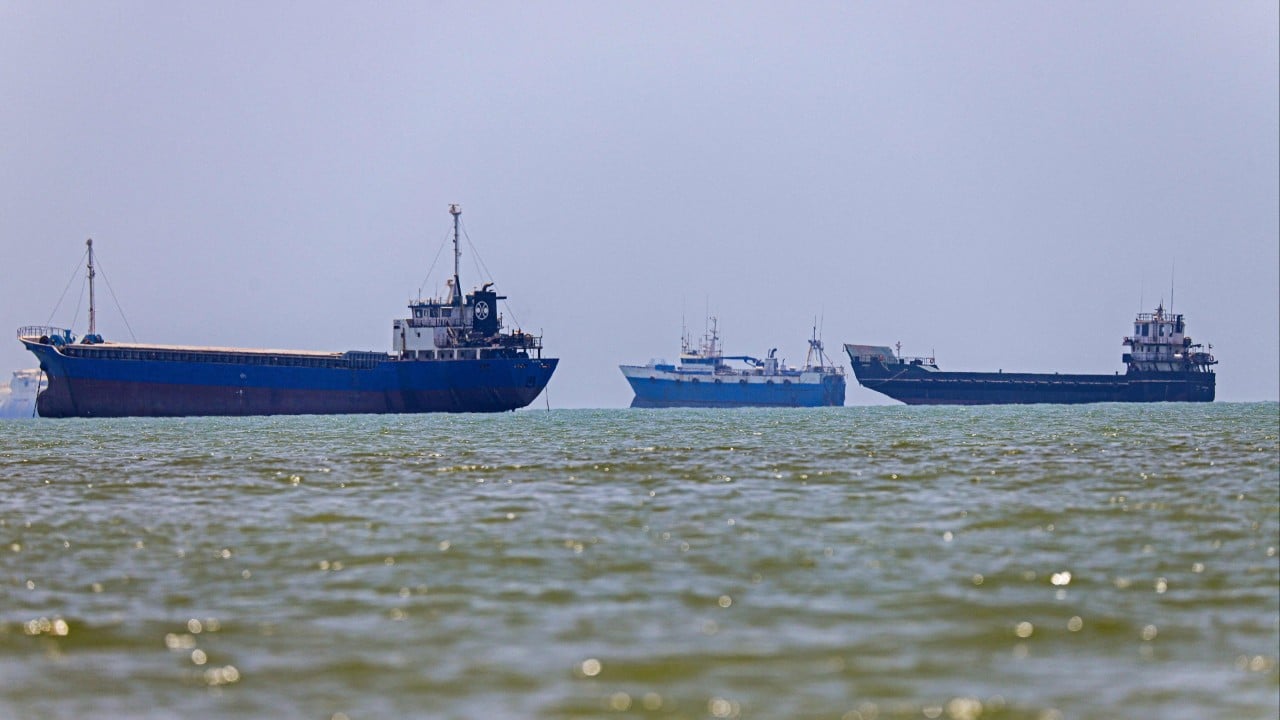
Iran sought to assert control over Strait of Hormuz by saying that ships need its permission and mandatory insurance to cross, even as the US said that 20 ships sailed through overnight via a route it recommends along Oman’s coast.
The conflicting signals come as the shipping industry tries to assess whether it is safe to transit the world’s most important energy chokepoint and what sort of system will emerge after the US and Tehran reached an interim peace deal to reopen the strait.
The number of ships crossing with their signals on dropped Friday after an initial surge, and after a report of a mine spotted near Oman’s coast.
Advertisement
For many shippers and oil producers, Iran’s update on insurance threatened to crystallise a worst-case scenario: tolls on the Strait of Hormuz.
The insurance policy required by Iran is currently free, but could involve charges in the future, the country’s Persian Gulf Strait Authority said in a document on its website. It also said that ships must follow a prescribed route that passes along its coast and that alternatives are prohibited.
Shippers and producers have grown increasingly concerned about the prospect that Iran will seek to toll the strait in future, after the memorandum of understanding signed with the US said only that transit would be free for the duration of its 60-day term.