
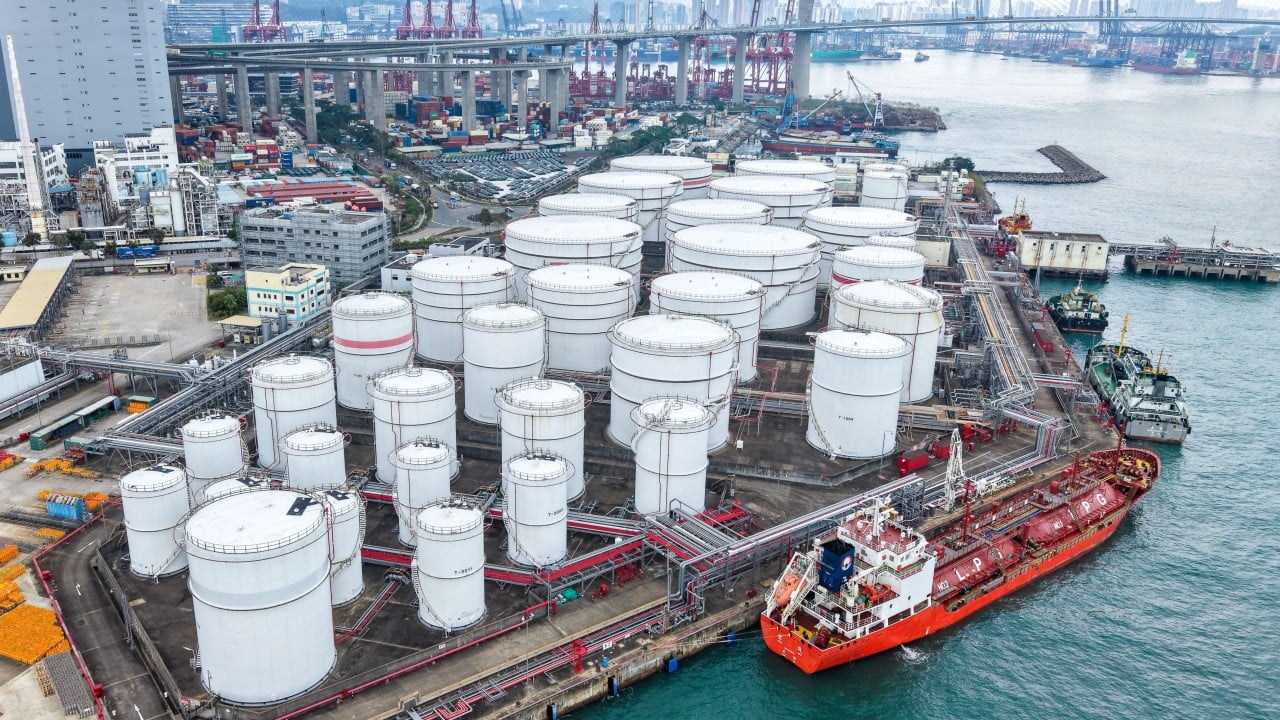
External shocks from the war in the Middle East have had only a limited impact on Hong Kong’s inflation, the finance chief has said, despite an upwards revision to forecasts, citing the city’s service-based economy and stable energy and food supplies from mainland China.
Briefing the Legislative Council’s Panel on Financial Affairs on Monday, Financial Secretary Paul Chan Mo-po said the surge in global fuel prices was expected to feed through to fuel-related consumer prices, pushing inflation higher.
The government earlier revised its 2026 forecasts for underlying and headline consumer price inflation from 1.7 per cent and 1.8 per cent to 2.5 per cent and 2.6 per cent, respectively.
Advertisement
“Rising international oil prices will continue to feed through to consumer prices and the fuel-related products,” Chan said.
“However, as Hong Kong is a service-oriented economy with relatively low energy dependency, and with stable energy supplies from the mainland, the external impact can be mitigated.”
Advertisement
Asked whether all factors had been considered in revising the inflation forecast, Chan said rising fuel prices had disrupted global supply chains, but the mainland – Hong Kong’s main supplier of food and non-staple goods – had kept supplies and prices stable.
He added that the government had introduced a range of fuel subsidies to help the transport sector cope with persistently high fuel costs, including a two-month LPG subsidy of HK$0.50 per litre that began on Sunday. He said the government would monitor the situation closely and adjust measures if necessary.