
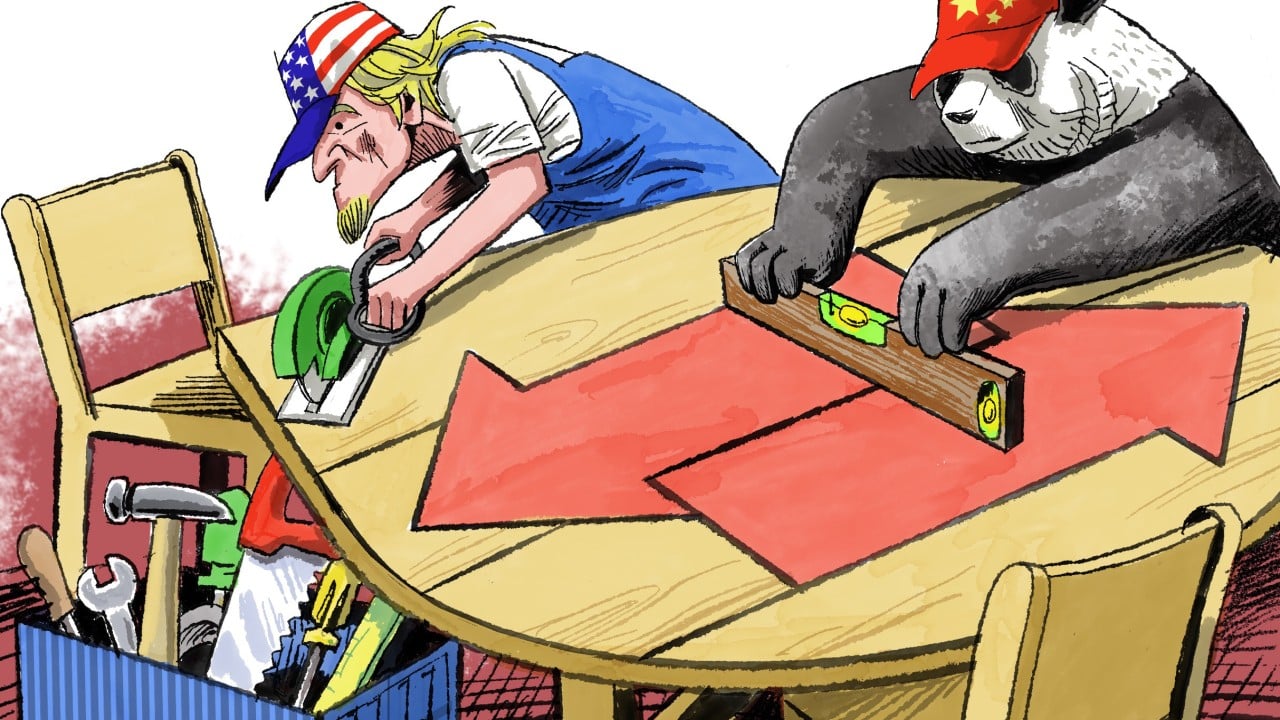
High on the list of deliverables agreed following the summit between Chinese President Xi Jinping and US President Donald Trump was the establishment of a board of trade, albeit with little detail on its mission, responsibilities or operations. The White House expects the board “to manage bilateral trade across non-sensitive goods” while China’s Ministry of Commerce says the board “will discuss issues such as tariff reductions”. While not contradictory, both formulations are vague and hint at bumps down the road.
There are two important ways to avoid misunderstanding and make the board of trade an effective mechanism – not only for engagement but also for action.
First, both sides should take the time to agree on a detailed mandate, rather than papering it over or leaving that discussion for another day. Second, the US should apply the lessons of what worked and what did not work in past bilateral economic engagement bodies, including the Strategic and Economic Dialogue and Joint Commission on Commerce and Trade.
Advertisement
For its initial task, the US-China board of trade is expected to identify products in non-sensitive sectors thought to be worth around US$30 billion that could be subject to tariff reductions or elimination. This means products such as critical minerals, advanced semiconductors, chip equipment and even cars will be off the table.
It is one thing to determine what falls into the basket of sensitive trade. It is a whole other thing to develop a list of non-sensitive sectors and products.
Advertisement
Trade Representative Jamieson Greer has listed agricultural goods, aircraft and medical equipment as US exports that Washington would like to discuss with Beijing under the new trade board arrangement. Greer has also said the administration would seek public comment on which products should be considered as falling within the board’s mandate. Non-sensitive US imports of Chinese products could include consumer goods and low-technology items, he suggested.