
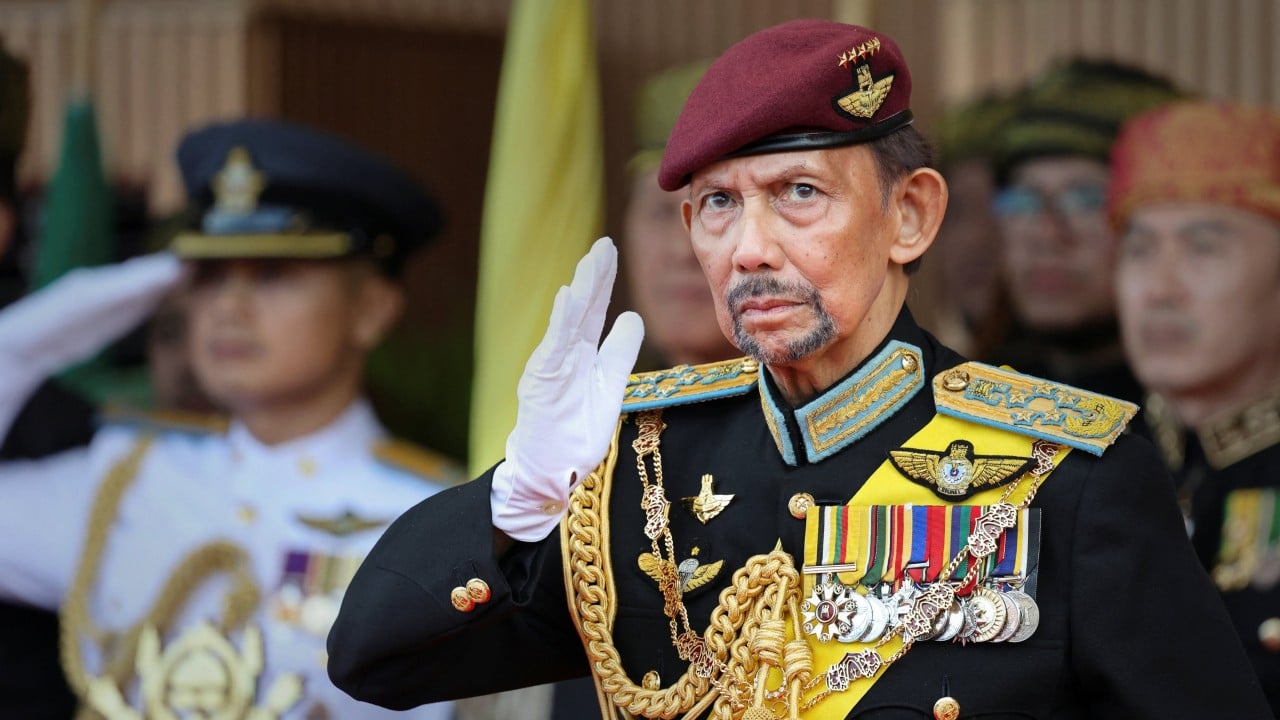
When Brunei’s Sultan Hassanal Bolkiah recently stripped his daughter-in-law of a royal title, the move drew attention for its unusually public glimpse into discipline inside one of the world’s few remaining absolute monarchies.
But it also offered a small example of what analysts who study Southeast Asia’s royal families describe as a wider challenge for the region’s monarchies: how to preserve authority through tradition and adaptation as public expectations change.
An official announcement dated August 7 said Pengiran Raabi’atul ‘Adawiyyah’s conduct had tarnished the monarchy’s reputation and shown disrespect towards the sultan, Queen Saleha and the royal family, but did not offer details.
A contrasting example came on May 25, when Cambodian Senate president Hun Sen, acting as head of state during King Norodom Sihamoni’s medical absence in China, signed a royal decree pardoning former opposition leader Kem Sokha.
One case involved hierarchy and discipline inside an absolute monarchy; the other showed the working of constitutional authority in a monarchy with limited governing power.
Across the region, the models differ sharply. Brunei’s sultan rules as both head of state and government, Malaysia’s king is elected every five years from among nine hereditary rulers, Cambodia’s crown remains largely symbolic and Thailand’s monarchy occupies a prominent but highly sensitive place in national life.
Yet analysts told This Week in Asia that all four faced a common test: whether they could keep adapting as politics, institutions and public expectations evolved.