
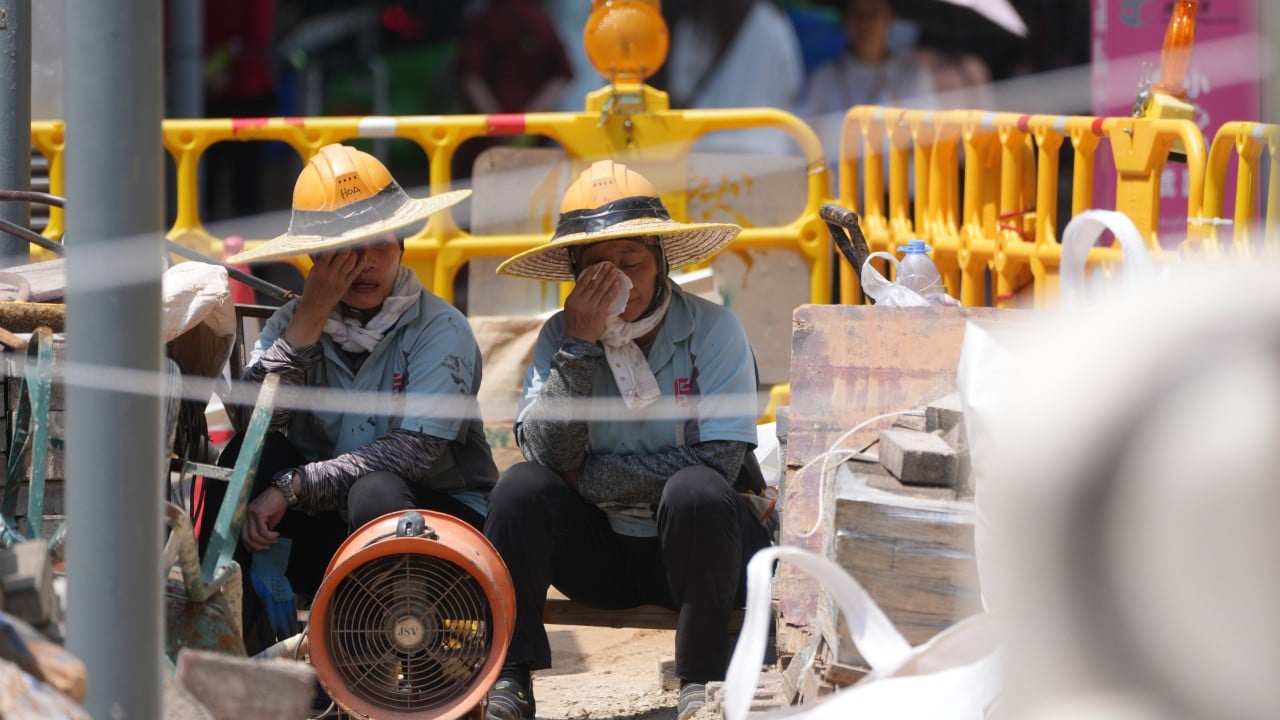
At the beginning of August, when temperatures in Hong Kong hit highs not seen for at least 140 years, the Labour Department’s Heat Stress at Work Warning system remained at the amber level, the lowest of three tiers. The controversy that followed raised a broader question: are our heat warnings adequately protecting people who work outdoors?
The Labour Department has since announced changes that will lead to earlier heat-stress warnings. These improvements to worker protection are welcome. But they also force us to confront a harder question: what happens when dangerous heat becomes common enough that protecting workers’ health begins to conflict with construction schedules, noise controls, workers’ incomes and the normal functioning of the city?
Let us for a moment consider the wider impact of the updated rules. After this summer, it is not hard to believe that heatwaves will become increasingly long and common.