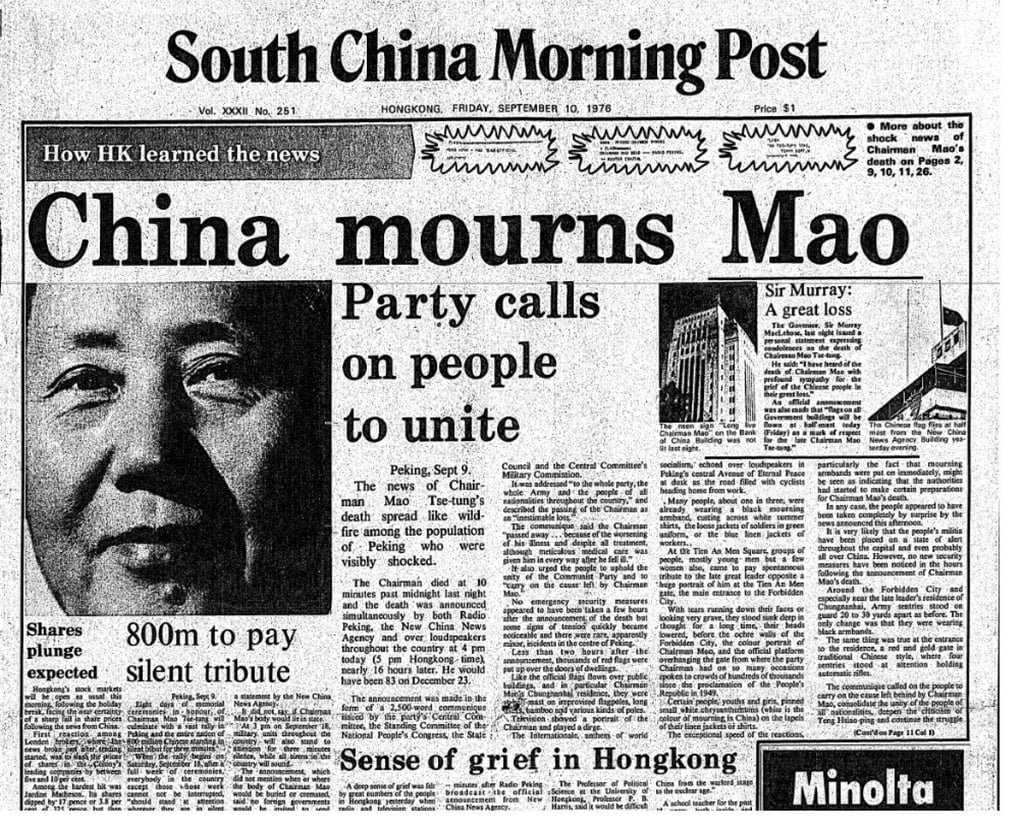
This article was first published on September 10, 1976.
Sense of grief in Hongkong
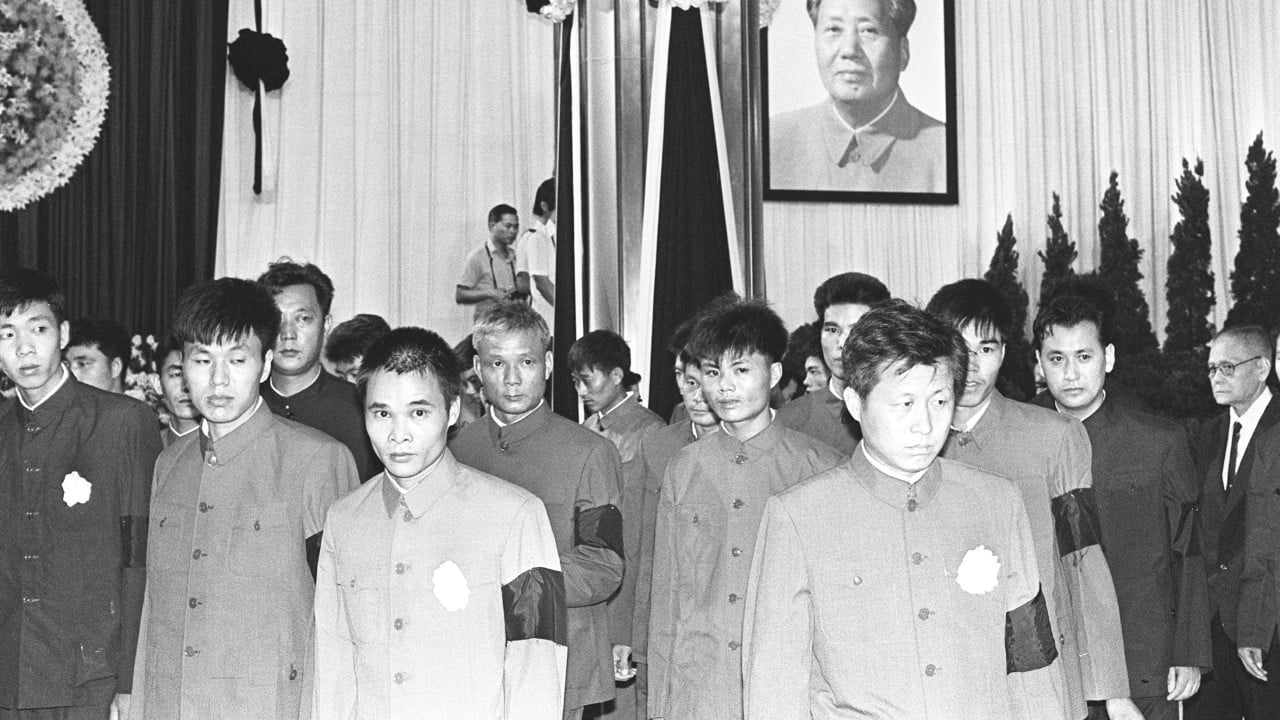
A deep sense of grief was felt by great numbers of the people in Hongkong yesterday (September 9, 1976) when radio and television stations flashed the news of the Chairman’s passing. The news brought a cloud of gloom over celebrations of the mid-autumn festivities. Flags at a number of major building and hotels, – including the Bank of China – were flown at half-mast within an hour of the announcement.
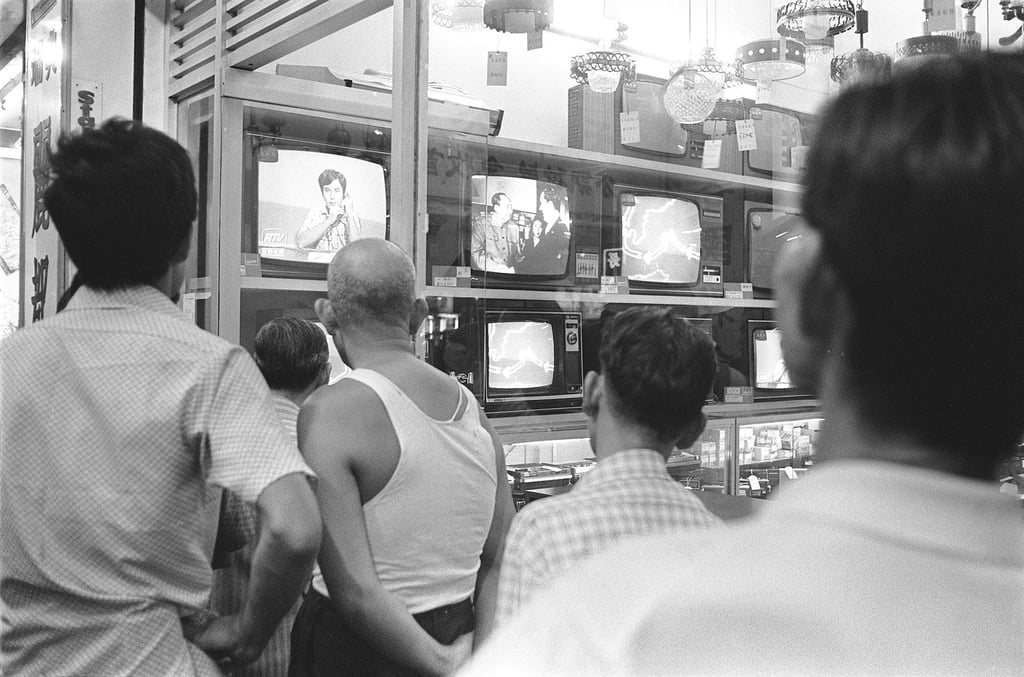
Hongkong people first heard the news over both channels of Radio Hongkong and the English Channel of Commercial Radio at 5.08 pm – minutes after Radio Peking broadcast the official announcement from New China News Agency. The first television flash was broadcast by RTV’s English Channel at 5.17 pm followed by others two or three minutes later. Large crowds milled outside television shops to watch for more announcements.
Our Macau correspondent reported that almost immediately after the news became known, local cinemas cancelled shows for the rest of the day to show their respect for the Chinese leader.
The Professor of Political Science at the University of Hongkong, Professor P. B. Harris, said it would be difficult to gauge the political significance of the Chairman’s death. “But his passing will mean that we are entering a new era in which things are much less certain than they have been. “But we have been prepared for his death for the past few months. We are psychologically more prepared than, say, a year ago and therefore the impact is much less than a year ago. “Chairman Mao has taken China from the warlord stage to the nuclear age.”
A school teacher for the past 18 years, both inside and outside China, Mr Tseng Man-kiu, was confident that Hongkong would not be affected in the near future. “But everything would have to rest and the dust to clear. And when a new leadership emerges a clear evaluation of the whole situation could be made.” His view was shared by many who were interviewed.
The feelings of the world community could be best summed up in the expression of sorrow by members of the local diplomatic corps.