
Hong Kong is embracing its growing role on the international stage in vital sectors driving global prosperity – a message highlighted at an annual gathering of international industry leaders, corporate executives and local policymakers who back the city’s upward momentum.
The Global Prosperity Summit 2026 (GPS 2026) showcased high-stakes international dialogue over two days in Hong Kong last month for panel discussions on the city’s potential across several fast-evolving and globally significant industries.
During a keynote speech at the opening dinner on May 18 preceding the summit, city Chief Executive John Lee Ka-chiu said that, as a Special Administrative Region of China, “Hong Kong’s doors have long been open – wide and welcoming to all, a champion of free trade and multilateralism”.
Advertisement
Now in its third year, the summit was co-organised by the Savantas Policy Institute, the Shanghai Institutes for International Studies and the European Chamber of Commerce in Hong Kong. Regina Ip Lau Suk-yee, chairperson of the board of governors at Savantas Policy Institute, welcomed delegates with a speech praising the city for being a bridge between China and traditional Western powers.
“Hong Kong stands at the intersection of East and West, tradition and innovation, global capital and national development,” Ip said. “It can serve as a platform for dialogue, exchange and pragmatic cooperation. Amid uncertainties, Hong Kong continues to stand out as an oasis of stability, connectivity and opportunity.”
Advertisement
The city is increasingly establishing itself as a premier platform for global dialogue, capitalising on key strengths that span both established and emerging industries. That range was on display in the summit’s panel programme, with each discussion highlighting different facets of Hong Kong’s strategic advantages, world-class connectivity and unique capacity to convene cross-border stakeholders.
Ip said discussions focused on important topics including the city’s “positioning as a hub for innovative drug development and as a centre for culture, sports and entertainment”. She said panellists also discussed “international trade and the future development of digital finance and explored whether Hong Kong can play an important role in the space economy”.
Summit speakers were of a “very high calibre”, Ip said, adding that the dialogues granted Hong Kong “valuable insights into how it should position itself in the future”.
Advertisement
Frank Chan Ling-fung, an assistant director at the Department of Health who oversees drug matters, joined a panel on innovative drug development in the Guangdong-Hong Kong-Macau Greater Bay Area. The topic sits at the heart of Hong Kong’s ambition to become a world-class centre of medical innovation.
“Hong Kong can gain the trust of other jurisdictions because we are transparent and efficient,” Chan said. “These jurisdictions know our internationally recognised standards and understand our thinking, thereby allowing us to serve as a superconnector.”
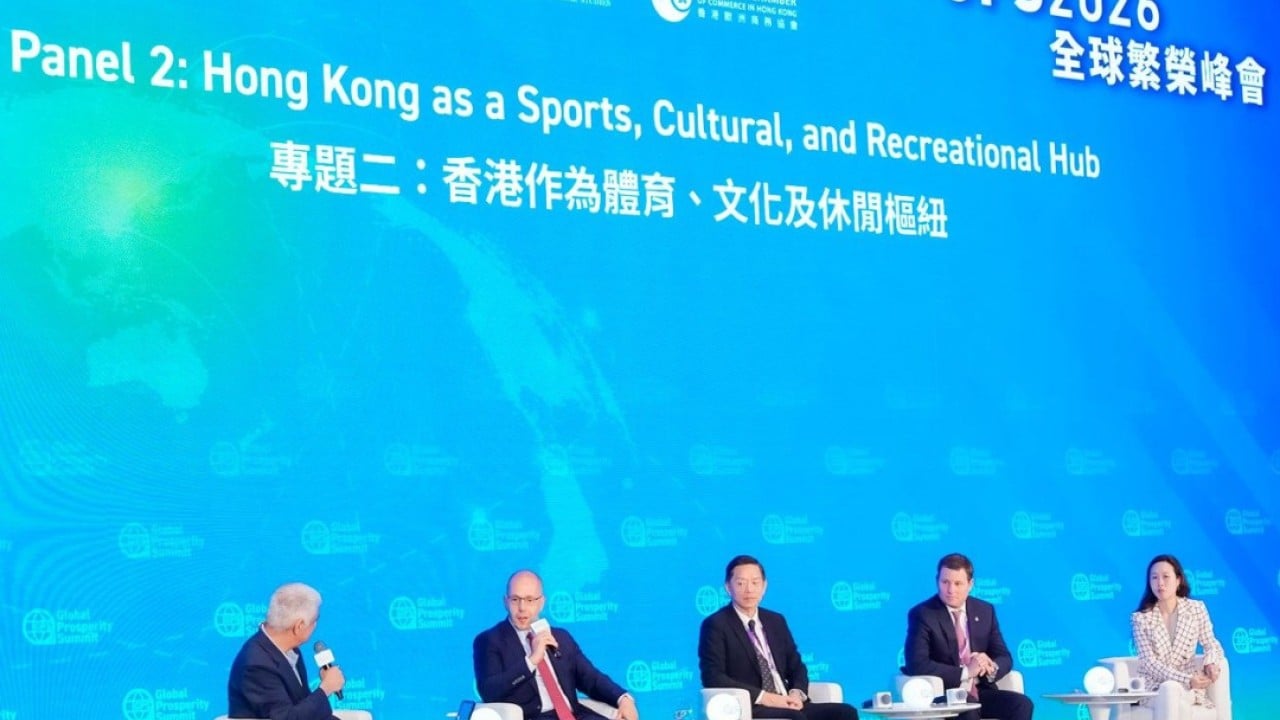
Another panel explored the intersection between sports and culture, discussing how the city could adapt to growing global demand for intentional travel by leveraging its cinematic natural landscape and world-class sports and concert infrastructure.
Advertisement
“I definitely think we are a sports destination,” said Casper Stylsvig, executive director for sports business at the Hong Kong Jockey Club. “We, as institutions, need to help develop together with the government. I think that’s extremely important for the development of Hong Kong as a destination.”
Adrian Pang, commodore of the Royal Hong Kong Yacht Club, teased big events in the world of sailing, including the city’s first hosting of the International Dragon class sailing boat event in November.
“There will be a record number of boats participating. One hundred boats trying to compete in a start line more than one kilometre long,” Pang said. “One of the boats was actually owned by the late Prince Philip, the queen’s husband. It was given to Prince Philip as a wedding gift.”
Advertisement
Bonnie Chan Woo Tak-chi, founder of Complex Asia, said “creativity among youth” that is “uniquely Hong Kong” was something the globe looked up to. “That history of Hong Kong is not replicable,” Chan said. “It’s uniquely ours and we own it. And that makes Hong Kong very authentic in Asia, being the pop culture centre.”
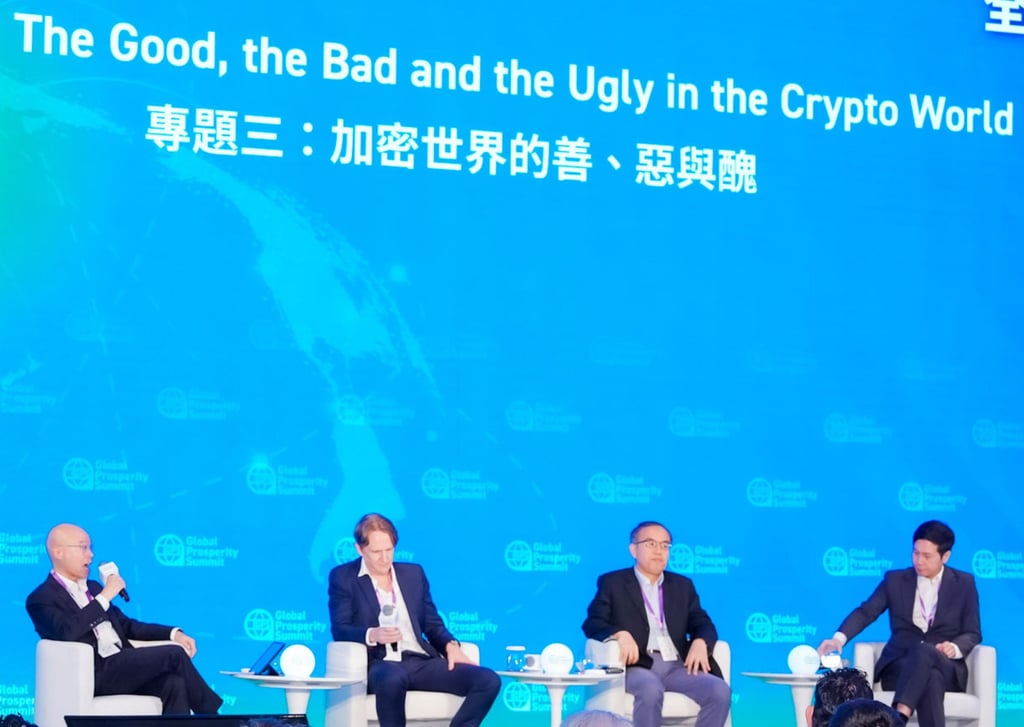
During a panel tackling issues related to digital assets, the government’s Secretary for Financial Services and the Treasury, Christopher Hui Ching-yu, said there would be an eventual convergence between traditional finance (TradFi) and decentralised finance (DeFi).
“The innovators now increasingly come to realise they need applications for their tech to be utilised and for the benefits to be seen,” Hui said. “At the same time, conventional bankers feel there’s pressure externally from their customers and internally for them to innovate.”
Advertisement
Hui also said the city had taken a more structured approach towards digital assets, favouring a wait-and-see approach regarding how they might regulate TradFi and DeFi post-convergence over the creation of a customised, statutory legal framework for such assets.
“If you have a separate regulator which is detached from daily regulation of conventional markets, synergy will be very difficult,” Hui said, noting that in such a leading hub for digital assets, convergence could happen smoothly.
The other two focal points of the summit were international trade and space, which saw insightful conversations about the city’s future in these two areas.
Advertisement
The panel discussion on “International Trade in a Changing World Order” was timely and underscored the topic’s relevance to global economic and geopolitical developments. Experts from Asia, Europe and the US offered valuable insights on this pressing issue.
Development of the space economy was also an area panellists explored through two dedicated sessions: “Fireside Chat: Progress on The New Space Economy since GPS 2025” and a panel titled “Hong Kong as a Facilitator of Aerospace Development”.
From immediate opportunities in international trade, medical innovation and digital assets to longer-term frontiers like the space economy, the summit spotlighted a definitive takeaway: Hong Kong is primed to command a more influential role on the world stage.
After the summit, Ip reaffirmed how the event could help inform local policymakers in the future.
Advertisement
“Our five panel discussions focused on the most important forces reshaping the world – technological, trade and economic transformations,” Ip said.
“Hong Kong can play an important role in addressing important aspects that impact global prosperity – energy issues and climate change as an example. As the government always says, we can be a superconnector. The summit this year helps Hong Kong to reposition itself in the changing world order.”
Advertisement