
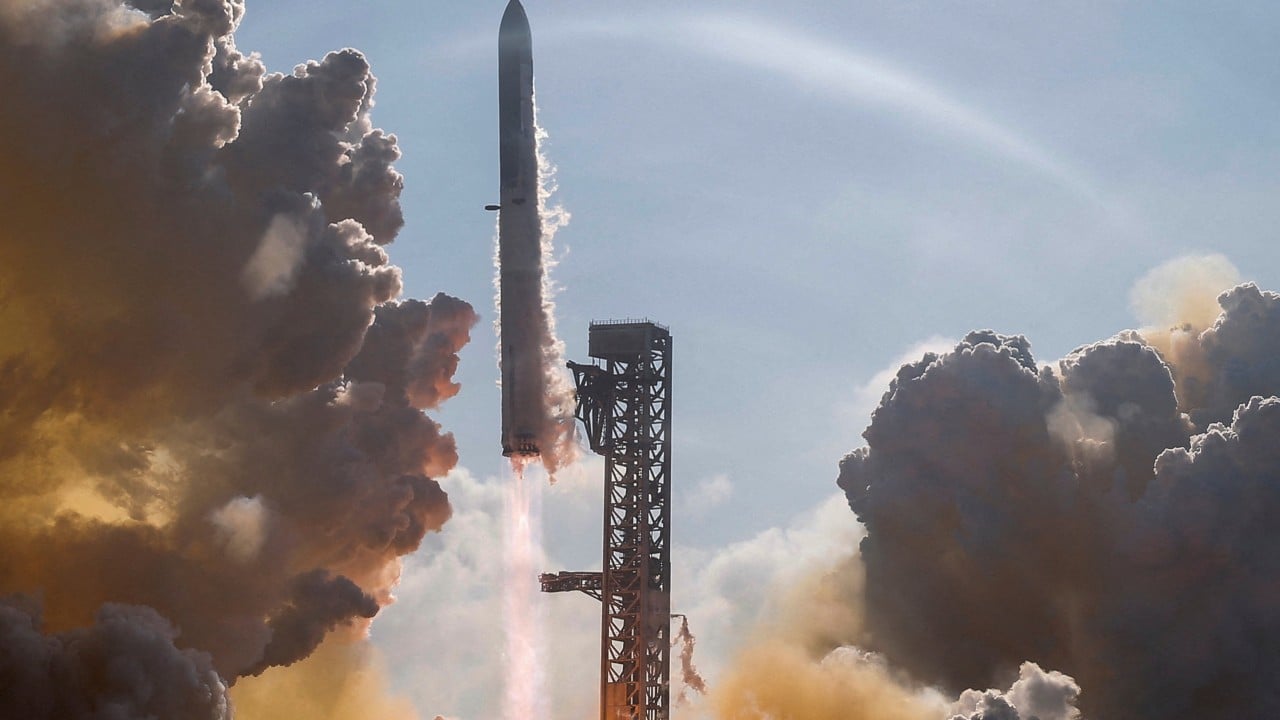
The excitement around SpaceX, fuelled by the targeted US$1.8 trillion valuation for its initial public offering and its promising Starship rocket development, has revived a familiar claim: that SpaceX is on course to dominate the space market.
Commercially, that view is understandable. SpaceX conducts more space launches than anyone and at very competitive costs, its Starlink satellite internet company provides strong in-house demand, and it has a scale advantage unmatched by any other private space company.
But space is no ordinary, commercial, open market. It is a strategic domain where launch, satellite communications, remote sensing and orbital infrastructure are tied directly to sovereignty, security and industrial policy.
Advertisement
Governments do not choose space providers the way consumers choose smartphones. The central question is not only who offers the best technology or lowest cost, but also who can be trusted with critical infrastructure, sensitive data and long-term dependency.
In this light, the bullish assumption that SpaceX will simply overwhelm international markets becomes much less persuasive.
Advertisement
SpaceX is deeply embedded in the US strategic system, with military implications – such as in the Russia-Ukraine and US-Iran wars – and closely associated with its founder Elon Musk, whose political profile is prominent and polarising. While this may reinforce SpaceX’s position in the US, particularly in defence and national security programmes, it can produce the opposite effect abroad. Foreign governments will have to consider if reliance on SpaceX creates excessive political exposure or national security issues.