
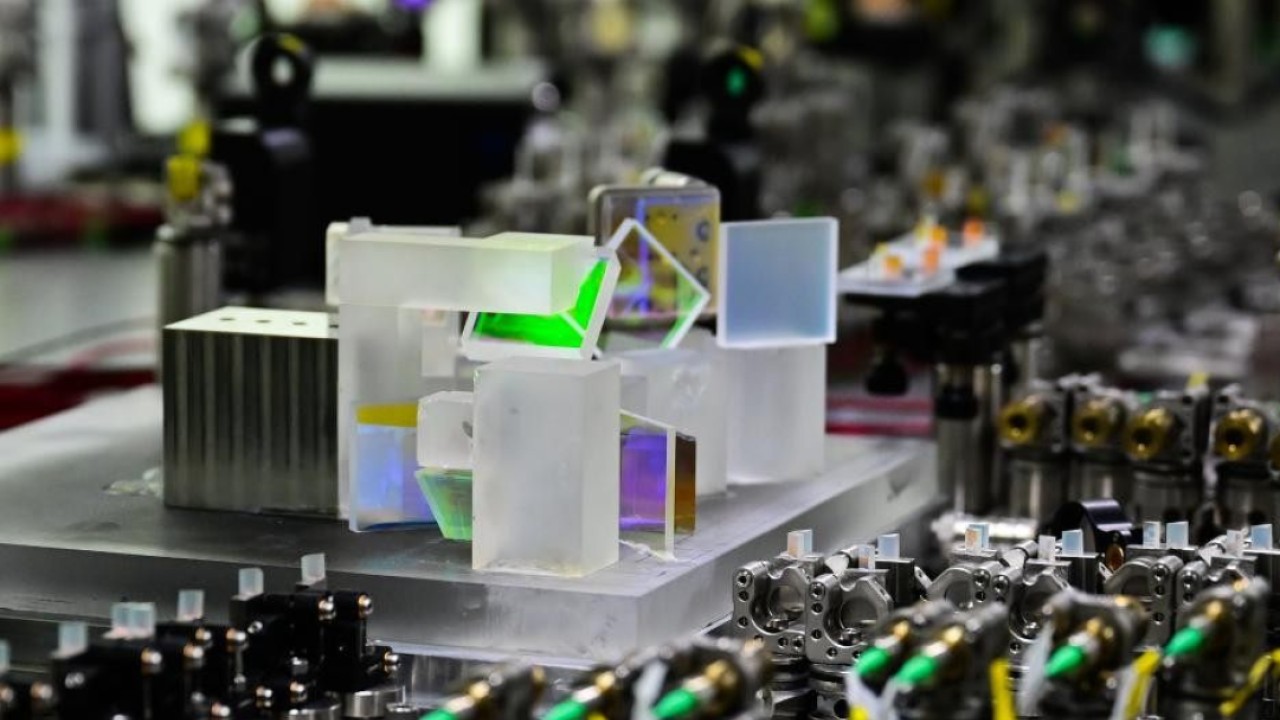
China has unveiled its latest photonic quantum computer, Jiuzhang 4.0, with researchers saying it can outperform the world’s fastest classical supercomputer by a vast margin, further strengthening Beijing’s push towards quantum supremacy.
The results, published on May 13 in the peer-reviewed journal Nature, mark the latest milestone in China’s rapidly advancing quantum programme led by a team of scientists at the University of Science and Technology of China headed by renowned Chinese quantum physicist Pan Jianwei.
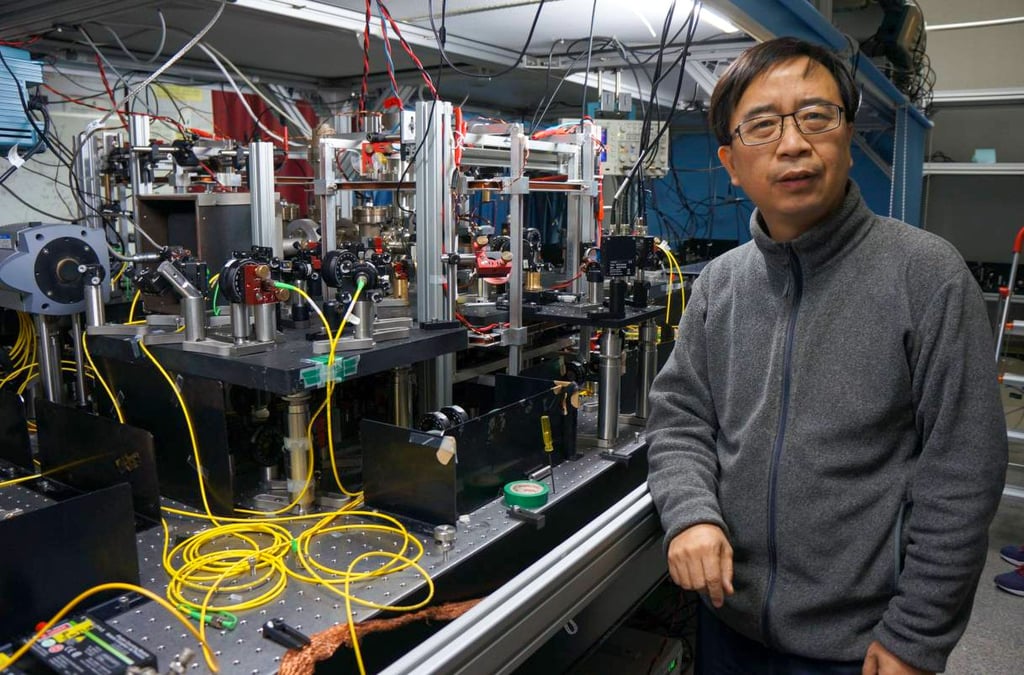
Jiuzhang 4.0 completed a Gaussian boson sampling task in just 25 microseconds – a calculation they estimated would take the world’s most powerful supercomputer, El Capitan in the United States, a mind-boggling more than 10^42 years to finish, according to the university in the eastern city of Hefei.
Advertisement
A Gaussian boson sampling task is a quantum computing task that is computationally difficult for classical computers to handle.
“No realistic classical computing resources, to our knowledge, can bring the MPS [matrix product state] algorithm anywhere near the accuracy achieved by our experiment,” the team said in a press release.
Advertisement
Jiuzhang 4.0 operates with 1,024 squeezed-state inputs across an 8,176-mode interferometric network, and can manipulate and detect up to 3,050 photons – more than 10 times the scale achieved in previous experiments.