
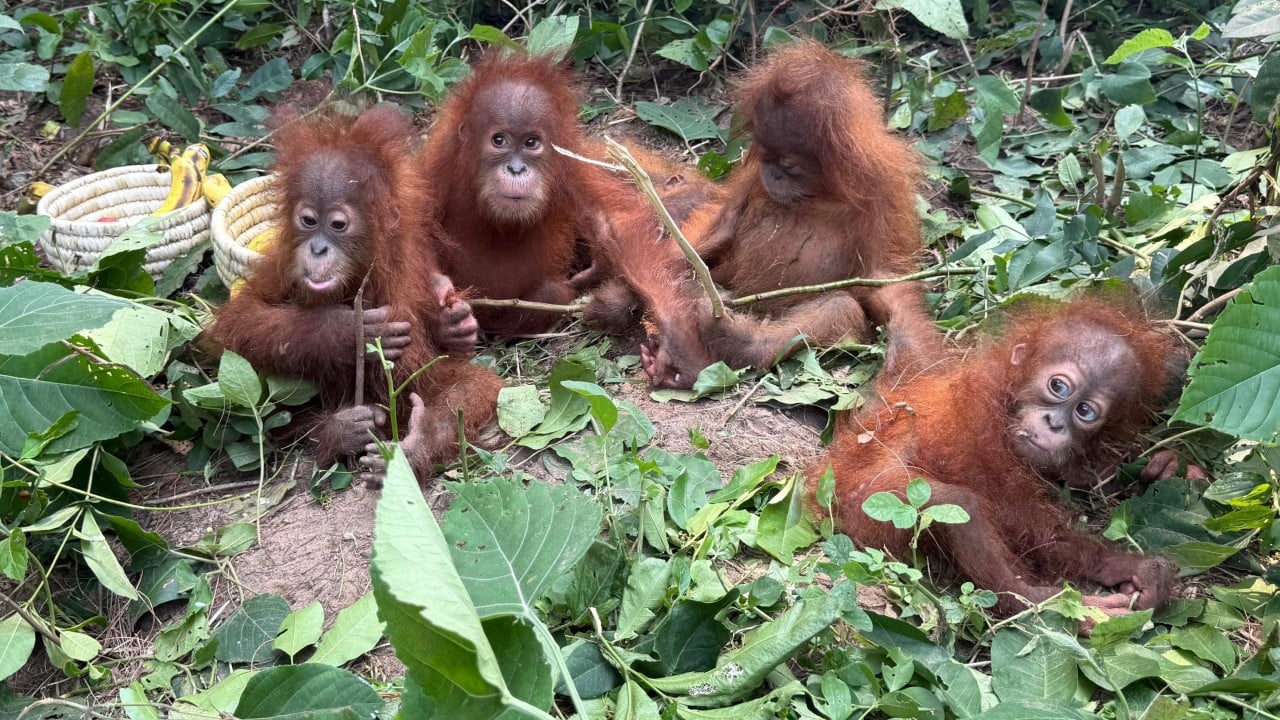
The villagers who first spotted the five baby orangutans in a casuarina forest in India in early September were puzzled by their reddish hair and unfamiliar faces.
The three males and two females, aged six to eight months – were left on a plantation in eastern India’s Odisha, over 2,700km (1,700 miles) from their native rainforests in Borneo and Sumatra, evidence of a growing illicit trade of apes being trafficked into India. They are now at an Indian zoo, where keepers reportedly have been playing classical music to soothe them.
Wild orangutans are native only to the islands of Borneo and Sumatra, where they sustain rainforests by spreading seeds across vast areas, allowing trees to regenerate and store carbon that would otherwise contribute to global warming. The species is critically endangered, threatened by severe habitat loss. There are about 119,500 orangutans left in the wild, according to conservation organisation WWF.