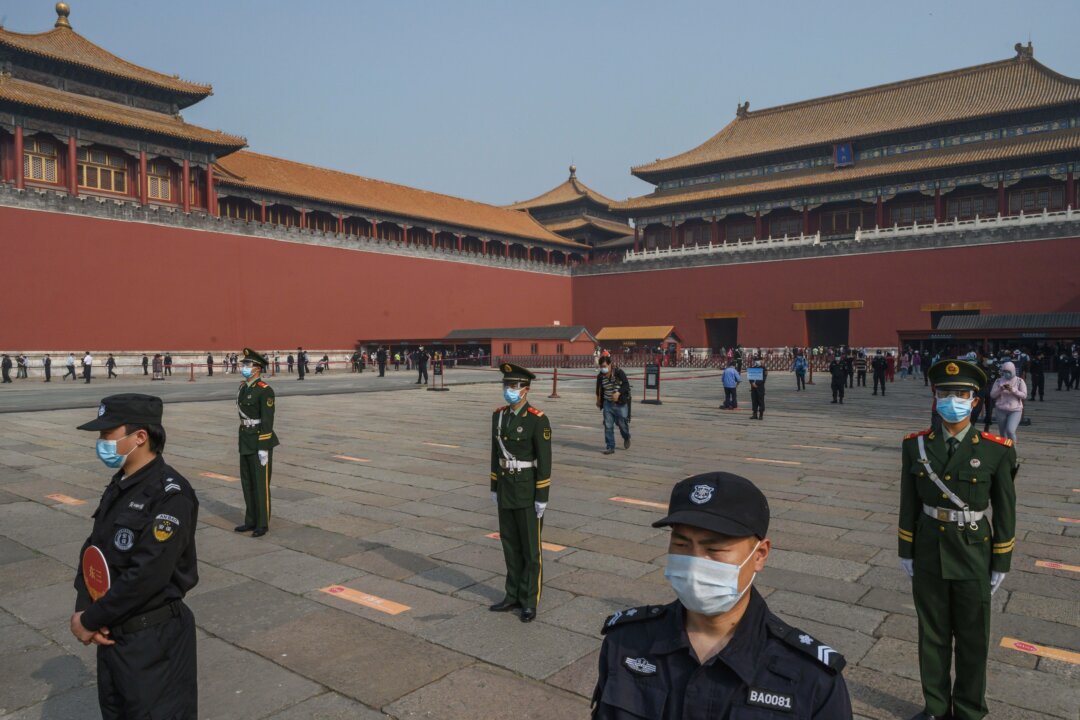
Doctors in China are more likely to stay silent in the face of forced organ harvesting and other transplant abuses rather than speak out for victims, due to the tight grip of the Chinese Communist Party (CCP) on the medical sector, according to a report.
The report, released by the International Coalition to End Transplant Abuse in China on Oct. 20, found that there were no independent safeguards against organ transplant abuses in China, because the country’s transplant oversight bodies, hospital ethics committees, organ procurement organizations, and professional associations all sit within the Party-state hierarchy.
The report is the first in a series examining various aspects of the transplant system that indicate state-sanctioned forced organ harvesting is potentially continuing, seven years after an independent people’s tribunal found the abuse had happened on a significant scale.
“Every entity that Chinese officials present to international audiences as ostensibly independent or as a ‘third party’ is in fact a node in the same Party-controlled system,” Sarah Cook, a China human rights researcher and author of the report, said in a statement.
Unlike an ordinary political party in a democratic country, CCP membership demands total loyalty. Members, including doctors, are required to swear a lifelong oath to serve the Party, protect Party secrets, and “never betray the Party” as they join.
“These are the people who are basically running the transplant sector,” Cook told The Epoch Times.
Within the CCP apparatus, everyone involved, including the people supposedly providing oversight, are bound to act in the Party’s interests, raising questions of accountability.
Given the basic architecture of the system, any abuse occurring would be very difficult to see from the outside.
“It could absolutely be concealed,” she said.
Party Committees
In China, CCP committees are embedded inside hospitals, and the top decision-maker is not a hospital president or medical director, but a Party secretary whose authority over personnel, discipline, and major institutional decisions supersedes clinical administrators, the report found.
This political control extends far beyond individual hospitals. Party committees are also embedded inside China’s two main professional medical bodies—the Chinese Medical Association and the Chinese Medical Doctor Association—rendering them state-controlled organizations rather than a “source of independent oversight” on the medical sector, according to the report.
At the individual level, Chinese medical students pledge to “alleviate human suffering” much like their Western counterparts, but their oath also requires them to “love my motherland,” the report noted. The political oath sits above the medical one.
“When you’re talking about an area of medicine also that deals daily with issues of life and death, and where there is very strong evidence of past abuse and questions of transparency … these oaths of secrecy become that much more significant,” Cook said.
These state-controlled measures have repeatedly enforced institutional silence, most notably when Chinese authorities suppressed Dr. Li Wenliang’s early warnings about the COVID-19 pandemic. The report also details a 2002 incident in which a Falun Gong practitioner was brought to a hospital with a broken pelvis, yet authorities barred the entire medical staff from providing necessary treatment and forced them to conceal his presence.

‘Performative Formality’
While the United States relies on 54 independent, nonprofit organizations to coordinate organ recovery and facilitate transplantation, no such independent bodies exist in China.
Instead, Chinese procurement organizations function as “internal units” within state-approved transplant hospitals, meaning their governance falls to the hospital leadership structure, and ultimately, the hospital Party committee, the report stated.
At the national level, the transplant sector is overseen by China’s National Organ Donation and Transplantation Committee. Analysis of the group’s latest publicly available membership roster from 2016 showed that 17 of its 33 members were confirmed CCP members.
Two of the 17 were from the Logistics Support Department of the Central Military Commission, China’s top military body, according to the report.
“The military presence highlights direct People’s Liberation Army involvement at the highest level of transplant governance,” the report states.
Another three members were from the Red Cross Society of China.
Names such as “Red Cross” create a false sense of independence, Cook said. But the Red Cross Society of China is a state-supervised social organization and isn’t governed by the International Committee of the Red Cross, a humanitarian aid organization based in Geneva.
The report also questioned the role of hospital ethics committees, noting that a lack of public disclosure of membership and logistical hurdles suggest the review process functions “more as a performative formality than as a robust safeguard.”
“When Chinese officials assure the international community that abuses are no longer occurring, those assurances flow through the same hierarchy that would have directed, concealed and benefited from abuses in the first place,” the report states.
Cook contrasted that with the situation in the United States. When concerns arose about some organ procurement groups taking organs without meeting the brain death criteria, medical workers revealed the issue and brought it to federal attention.
In China, there are significant consequences for doctors trying to raise concerns.
“If you yourself dare to speak up, you’d be the next to disappear,” an exiled former internal medicine doctor from Liaoning Province told researchers.
‘Exploit a Captive Donor Population’
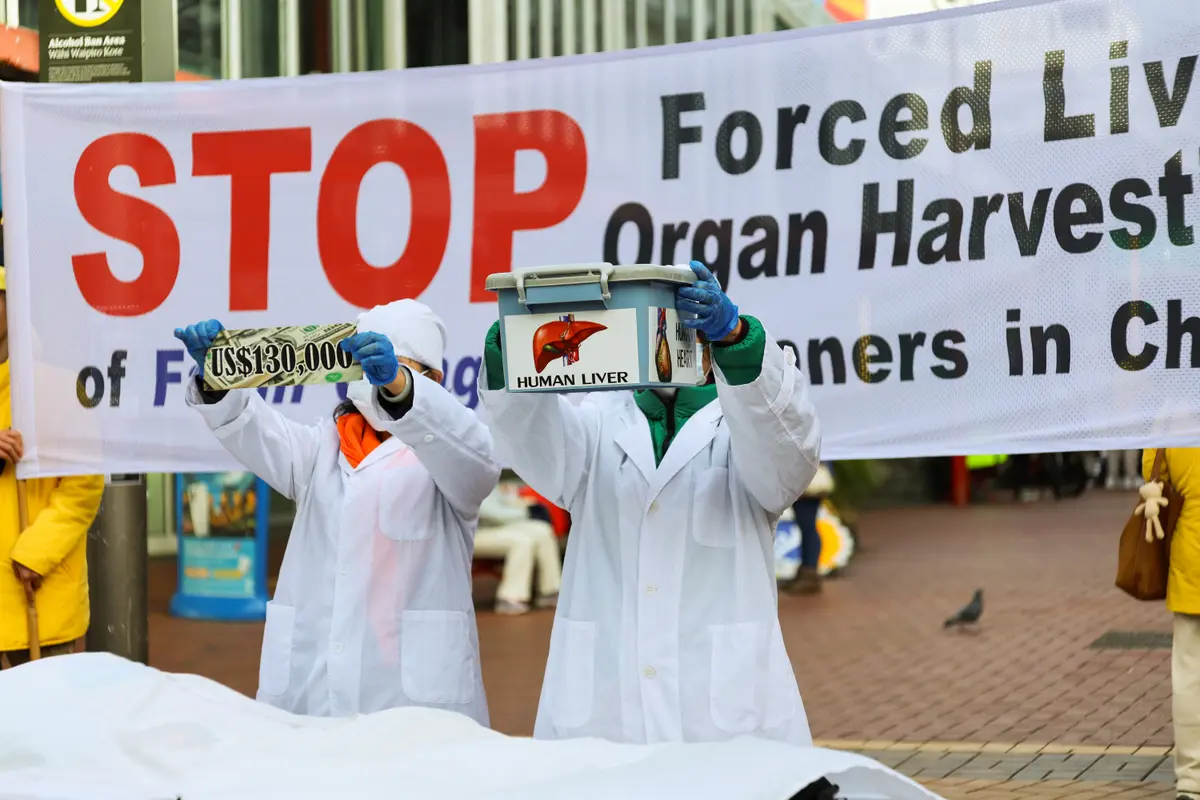
The report identified 19 confirmed cases of transplant surgeons or transplant center directors who were also CCP members, while emphasizing that this figure is not exhaustive.
Two of the confirmed individuals, Wen Hao and Yang Yining, are based in China’s far-western region of Xinjiang, where the U.S. government has accused Beijing of committing genocide and crimes against humanity against Uyghurs. The report noted that the institutions where these individuals work are “best positioned to exploit a captive donor population in Xinjiang.”
Another four of the identified officials work at major hospitals in Jilin, Heilongjiang, Liaoning, and Shandong, provinces the report noted for having the “most extensive, sustained persecution of Falun Gong.”
Falun Gong, also known as Falun Dafa, is a spiritual discipline that features meditative exercises and a set of moral teachings centered on the principles of truthfulness, compassion, and forbearance.
The CCP began persecuting Falun Gong, a popular meditation group in China, in 1999, and millions have been subjected to arbitrary detention, torture, forced labor, and other abuses.
In 2019, after a yearlong investigation, the London-based China Tribunal concluded that the Chinese regime had been forcibly harvesting organs from prisoners of conscience for years. It identified Falun Gong practitioners as the main victims.
One notable case involves Zheng Shusen, a prominent transplant surgeon in Zhejiang Province who simultaneously held a leadership role in an anti-Falun Gong organization.
His case illustrates how “in China’s transplant sector, clinical leadership and the Party’s political apparatus are integrated spheres,” the report said. Across numerous organ transplant hospitals, senior leadership positions are substantially composed of individuals “accountable primarily upward through the Party hierarchy,” it said.
The report offered several recommendations for foreign governments, urging them to pass legislation enabling sanctions and visa restrictions against individuals involved in organ trafficking. It also called on democratic nations to apply targeted sanctions, vet visiting Chinese transplant physicians for CCP affiliations, and support whistleblowers.
We had a problem loading this article. Please enable javascript or use a different browser. If the issue persists, please visit our help center.