
When Nio CEO William Li outlined earnings prospects for the Shanghai-based carmaker in March, he could not help but liken the automotive business to the development of robots.
“I think robotics will represent a natural extension of our carmaking capabilities and business acumen,” Li told reporters at a media briefing after Nio posted its first-ever quarterly profits for the three months ending December.
“Don’t you think that every car we produce in the future will actually be a robot? Its perception, decision-making, and execution will all be based on artificial intelligence.”
While Li has adopted a “latecomer” strategy in robotics to avoid potential big losses in early-stage investment, he is convinced that robotics and carmaking have synergistic benefits.
The premium cars Nio is building already embody perception, decision-making and control systems – similar to those of robots.
That perspective on the future of mobility, buoyed by rapid growth of physical AI, is typical of the more than 10 Chinese manufacturers of intelligent vehicles that have ventured into robotics.
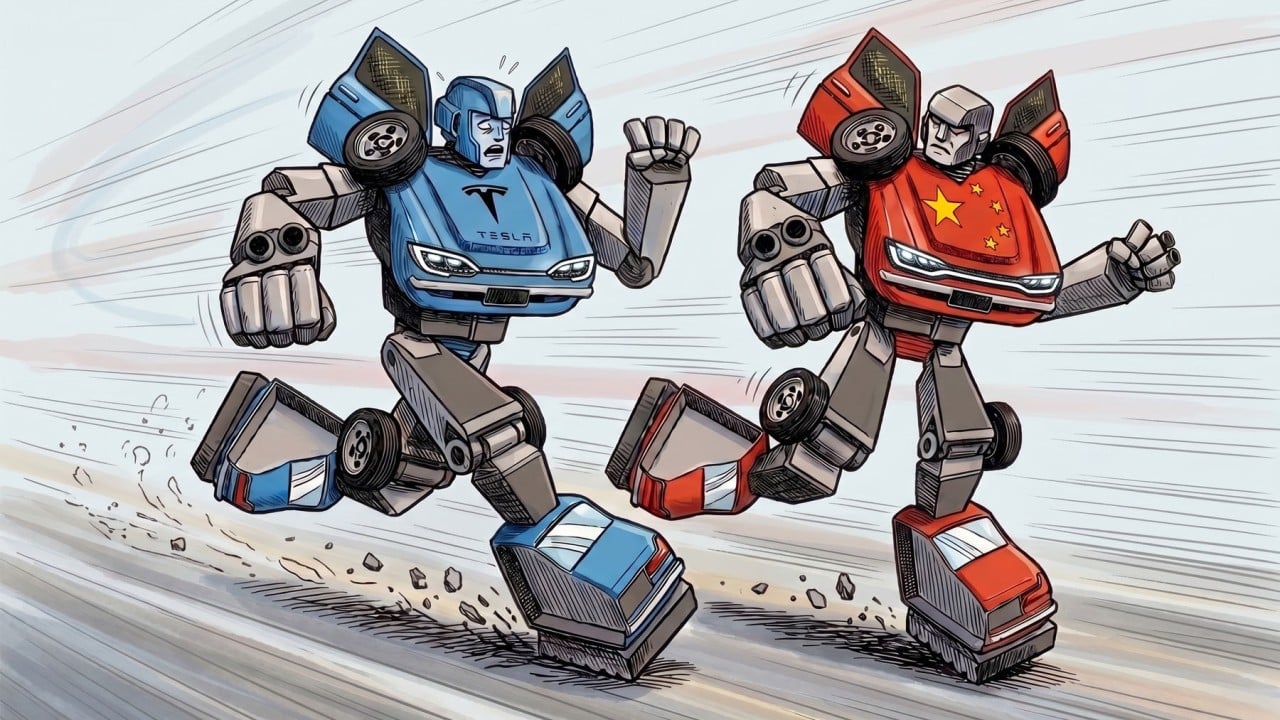
These players, from BYD – the world’s largest electric vehicle (EV) maker – to Stellantis-backed Leapmotor, are once again being labelled as Tesla imitators because the US carmaker is accelerating commercialisation of its humanoid robot Optimus.