
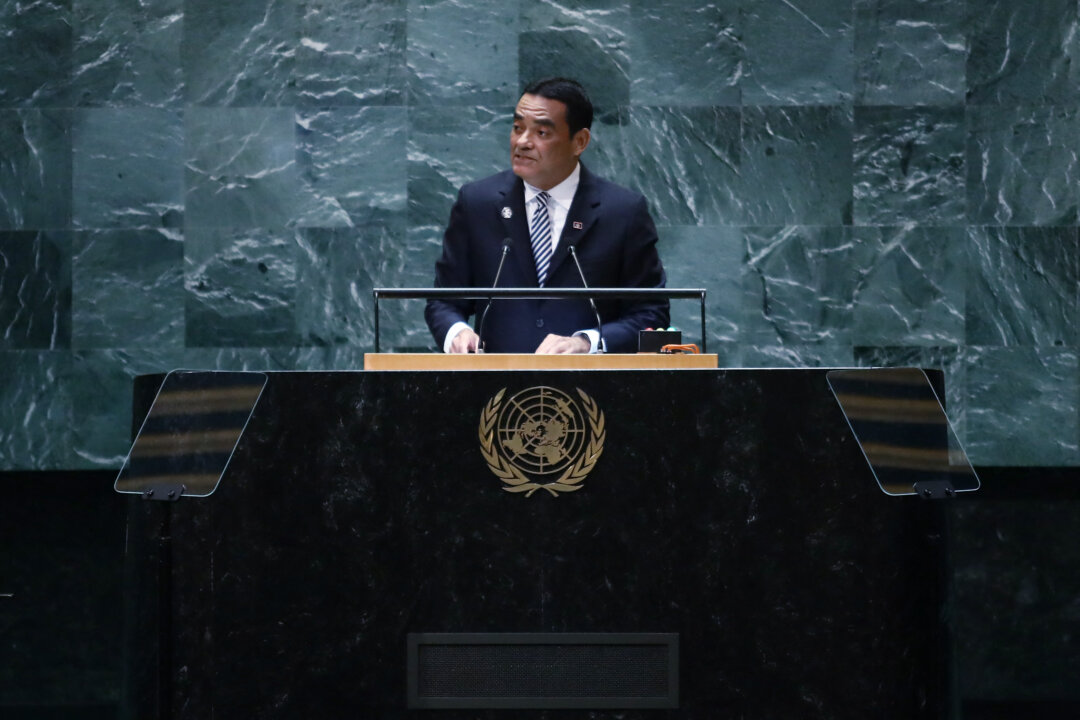
The Chinese regime is using a new form of political intimidation to override other countries’ diplomacy toward Taiwan and squeeze what little international space the island has, analysts say.
One expert noted that this strategy marks a shift toward directly targeting foreign lawmakers and diplomats rather than relying solely on state-level pressure.
“China is turning a sovereign foreign policy choice into a legal risk that individual officials must bear personally,” Hung Pu-chao, director of the Center for Global Strategy and Democratic Resilience at the University of Taipei, told The Epoch Times.
He said that foreign officials now “have to consider whether they are crossing China’s political red lines” before carrying out their own government’s foreign policy.
Hung’s warning comes after the regime announced measures on Oct. 12 against Paraguay’s communications minister, Gustavo Villate, and Belize’s foreign minister, Francis Fonseca.
They include freezing the two officials’ assets in China, barring local organizations and individuals from dealing with them, and denying them entry to the country, including Hong Kong and Macau.
The penalties mark the first time Beijing has directly targeted sitting cabinet members from Taipei’s diplomatic allies. The island only has 12, mostly in the Pacific and in Latin America and the Caribbean.
Hung said the sanctions have “very limited real economic impact,” since the two ministers have few ties to China, but the narrow scope is deliberate.
“Targeting specific officials rather than whole countries contains the diplomatic fallout for China, while leaving room to win their recognition later,” he said.
Huang Kwei-bo, a professor in the Department of Diplomacy at National Chengchi University in Taiwan, said Beijing singled out these two ministers most likely because their remarks went beyond the support that Taiwan’s allies routinely offer.
“The Paraguayan minister invoked the Taiwanese people’s right to self-determination, while Belize’s foreign minister described Taiwan as a country embracing democracy, development and innovation,” Huang told The Epoch Times.
“When the regime sees other nations’ ministers encouraging Taiwan independence, it feels it must take concrete steps to keep ‘outside forces’ from ‘inflaming’ cross-strait tensions.”
Taiwan, whose formal name is the Republic of China (ROC), is a self-governed democracy that the Chinese Communist Party (CCP) has never controlled, although it has vowed to annex the island—by force if necessary.
The U.S. State Department on Oct. 13 condemned Beijing’s sanctions against ministers from Paraguay and Belize for backing Taiwan.
“The Trump Administration opposes coercion and aggression by China against countries in our hemisphere for exercising their sovereign rights,” U.S. State Department spokesperson Tommy Pigott said in a statement.
Taiwanese President Lai Ching-te has repeatedly said Taiwan is already a sovereign, independent democracy, so “Taiwan independence” is a non-issue. He has also said the ROC and the People’s Republic of China, communist China’s official name, are not subordinate to each other.
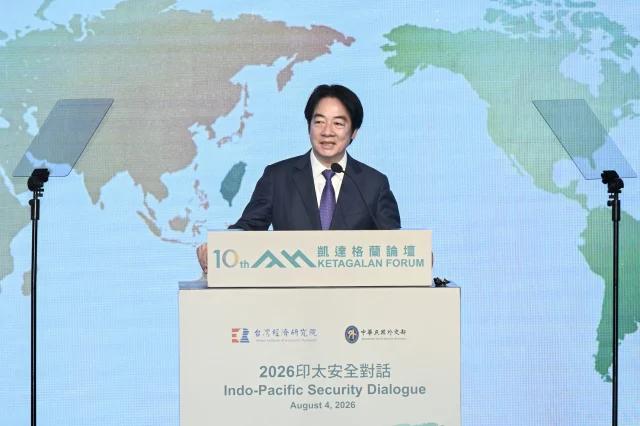
Taiwan’s foreign ministry on Oct. 12 strongly condemned the sanctions, saying they amount to “blatant interference in other countries’ sovereignty and foreign policy” and lay bare the regime’s attempt to use political threats and transnational repression.
Beijing’s Next Moves
Hung said the CCP’s main tools for pressuring Taiwan’s allies are political engagement, economic incentives, and diplomatic isolation, and that targeting individuals “adds a new option.”
“In the future, China could widen its sanctions list to include other pro-Taiwan ministers, lawmakers, and officials working on key projects with Taipei,” he said.
“That would raise the political cost for any government seeking closer cooperation with Taiwan.”
Hung said China could also squeeze the island’s allies through market access, trade, investment, and infrastructure deals.
“That could work for countries that badly need foreign capital and markets,” he said.
However, the CCP must also weigh the diplomatic cost of its pressure, according to Hung.
“One of the ministers has vowed to push harder for cooperation with Taiwan, and the other has reaffirmed that ties will not change,” he said, referring to Paraguay and Belize, respectively.
“This shows that pushing too hard can provoke a political backlash from Taipei’s partners.”
With that risk in mind, Hung said the regime’s next step could be pairing targeted pressure with economic rewards, coaxing individual countries into switching recognition.
Global Concern
Huang said governments and international organizations that support Taiwan may not rush to back it publicly over the sanctions as they navigate intensifying U.S.–China competition.
Hung sees more room for a response, saying the episode gives them a concrete common cause.
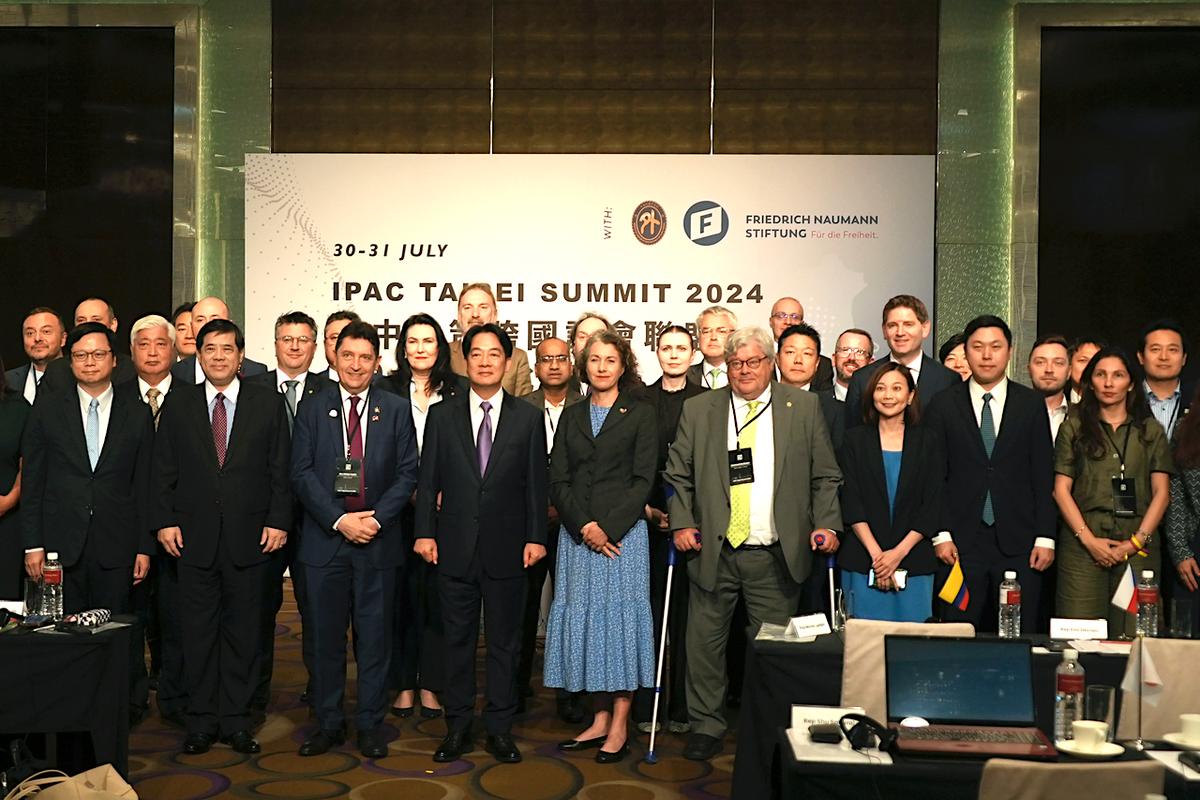
“A cross-border group like the Inter-Parliamentary Alliance on China can press governments to confront China’s use of sanctions to meddle in other countries’ diplomacy,” he said.
“Democracies that share Taiwan’s values can also push back by speaking out, deepening practical ties with Taiwan and backing its place on the world stage.”
The Inter-Parliamentary Alliance on China is a global network of more than 200 lawmakers from 40 countries formed to coordinate responses to the Chinese regime’s malign activities.
Hung said the sanctions could end up costing Beijing diplomatically if more democracies take up the issue.
“The harder China tries to impose its red lines on other countries, the more their right to set their own foreign policy becomes a global concern,” he said.
We had a problem loading this article. Please enable javascript or use a different browser. If the issue persists, please visit our help center.