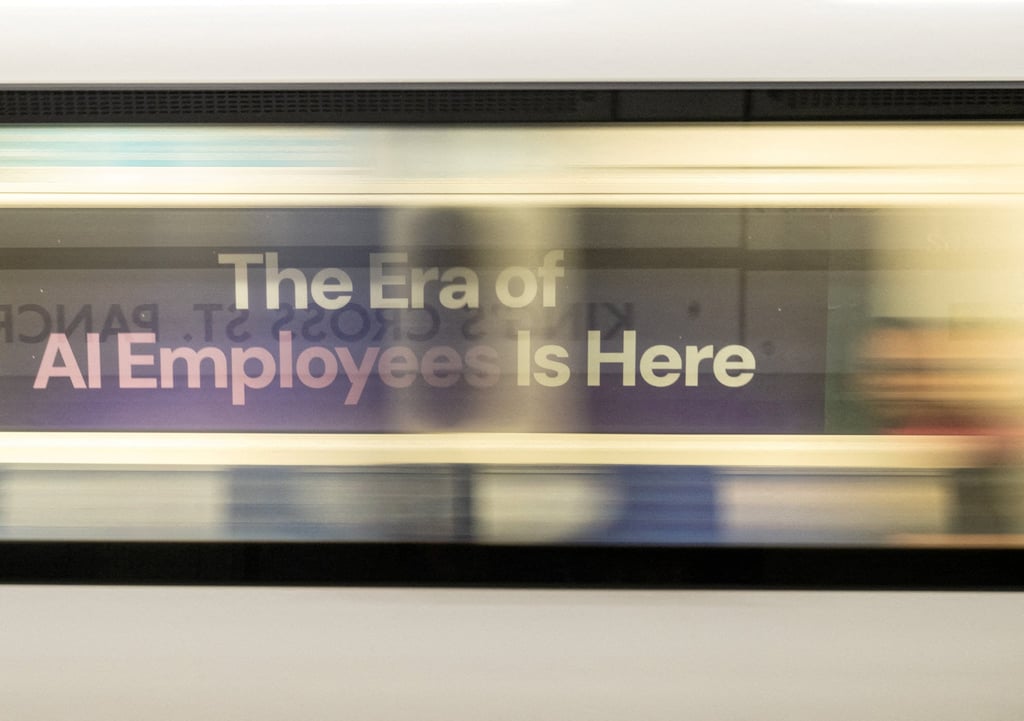
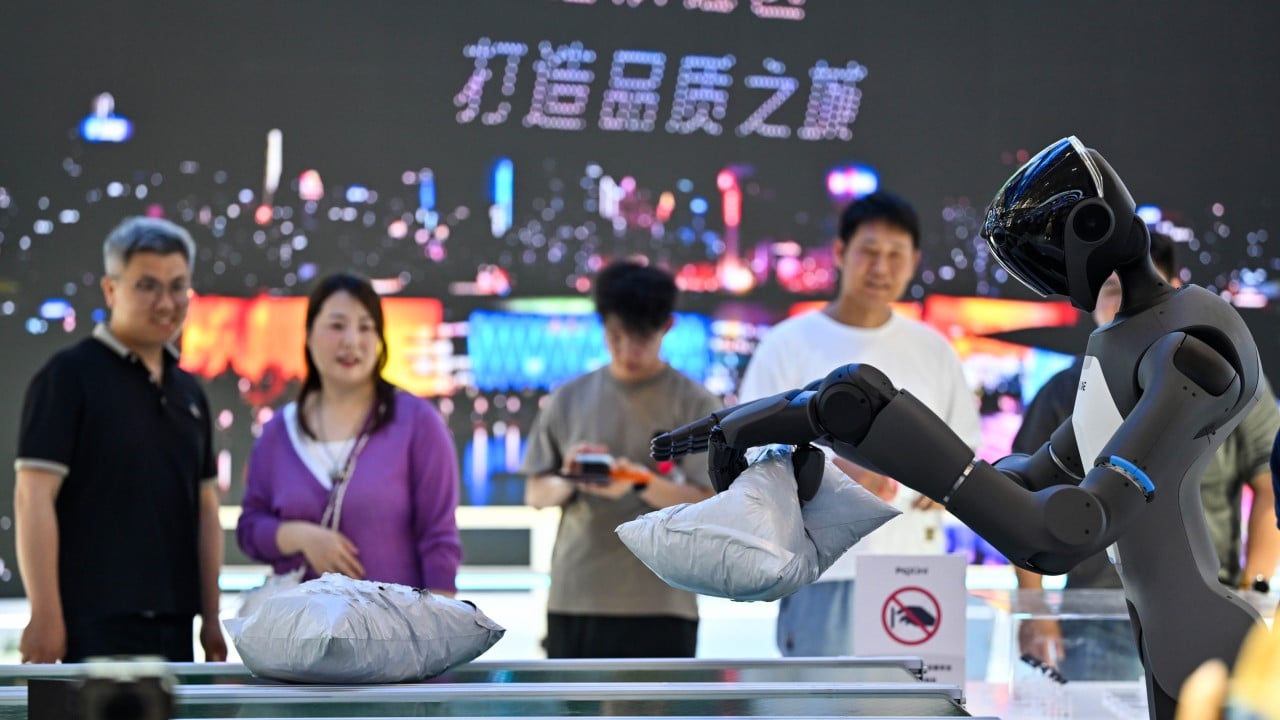
During a recent discussion in Shenzhen with British Foreign Secretary Yvette Cooper, I was reminded that the development of artificial intelligence (AI) is no longer only a technological race. It is a test of whether major economies can build the institutions, standards and economic systems needed to integrate intelligent machines into human society.
Britain has every reason to enter this new era with confidence. It has contributed to much of the modern world’s foundations. In 1687, Isaac Newton published Philosophiae Naturalis Principia Mathematica, helping establish the scientific world view that made modern engineering and the Industrial Revolution possible. In 1776, Adam Smith published The Wealth of Nations, giving the industrial age one of its most influential economic models: division of labour, specialisation, markets, trade and capital accumulation.
In the 20th century, Alan Turing laid the intellectual foundation for computation and machine intelligence. His work helped define what computation is, and later opened one of the most profound questions of the modern age: whether machines can think.
Advertisement
This history matters. The AI era needs both technological confidence and viable economic systems. Britain has helped provide both. It should not see the AI age only as a challenge from larger markets or faster-moving competitors. It should see it as another moment when its strengths in science, political economy, law, education and governance can help shape the rules of a new era.
China, meanwhile, has developed at extraordinary speed over the past few decades. In particular, it has built the world’s strongest manufacturing and robotics capabilities, along with supply-chain resilience and large-scale application ecosystems. There is little doubt that China will be one of the global powerhouses of the AI age. From smart manufacturing and AI deployment, there is no question that China’s scale and engineering capacity matter.
Advertisement
Clearly, both countries have a role to play. The real question is whether Britain or China can cooperate on problems that neither country can solve alone.